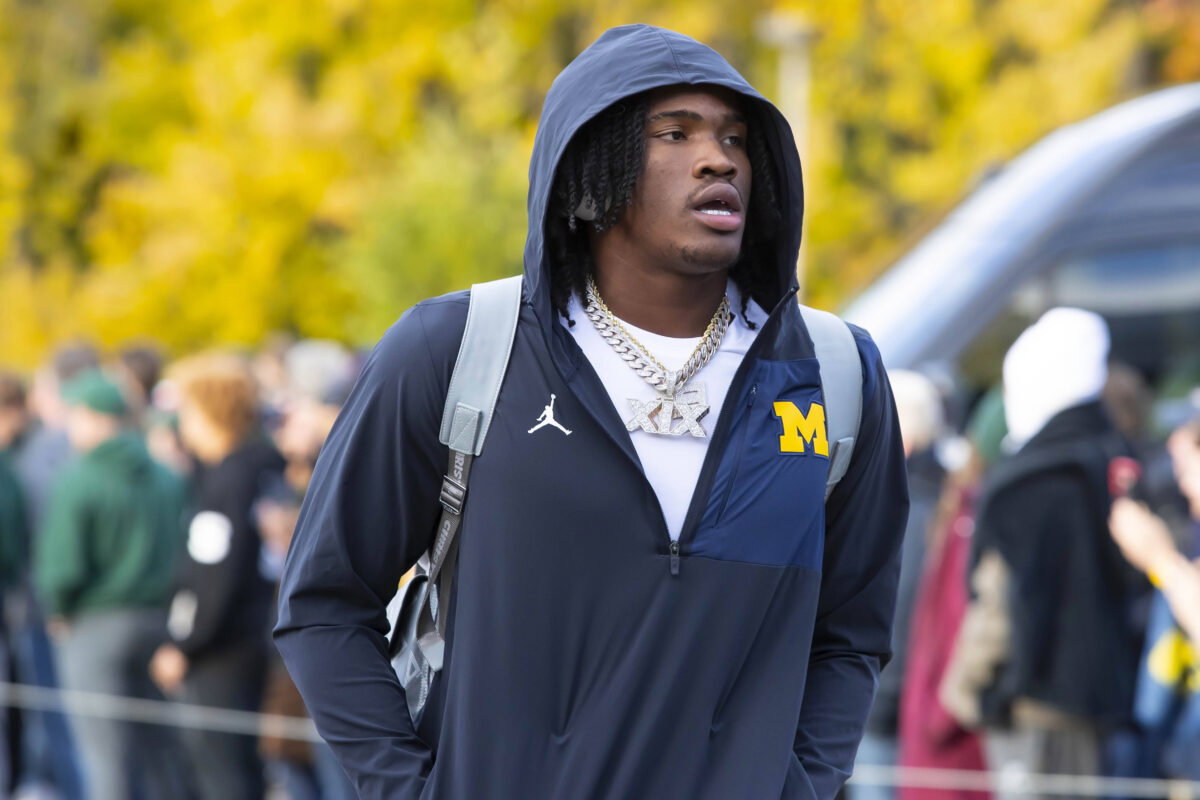
Michigan began the season ranked No. 16. After receiving a second-chance Hail Mary from Bryce Underwood to beat a MAC opponent by one point, voters didn’t just drop the Wolverines a few spots; they exited the poll altogether. Michigan still collected 69 votes in the “others receiving votes” category, but that was insufficient to remain ranked.
The AP noted that this represented the largest fall from a winning team to unranked in recent memory.
Offensively, Michigan’s performance did little to bolster its case. The offense scored on its opening drive but did not reach the end zone again for the remainder of regulation, needing a final-second play to escape a game in which Michigan had opened as a 27.5-point favorite.
Implications are already visible in Week 2 betting lines. Michigan opened as a 2.5-point favorite over Oklahoma in the lookahead, but the line shifted to Oklahoma by 6.5 points by Monday.
The MAC’s Reversal
The broader story centers on what happened after the game. Western Michigan’s president, Russ Kavalhuna, said Sunday he did not see anything inherently unfair in how the extra second was awarded.
That stance did not endure. By Tuesday, MAC commissioner Dr. Jon Steinbrecher issued a formal statement asserting that the end-of-game replay protocol had not been followed correctly. According to Steinbrecher, officials should have used the clock displayed on the program feed to determine remaining time. Instead, the Big Ten’s replay crew used the clock embedded in its own replay system, which, per the MAC, produced a different result.
Western Michigan would have won the game 12-7 under the correct protocol, the statement described.
What the MAC Is Asking For
This request is not framed as an effort to overturn the final score in the box score. The MAC has filed formal appeals with the NCAA FBS Oversight Committee and the College Football Playoff, asking those bodies to recognize Western Michigan as the actual winner for the purposes of rankings, evaluations, and selection deliberations, along with any other corrective actions within their authority.
In practical terms, the MAC is seeking to ensure Western Michigan’s outcome is recognized in postseason considerations, rather than attempting to erase Michigan’s win from history entirely. This represents the most feasible penalty the conference can request within existing structures.
There is no established precedent for such an adjustment after a game has concluded and officials have issued a final ruling. The Big Ten’s initial defense of the call was precise, citing synchronized camera timing and specific rulebook language. The MAC’s later statement focuses on the mechanics of which clock feed should have been used, rather than disputing the on-field judgment. That distinction could be pivotal for any committee that reviews the case, though it may matter little to those following the broader on-field performance.
On the field, Michigan must address its immediate challenges regardless of the appeal outcome. Whittingham’s team now sits unranked, prepares to host a strong Oklahoma squad as an underdog, and confronts questions about an offense that managed only one touchdown in 60 minutes against a program expected to be middle-of-the-pack in the MAC.
In the weeks ahead, the outcome of the appeals and how ranking bodies treat the game will unfold, but the immediate focus remains the same: improve the offense, win games, and navigate the evolving postseason implications of an unconventional finish.