For Knicks fans, this serves as a reality check. James’ name often surfaces in speculative discussions about his future, especially when circumstances align—for example, James being a free agent and the Knicks coming off a championship season. The Eastern Conference is also undergoing shifts with major player movement.
James announced his intent to explore options beyond the Lakers after averaging 20.9 points, 7.2 assists and 6.1 rebounds per game last season. Market chatter has pegged other organizations as strong contenders, including the Philadelphia 76ers, the Cleveland Cavaliers, the Miami Heat, and the Golden State Warriors.
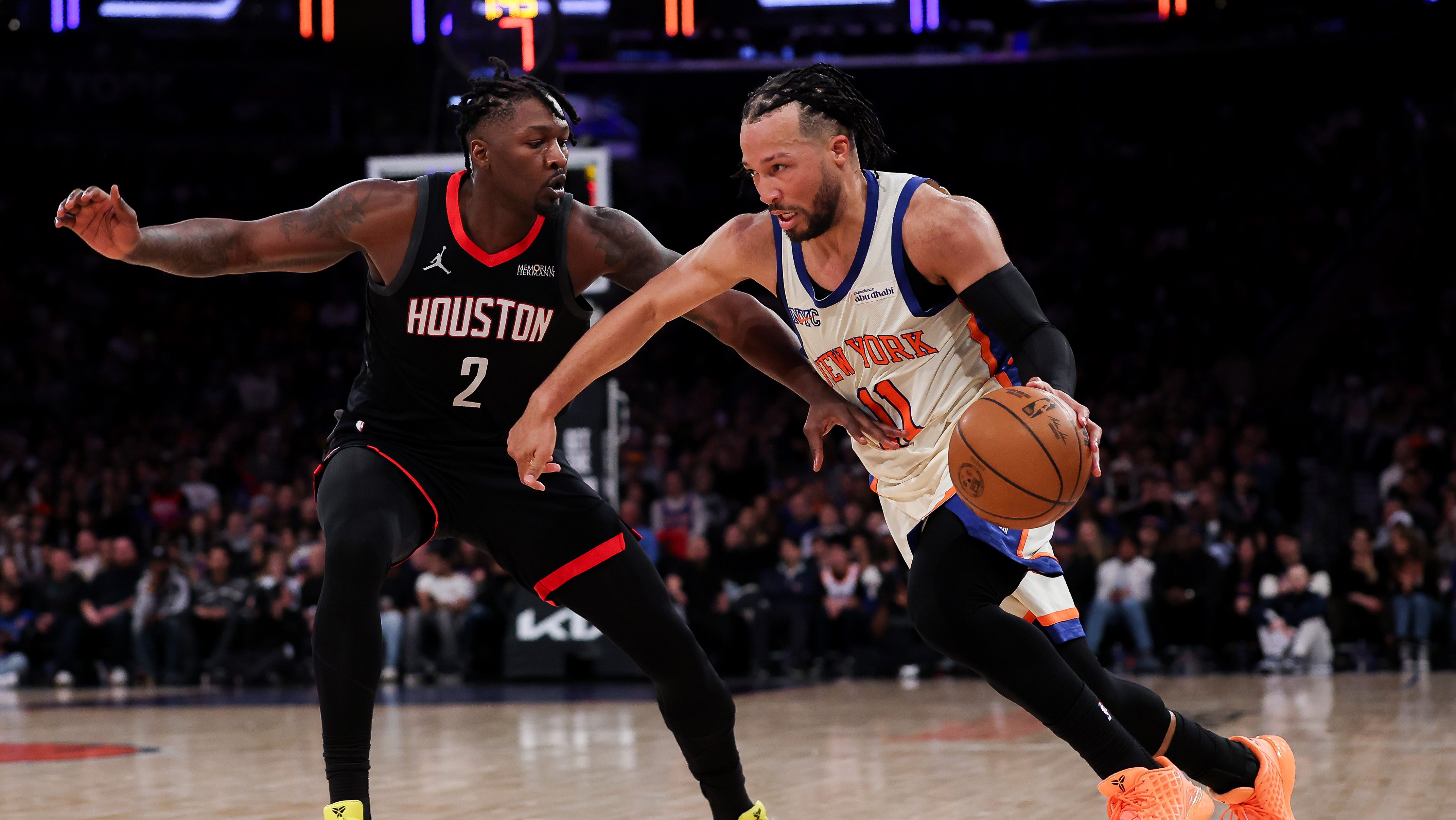
The idea of James joining the Knicks, while alluring to fans, clashes with roster realities. Any move involving James would influence touches, salary structure, late-game roles, and the franchise’s public identity. The Knicks already boast a championship-caliber core featuring Jalen Brunson, Karl-Anthony Towns, Mikal Bridges, OG Anunoby and Josh Hart. Bringing in James would not merely be an addition; it would constitute a franchise-defining shift.
The initial check-in cited by reporters does not imply the Knicks ignored James; rather, it indicates there was no traction toward a serious pursuit. For Knicks supporters, the takeaway is that the team’s immediate offseason priorities lie elsewhere. The focus is on preserving depth around a strong core while navigating the league’s updated spending rules.
Frontcourt depth is the Knicks’ more pressing concern. They have seen departures like Mitchell Robinson to the Boston Celtics on a multi-year contract, and Ariel Hukporti leaving for the Philadelphia 76ers on a one-year deal, which thin the frontcourt. As a result, the offseason strategy has leaned toward adding big-man depth rather than chasing another superstar wing. Efforts to trade for Yves Missi from the New Orleans Pelicans have been unsuccessful so far, as the Pelicans have resisted moving him.
Financial constraints also factor into the equation. The NBA’s 2026-27 salary cap stands at approximately $164.961 million, with the first apron at about $209.015 million and the second apron at about $221.686 million. These thresholds influence the Knicks’ roster-building options, with ownership reportedly cautious about exceeding the second apron. Consequently, even if James becomes available, whether such a move fits the Knicks’ actual offseason needs remains uncertain.
While the James market remains of interest to the Knicks, the immediate implication is that the team is unlikely to pursue him in a blockbuster fashion. Instead, the path forward appears to focus on sustaining a championship structure, improving frontcourt depth, and managing costs under the league’s financial guidelines.
In short, LeBron James’ free agency market is moving away from New York for now. If he signs with another team such as Philadelphia, Cleveland, Miami, or Golden State, it would ripple through the league and affect the Knicks’ plans. However, for the Knicks, the current narrative is more about prudent roster decisions and maintaining balance around a title-winning core rather than chasing a marquee off-season splash.
The takeaway for Knicks supporters is clear: a direct leap to acquire James is not the expected outcome. The more consequential questions concern how the team will address frontcourt depth and salary-cap considerations to preserve their championship trajectory. The update from credible reporting suggests that while the James-to-New York chatter isn’t dead forever, it isn’t the focal point of the Knicks’ off-season strategy. The club’s emphasis should remain on optimizing the current roster and navigating the cap landscape to sustain competitiveness.