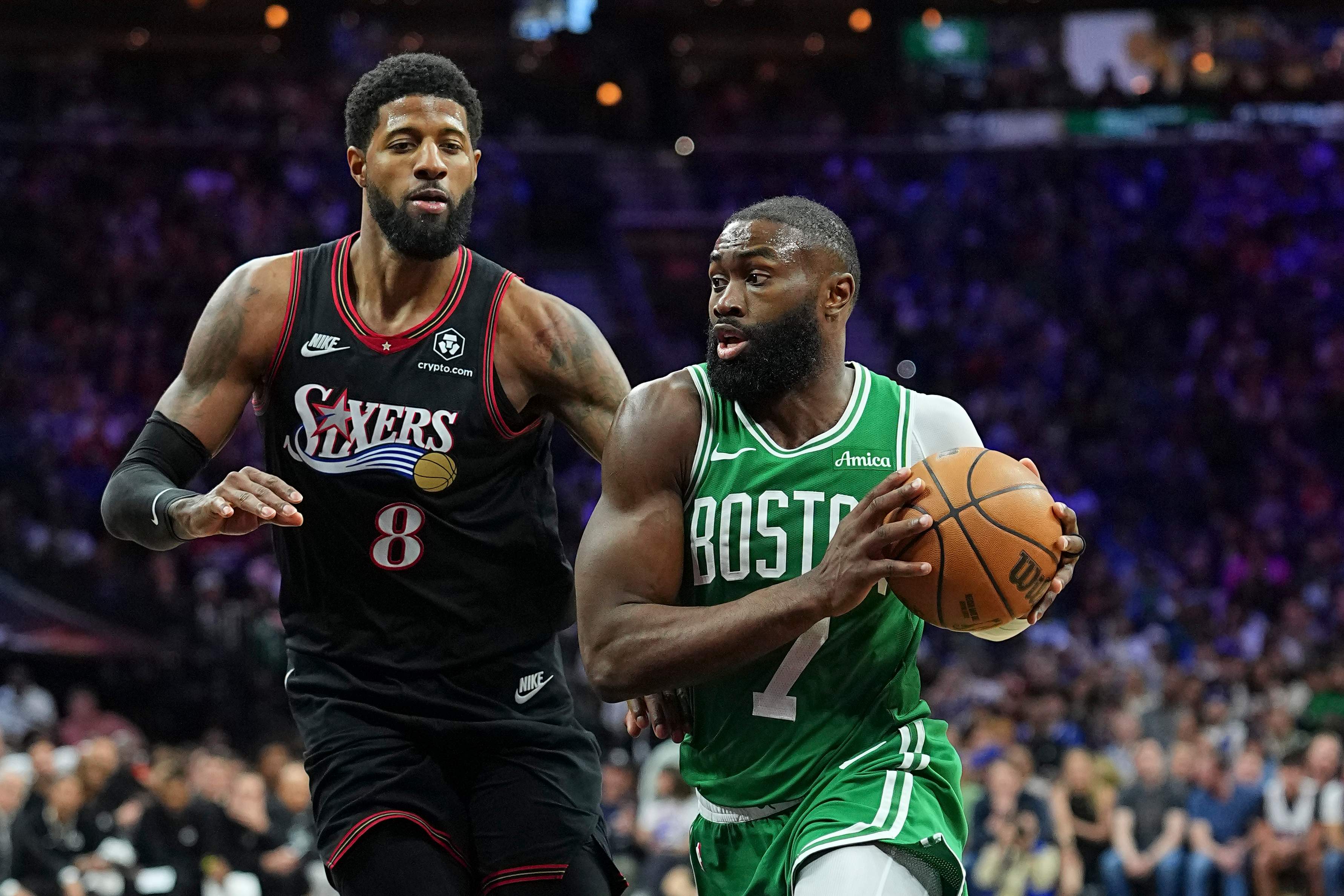
Details of the trade indicate a strategy centered on balancing immediate veteran impact with long-term flexibility. Philadelphia acquires Brown, a five-time All-Star who has anchored Boston’s wing rotation and served as a two-way force for the franchise during his decade in green. In return, the Celtics receive veteran star Paul George, a two-time All-Star who has proven scoring ability and playoff experience, along with a mix of draft assets that could include multiple picks across several years, with one of the first-round selections potentially converting to a swap option.
Context surrounding the move points to a broader theme shaping many teams’ approaches in the modern NBA: teams weighing the cost of luxury tax commitments and the value of young, controllable assets versus established stars. By trading Brown for George and several draft assets, Boston is signaling a willingness to reconfigure its core around other stars and the potential for a more flexible payroll framework. The computed risk is clear: the team dials down a long-term window for title contention in exchange for a shorter-term boost and greater future capital.
Brown’s departure marks the end of a ten-year arc in Boston that elevated him from a defensively minded rookie to a centerpiece of the franchise. Drafted third overall in 2016, he developed into a versatile two-way player who thrived alongside Jayson Tatum and helped deliver a 2024 championship, earning Eastern Conference Finals MVP and Finals MVP honors as Boston claimed the title. Yet, with Tatum contending with Achilles recovery for a substantial portion of the recent season, Brown carried much of the load, guiding the team to 56 wins and the No. 2 seed in the East before the first-round exit to Philadelphia.
For Philadelphia, Brown’s acquisition pairs with a roster featuring Joel Embiid, Tyrese Maxey, and a rising rookie, forming a dynamic new look designed to contend in a crowded conference. The immediate reaction from bettors and analysts suggested Philadelphia’s championship odds improved in the wake of the trade, while Boston’s early outlook dimmed as the team recalibrates its lineup around different pieces and a new supporting cast.
Fan and media reactions to the move have been swift and varied. Commentators and former players weighed in with strong opinions about the trade’s impact. Some highlighted Brown’s all-around game and leadership as a missing piece in Philadelphia’s charge toward a title, while others argued that Boston’s return—centered on a proven scorer and playmaker in Paul George plus draft capital—gives the Celtics the flexibility to rebuild around a new core and address depth and defense in other areas.
The trade also reshapes the immediate landscape of the Eastern Conference. Philadelphia’s improved balance could make them a formidable threat to Boston, Milwaukee, and other contenders, especially if George recaptures form and fits seamlessly with Embiid and Maxey. For Boston, the path forward involves integrating George smoothly with the remaining core and leveraging draft assets to fuel future moves, whether through additional acquisitions or players developed within the organization.
Beyond the surface numbers, several crucial questions emerge for both franchises. How will Paul George adapt to a new team system and roster dynamics after years with different labels and roles? Can the Celtics maximize the value of multiple draft picks to build complementary pieces who can contribute immediately or develop into long-term contributors? And how will the remaining members of both teams adjust to new expectations, leadership structures, and on-court chemistry under the spotlight of a high-visibility trade?
As the league moves forward, the implications of this deal will unfold over the coming seasons. For the Celtics, the focus will be on player development, defensive schemes, and finding a cohesive way to deploy George alongside the remaining veterans and younger talents. For Philadelphia, the emphasis will be on integrating Brown’s athleticism and playmaking into a system already anchored by Embiid and Maxey, with an eye toward sustaining momentum through a competitive playoff run.
In sum, this trade marks a watershed moment for both clubs. It signals a willingness to break from tradition and pursue a refreshed blueprint built around marquee talent, draft capital, and strategic flexibility. The full impact will depend on how well the new pieces fit, how effectively each team manages payroll and development, and how quickly players adapt to new roles and expectations in a league that values both immediate success and long-term stability.