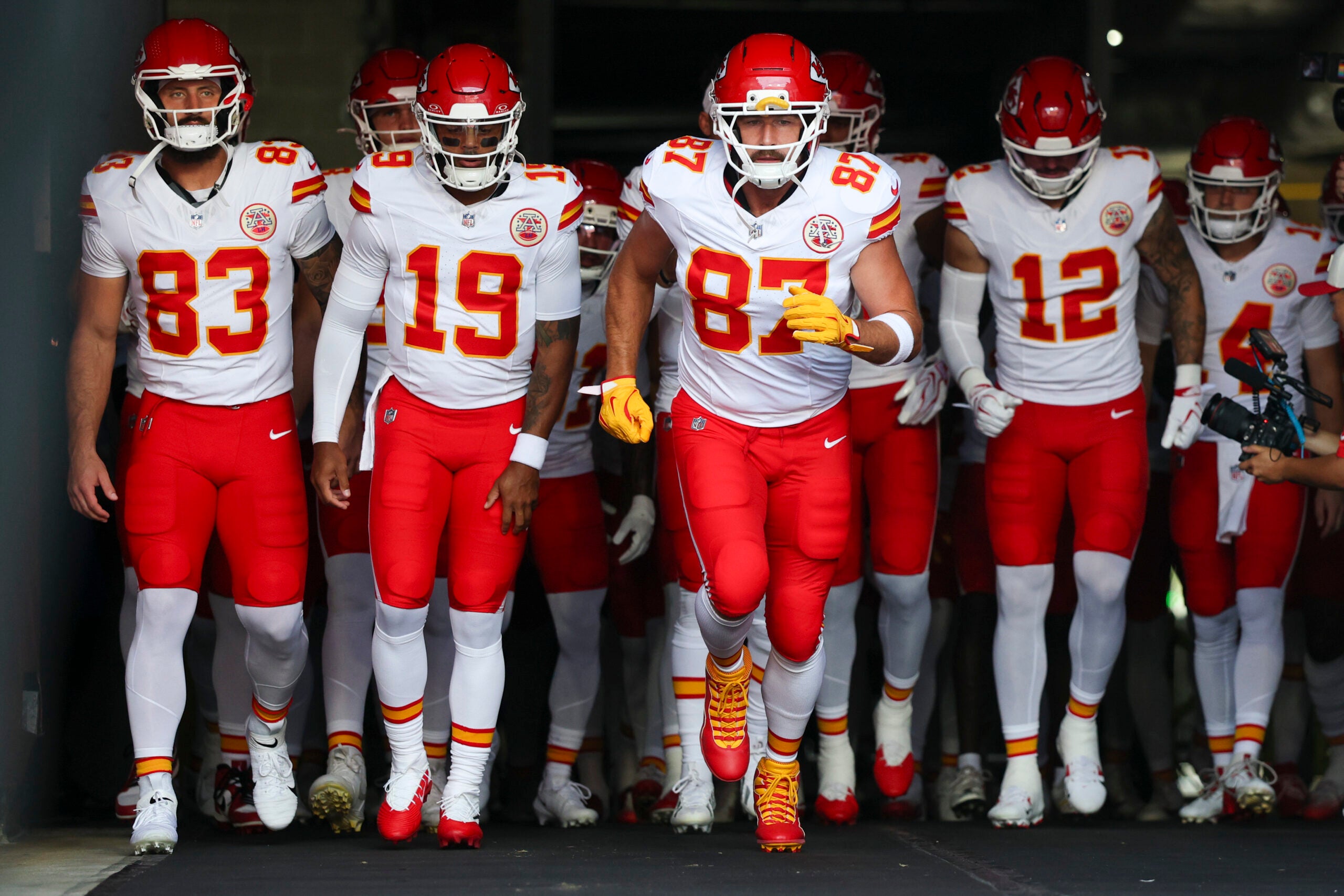
Right out of the gate, Kansas City made its intentions clear on offense. The opening drive featured a balanced, aggressive approach that blended Mahomes’ improvisational ability with a ground game designed to impose physicality on the Broncos. Mahomes himself got the scoring drive rolling in dramatic fashion, notching the team’s first touchdown of the season with a 15-yard rushing score in the red zone. The play came after a Broncos interception by rookie cornerback Mansoor Delane, which briefly gave Denver a chance to swing the momentum, but Mahomes’ response underscored his leadership and willingness to take control in high-pressure moments.
The drive itself was a showcase of versatility. Mahomes completed two passes on the sequence, one for nine yards to wide receiver Xavier Worthy, but the big story was the ground game. Kenneth Walker III carried seven times for 32 yards on the drive, averaging a solid 4.6 yards per carry. This mix of run and pass kept the Broncos guessing and allowed the Chiefs to move the ball methodically while testing Denver’s defensive front.
What stood out beyond the statistics was the strategic approach to formations. The Chiefs utilized multiple under-center looks, including heavy formations that created versatile blocking schemes and kept the defense off balance. One notable formation featured three offensive linemen declared eligible, a bold wrinkle that pressured the Broncos’ preparation and personnel decisions. The Chiefs even rotated in a newly acquired offensive lineman, Josh Ezeudu, after Jaylon Moore declared eligible, highlighting Kansas City’s willingness to adapt on the fly and keep defenders guessing about who will touch the ball and where the pressure will come from.
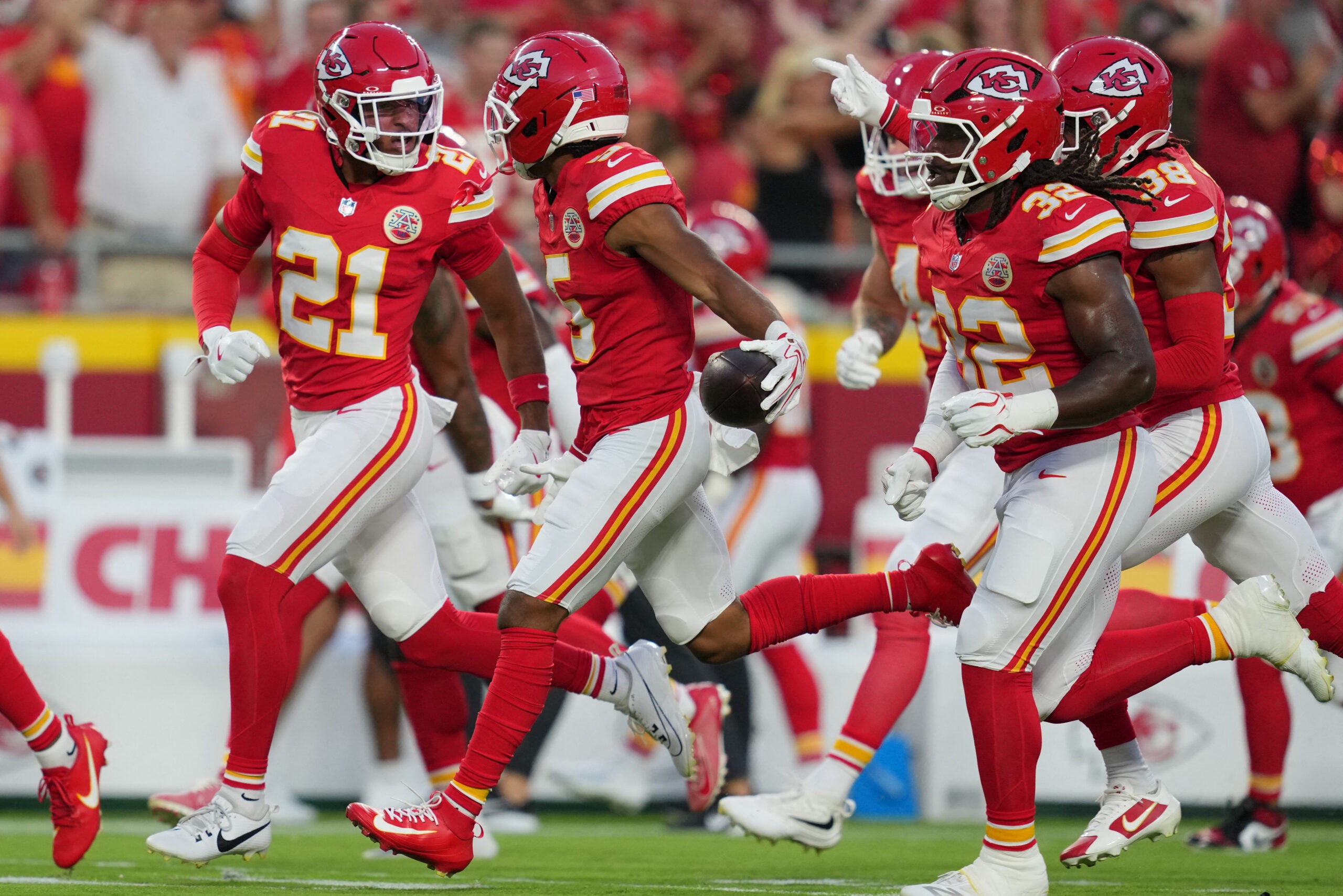
Defensively, Kansas City contributed to the early impression with a takeaway that set the tone for the game. The interception momentarily reversed the momentum, but the Chiefs answered quickly, maintaining their physical approach on offense and keeping Denver from gaining any real rhythm. The defensive adjustments and the ability to force a turnover provided a strong counterpoint to the offense’s early success, illustrating that Kansas City intends to win both sides of the ball.
Beyond the numbers, Mahomes’ performance this season is already signaling a broader evolution of his game. He demonstrated a willingness to scramble and convert when the opportunity arises, including a near five-yard rushing attempt in the red zone that was nullified by a holding penalty on an offensive lineman. Undeterred, Mahomes came back to finish the drive with the decisive rushing score. This sequence underscored a growing comfort with using his legs in high-leverage situations, adding a dynamic dimension that defenses will have to account for in every series.
Coaching staff, led by Reid, appears committed to expanding the team’s physical running game. The opening drive featured a heavy emphasis on the run, with Walker receiving a prominent workload that underscored the plan to diversify Kansas City’s offense beyond purely explosive passing plays. If this trend holds, it could mark a strategic shift toward more downhill runs and pro-style, power concepts designed to control the clock, wear down opposing defenses, and create play-action opportunities that players like Mahomes can exploit in the passing game.
For Chiefs fans, the season’s early message is clear: this offense is capable of imposing its will through a combination of quarterback improvisation, a fortified running game, and creative formations that keep defenses off balance. The defense’s ability to create a turnover early in the game also signals that Kansas City intends to play complementary football, relying on both lines to win at the point of attack and a back seven that can capitalize on mistakes.
As the season progresses, the Chiefs will aim to refine their passing combinations while continuing to lean into a more physical approach on the ground. The balance between Mahomes’ dynamic playmaking and a retooled rushing attack could define Kansas City’s identity in 2026, especially within the AFC West, where divisional battles demand both resilience and adaptability. If the opening drive is any indication, the Chiefs are prepared to push their offense in multiple directions, forcing opponents to respect both the passing attack and the renewed emphasis on ball-control, power-running football.
In summary, the opening performance of the season showed Patrick Mahomes embracing leadership on the field, not shying away from contact, and turning a promising start into a definitive statement about the team’s strategic direction. With Andy Reid orchestrating a revamped running game and a defense that can generate momentum-changing plays, Kansas City set a tone that suggested they are ready to contend with the best in the league while expanding their offensive repertoire for the 2026 season.