In the season opener, the Cowboys’ defense appeared to regress in several areas, but the most glaring deficiency was their lack of effective pass rush without resorting to blitz packages. Using only four rushers on 20 dropbacks produced just two quarterback pressures, according to Next Gen Stats. That pace marked their lowest pressure rate since 2021 and left them chasing playmakers in the backfield rather than contending with a clean pocket.
When Dallas did bring pressure via blitz packages, the Giants frequently capitalized. The quarterback, Jaxson Dart, either escaped the pocket or targeted open receivers downfield, illustrating that the defense’s problems were not merely about execution but also about the personnel and schematic balance in the front seven. The reliance on pressure from extra rushers underscored a personnel issue: the unit lacks sufficient elite pass rushers to convert blitzes into sacks or hurried throws consistently.
The overarching fear is that this problem is talent-based rather than purely schematic. Over the past two offseasons, Dallas moved on from some edge and interior pass-rush options, making it more challenging to pressure without bringing extra bodies. Without major reinforcements or a rapid, internal development of role players into high-impact pass rushers, the team could struggle to remedy this weakness in the near term.
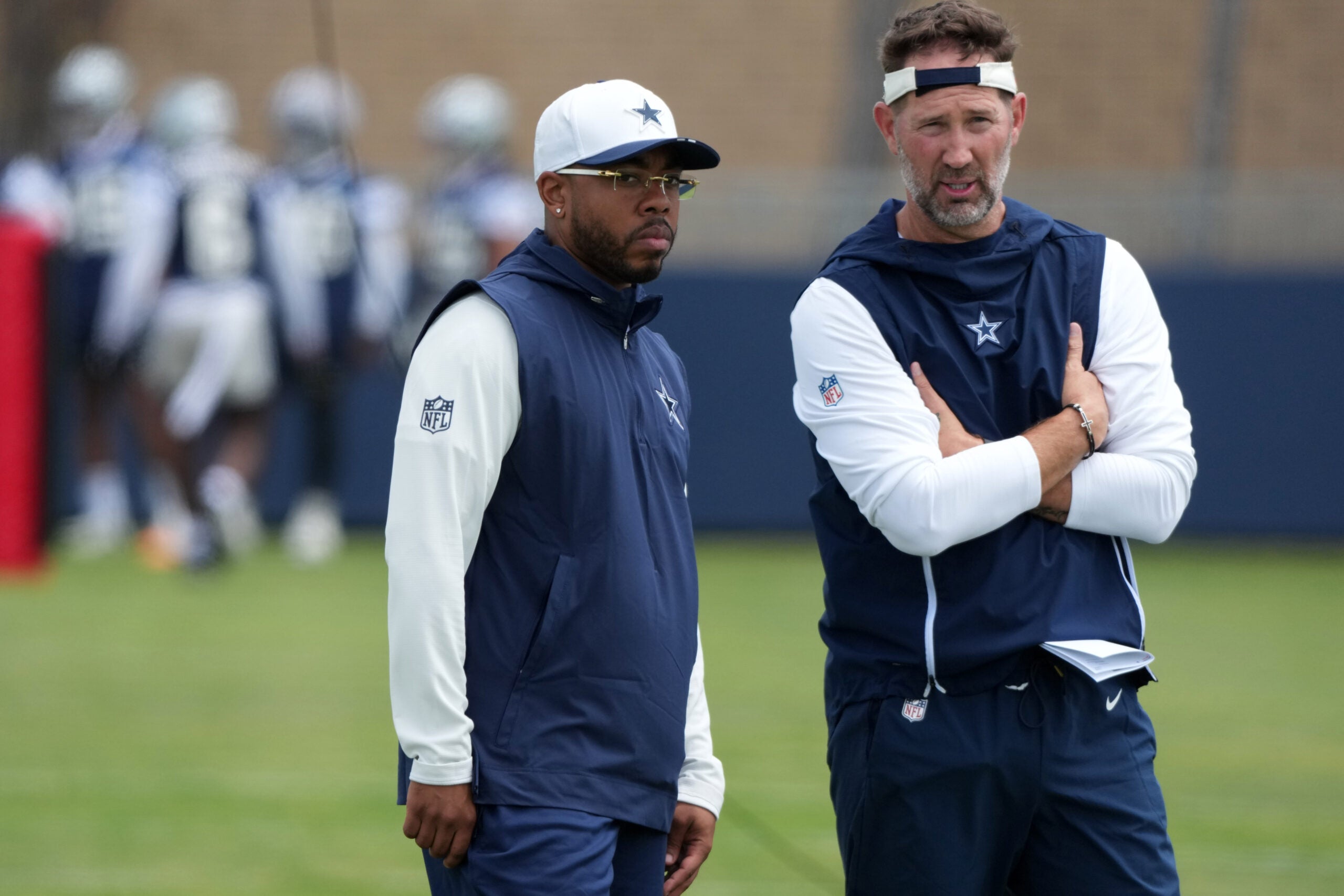
There is still time for adjustments. Defensive coordinator Christian Parker (in his debut) is expected to improve play-calling and tailor schemes to opponents as the season unfolds. Communication and chemistry should improve as the defense spends more time together, which can help mitigate some issues. However, even with growth, the crux of the problem—consistent, four-man pressure—remains a significant hurdle.
If the Cowboys cannot find a reliable way to pressure opposing quarterbacks with four rushers, the defense may continue to rely on blitzes that expose vulnerabilities in coverage or create mismatches for offenses to exploit. The cornerstone of a competitive defense is a balance between up-front disruption and the secondary’s ability to hold up in coverage. Dallas will need to develop or acquire players who can win one-on-one battles and collapse the pocket without extra help, allowing the team to play more complementary football on defense.
Looking ahead, the Cowboys will be tested by teams that can recognize and exploit a predictable pressure approach. The early signs suggest a potential mismatch between the current personnel and the demands of a modern, diverse passing attack. If the unit cannot regain a credible four-man rush, the coaching staff may be forced to rely on innovative schemes and blitzing more than desired, which could create additional challenges in coverage and scheme execution.
In summary, while improvements may come as the defense grows more cohesive, the most worrisome issue from Week 1 remains: the inability to generate pressure with a four-man rush. Until this is addressed—whether through player development, acquisitions, or tactical adjustments—the Cowboys’ defense may continue to struggle against efficient passing games early in the season.