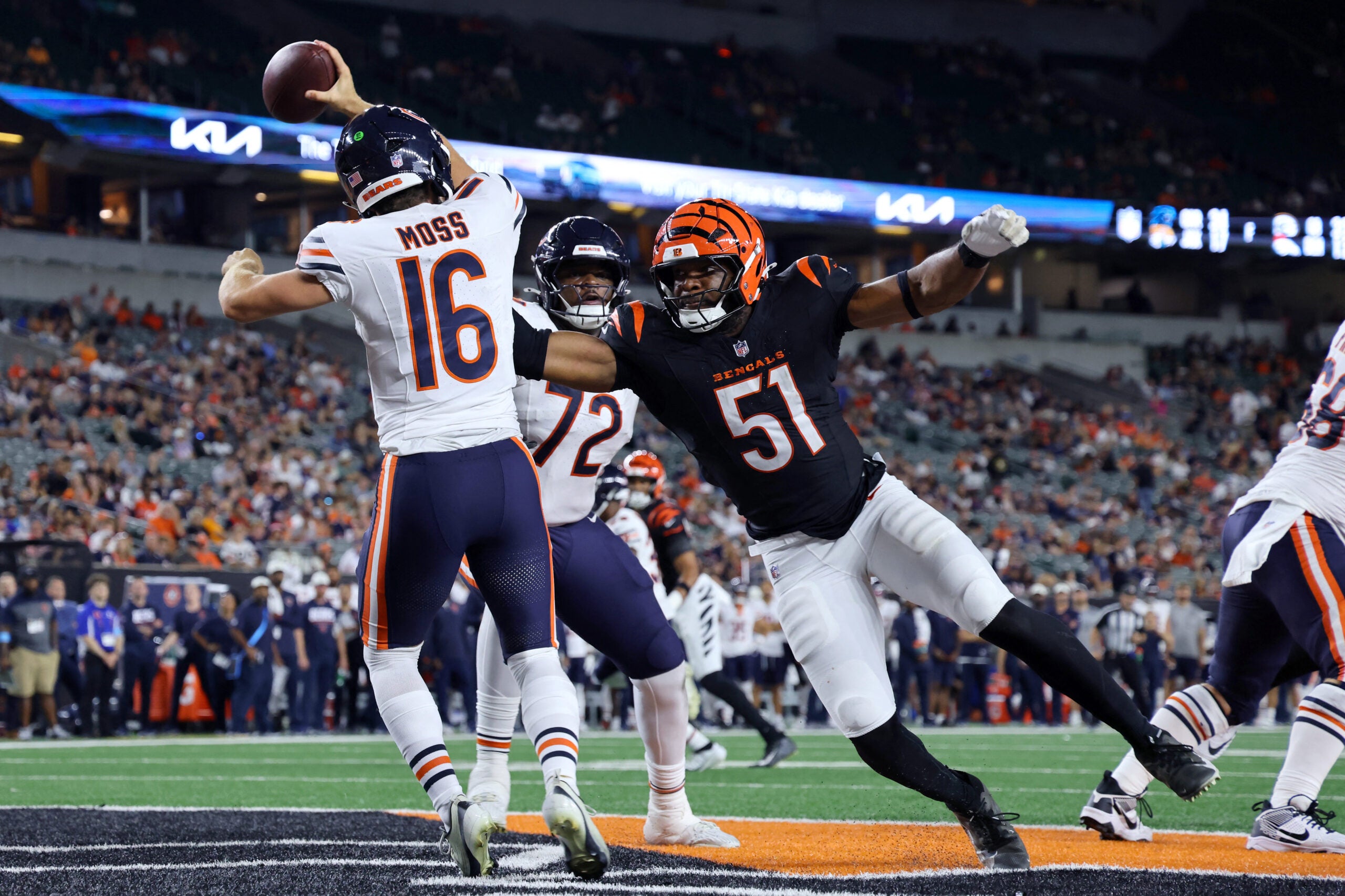
Heading into the regular season, linebacker depth was a clear area of concern. Bozeman, who joined the Bengals after being claimed off waivers in May, carved out a spot after spending 2023 with the New York Giants and stints with the Kansas City Chiefs and Chicago Bears. He earned a 53-man roster spot and provided the club with a viable option at a time when Cincinnati preferred to rely on a lighter middle of the defense. His rise was notable because he was the only Bengals linebacker addition with NFL experience from the previous year, a factor that helped anchor the group as camp concluded.
Why the Bengals can afford to go light at linebacker
Cincinnati’s 3-4 structure is the core reason four linebackers can be sufficient. In a base or nickel package, the defense typically places only two off-ball linebackers on the field. As a result, the difference between carrying four or five linebackers becomes less consequential. The starting linebackers are Demetrius Knight Jr. and Barrett Carter, with Oren Burks serving as the primary special-teams contributor and the top backup. Bozeman sits as the next-man-up option behind either Knight or Carter, depending on matchups and injury considerations. This setup allows Cincinnati to allocate more roster spots to other positions without sacrificing overall depth.
The rest of the linebacker room in practice and on the depth chart reflects a deliberate gamble: best-in-class players at other positions, rather than a deeper but less impactful group at inside linebacker. Not making the cut were several promising linebackers, and while some could return to the practice squad, the front office is comfortable with their contingency plan if depth is needed midseason.
Defensive line depth justifies the tradeoff
If the Bengals are prioritizing a lighter linebacker corps, the reason lies just a few feet in front of them. The team kept a robust defensive line to support the 3-4 scheme, which demands multiple linemen to spell each other and maintain pressure. The depth chart shows that the Bengals intend to rely on several big bodies up front, with three starting defensive tackles and a rotation among backups. Landon Robinson and Kris Jenkins Jr. provide backup 3-technique depth behind Jonathan Allen and B.J. Hill, while T.J. Slaton Jr. is positioned as the backup to Dexter Lawrence at nose tackle. The decision to retain both Robinson and Jenkins, rather than trimming the group further, reflects the value placed on a strong frontline, even if it means reducing linebacker depth slightly.
This approach aligns with the broader plan: a front-loaded defensive line capable of sustaining pressure, allowing the two starting inside linebackers to play with more freedom and relying on Bozeman and Burks for depth behind them. The emphasis on the defensive line also explains why Cincinnati was willing to absorb a lighter linebacker corps, trusting the front seven to carry the bulk of the workload.
The bigger picture going forward
The Bengals are betting that their defensive line’s depth will carry much of the load, while two dependable backups at linebacker will be sufficient behind two proven starters. The front five remained relatively healthy through the preseason, aside from Shemar Stewart, which supported the decision to keep 11 defensive linemen. Bozeman’s emergence as a viable fourth option at linebacker gave Cincinnati confidence that a roster of five linebackers isn’t necessary. If Knight and Carter continue to develop and take the expected leap, this strategy could pay dividends as the season unfolds.
In summary, Cincinnati’s shift to a 3-4 defense has driven a recalibration of the roster, favoring depth along the defensive line and a leaner group at inside linebacker. Bozeman’s rise to the fourth linebacker spot exemplifies the balance the Bengals seek: solid coverage and run support from a compact LB corps, backed by a robust front that can consistently apply pressure and sustain the defense throughout games.