In this quiet period, prominent voices in the basketball world have turned their attention to broader, more philosophical questions about what truly defines greatness in the sport. On a recent episode of a popular show featuring NBA veterans Vince Carter and Tracy McGrady, the discussion pivoted to a weighty debate: does winning an NBA Most Valuable Player award carry more significance than winning an NBA championship? The topic has attracted attention precisely because it challenges conventional wisdom about legacy and success in a league defined by team accomplishments as much as individual accolades.
It’s important to note that neither Carter nor McGrady captured an NBA championship or an MVP trophy in their own careers. Their perspectives are often valued for their objectivity rather than as a byproduct of personal accolades. Still, the conversation leans into a classic tension in basketball discourse: should the ultimate personal honor—being named the league’s most valuable player in the regular season—be considered more impactful than securing a championship ring?
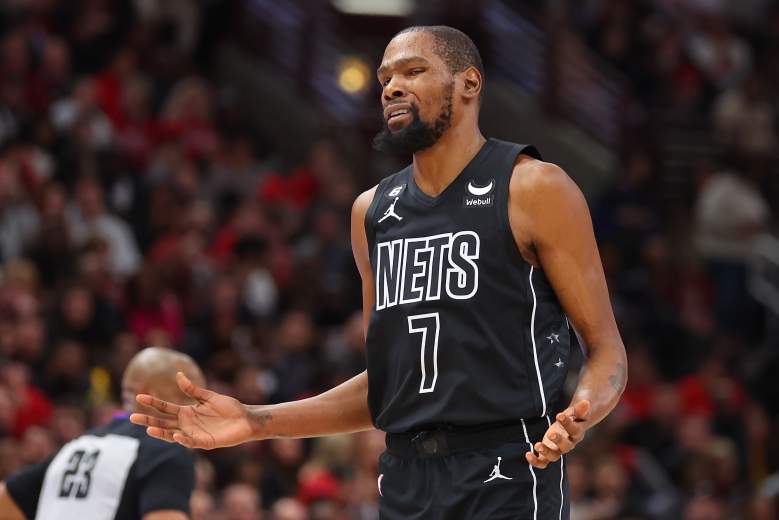
The spark for the debate came when Kevin Durant suggested that an MVP carries more weight than a title. When the topic reached McGrady, he delivered a bold stance. On the show, Carter asked McGrady whether an MVP should outrank a championship, and McGrady did not hesitate in his response. He asserted that the MVP holds greater significance because it identifies an individual as the clearest standout across an entire season. He argued that almost every championship team includes players who do not possess an MVP, and therefore the presence of a ring alone cannot guarantee personal greatness; the MVP, in his view, marks a higher individual achievement.
While McGrady’s stance is provocative, the broader conversation about MVP versus championship is not simply about comparing a single star to a collective unit. The most meaningful debate centers on comparing specific players who have achieved different kinds of greatness: those who have earned MVP honors without a title, and those who have secured championships without an MVP. A framework for this discussion involves looking at players whose career trajectories illustrate the tension between personal recognition and team success.
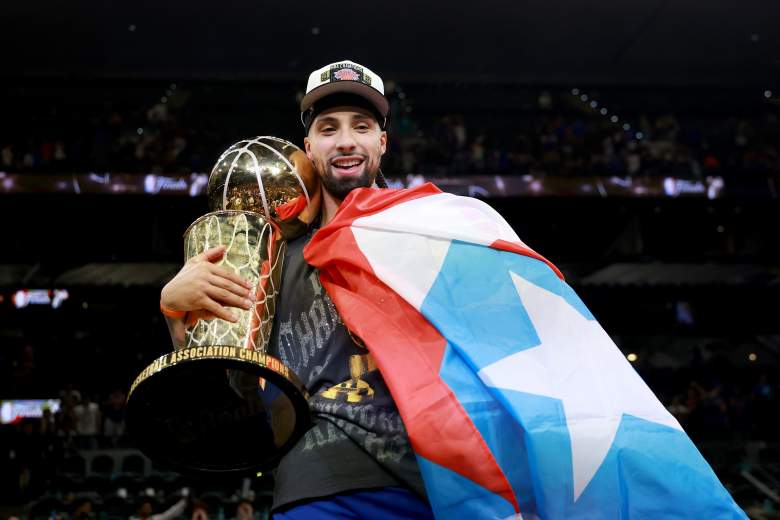
A more precise way to compare is to examine cases where arguments can be made on both sides. Consider Russell Westbrook, who won the 2017 MVP after averaging a triple-double, a historic feat that captivated the league. That season, however, his team—the Oklahoma City Thunder—faced a tough playoff matchup and fell to Houston in the conference semifinals, illustrating that individual brilliance does not always translate into a championship. In contrast, a player like Jalen Brunson demonstrated extraordinary performance to deliver a Finals MVP and help his team realize a championship, underscoring the idea that peak execution during the most crucial games can define a legacy in a way that regular-season statistics may not.
The point isn’t to argue about whether the ninth or tenth man on a deep roster is likely to be remembered more fondly than an MVP winner. The discussion centers on contrasting the legacies of players who have achieved the league’s highest individual honor with those who have captured the sport’s ultimate team prize. Regular-season excellence is undeniably prestigious and memorable, but postseason success—especially winning a title and starring in finals moments—often resonates more deeply with fans and historians when evaluating a career.
The conversation also underscores how context matters. MVP voting reflects a season-long assessment of a player’s value, efficiency, impact, and consistency. A title, by contrast, is a team achievement, contingent on a roster of players, coaching, health, and in-game decisions that extend beyond any single star. Both measures are valuable, and each can define a player’s legacy in different ways. Some players will be celebrated primarily for their MVP seasons, while others will be remembered for their ability to elevate a franchise to a championship, sometimes with a supporting cast that clears a path to glory.
Ultimately, debates like these fuel thoughtful analysis about what greatness means in basketball. They invite fans to weigh the importance of consistent excellence over an entire season against the drama and culmination of a title run. They also remind us that the conversation about legacy is complex, often depending on personal perspective, team context, and the specific narratives tied to particular players and eras.
As the offseason unfolds and teams approach training camps with renewed expectations, fans can expect more nuanced discussions about how to measure success in the NBA. The MVP versus championship debate will continue to surface in media rooms, podcasts, and social discussions, inviting football-like debates about who had the greatest impact, both individually and collectively, on the sport. In the end, celebrating great players—whether through MVPs, rings, or memorable playoff performances—adds to the rich tapestry of basketball history.