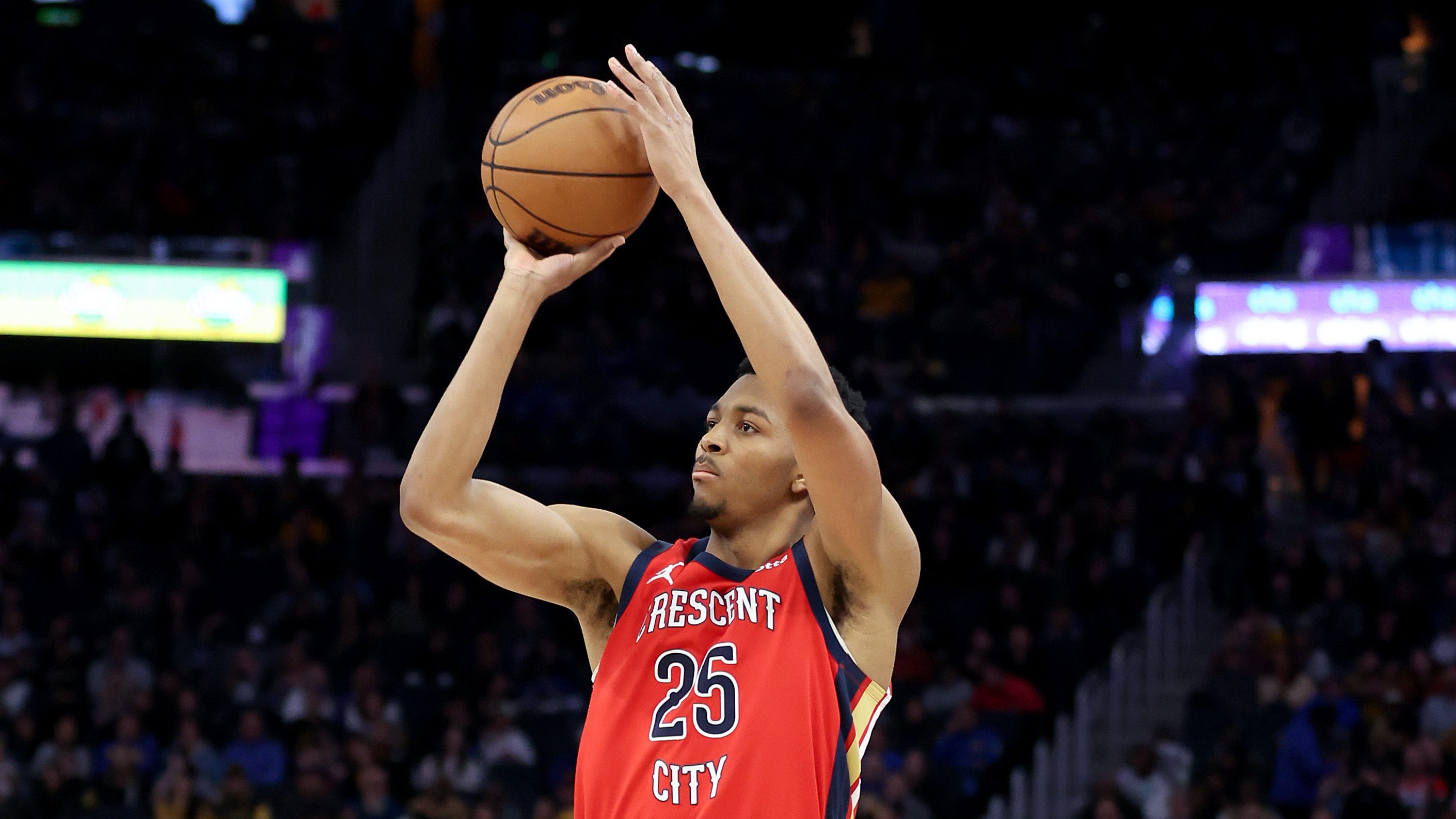
Cameron Carr
Question: Will his physical strength limit his effectiveness at the NBA level?
Carr arrives with a well-rounded package that the Lakers value in a wing: elite athleticism, reliable shooting, and notable defensive potential. Early impressions suggest he can be an ideal fit alongside star guard Luka Doncic and secondary playmakers like Austin Reaves, providing spacing, cutting, and secondary-ballhandling ability. In the California Classic, Carr showed productive scoring bursts, delivering 19 and 26 points in his first two appearances. Despite the positive signs, a practical concern remains: how will his strength translate to the demands of the NBA?
At the college level, Carr sometimes faced physical challenges from stronger, more physical defenders. In the NBA, many wings encounter ongoing contact and heavier defensive schemes, making strength a tangible factor in both scoring and defense. Carr’s development in Summer League will hinge on whether he can withstand that contact and finish through contact at a higher rate, while continuing to knock down perimeter shots and contribute on the defensive end with active help and contest timing. If he can add functional strength without sacrificing speed or explosiveness, Carr’s long-range shooting and versatility could make him a valuable two-way contributor for the Lakers.
Peter Suder
Question: Can he keep up athletically against higher-level competition?
Suder, coming off a standout college season as the MAC Player of the Year, arrived in the professional ranks with a reputation as a scoring guard capable of hitting mid-range shots and stretching the floor with a three-point stroke. His versatility as a playmaker and scorer helped him carry a high-powered offense for a 32-2 team, highlighting his potential as a complimentary backcourt piece in the NBA.
The challenge for Suder is the athletic transition. Summer League exposes players to faster pace and quicker athletes who can close gaps and close out shooters with tight contests. Through two California Classic games, Suder has faced struggles on the defensive end and has shown difficulty creating space for his own offense against higher-level defensive pressure. For Suder to carve out a role, he will need to prove that his defensive instincts and foot speed can keep pace with NBA guards, and that his shot creation and conversion rates can withstand the tighter windows of the NBA game. Continued improvements in lateral quickness, quick decision-making, and competitive aggression on defense will be essential to his development as a two-way guard for the Lakers.
AK Okereke
Question: Is his shooting real, and can he translate it to regular NBA accuracy?
Okereke brings size, length, and a multi-positional defensive profile to the Lakers. At six-foot-seven, he offers the versatility needed to guard multiple positions, while posting a shooting ability that has drawn attention. Last season’s three-point percentage hovered around 40%, though at a modest volume (approximately 2.8 attempts per game). The crux of his projection hinges on whether that shooting can prove consistent when integrated into NBA defenses and shot-selection realities.
For Okereke to establish himself as a reliable floor-spacer and defender, he must demonstrate that his three-point shooting is sustainable against NBA-level competition and off the catch, not just in favorable college lineups. If he can elevate his volume while maintaining efficiency, he could function as a practical 3-and-D option for the Lakers, capable of defending wings and helping space the floor for creators. His Summer League stretch will be telling: can he translate a solid shooting foundation into a consistent NBA skill, or will his numbers regress with higher-level resistance and increased competition?
Overall outlook
Summer League serves as an essential proving ground for this trio of Lakers prospects. Each player brings a distinct skill set and a clear path to contributing at the NBA level, whether through shooting, defense, playmaking, or a combination of these elements. The key narratives to watch are:
– Carr: How his physique develops and whether he can handle NBA-level physicality without sacrificing speed or shooting touch.
– Suder: Whether his athleticism and defensive adaptability improve enough to offset any gaps in quickness or prove that his scoring instincts translate to the NBA pace and complexity.
– Okereke: If his shooting volume can increase while maintaining efficiency, and whether his defensive versatility translates into reliable two-way contributions.
As the Lakers evaluate these players through Summer League performances, the results will shape how they prioritize roster decisions, two-way contracts, and development plans moving into the regular season. The league will be watching whether these promising attributes can mature into sustainable NBA tools, contributing to the team’s depth and long-term competitiveness.