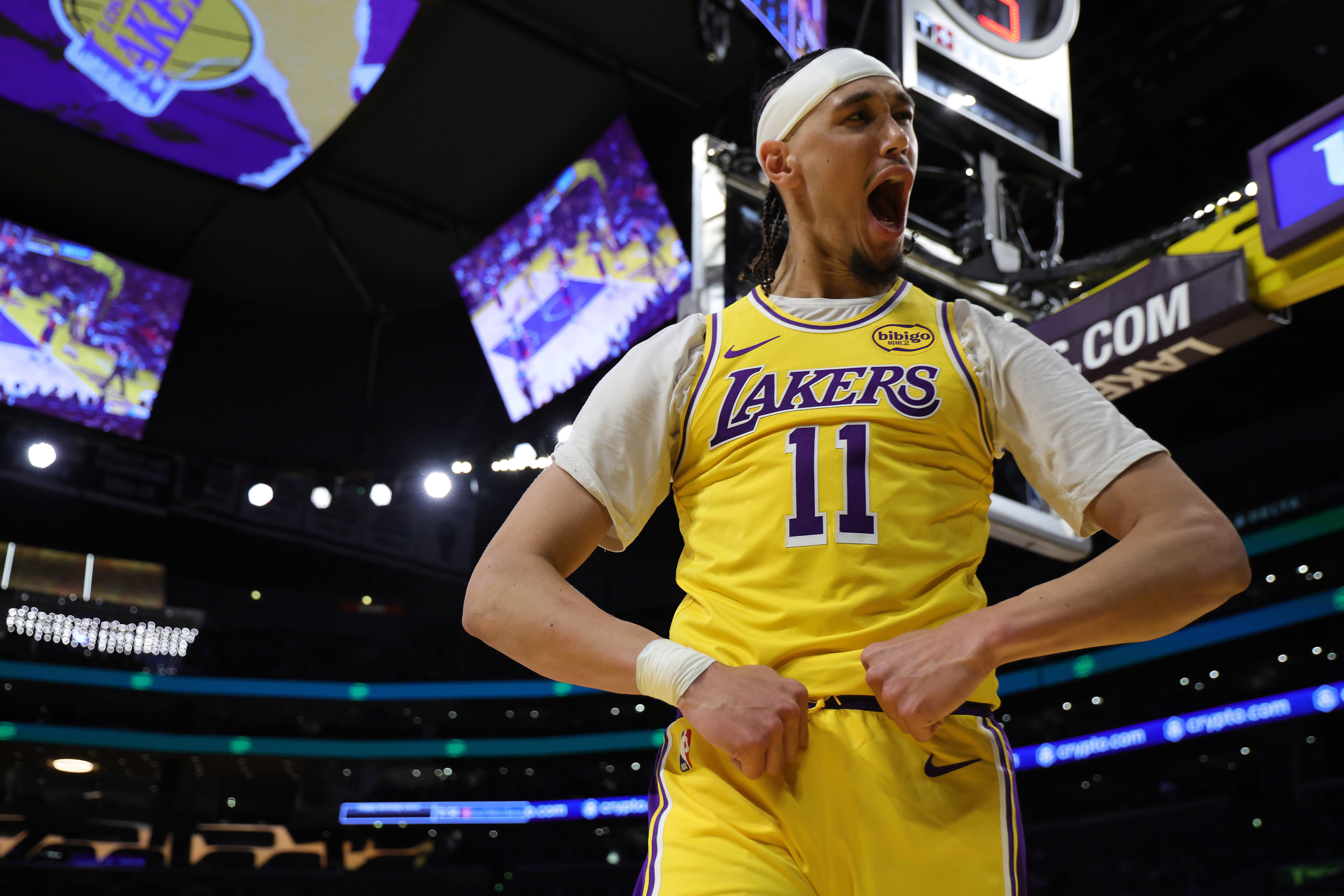
Hayes had become a notable piece for the Lakers after the arrival of Luka Doncic in the lineup, developing into a trusted lob threat. The 7-foot forward showcased athleticism and a knack for finishing alley-oops stemming from Doncic’s exceptional passing. In a season that saw Hayes appear in 66 games with nine starts, he averaged 7.5 points, 4.1 rebounds, and 0.9 assists in 18.3 minutes per game, while shooting an impressive 75.6% from the field. Despite publicly expressing a desire to remain with the franchise, the Lakers’ offseason moves left Hayes with a diminished role.
The pivotal moment for Hayes’ status came with the Lakers’ acquisition of Kessler from the Jazz. The trade included two unprotected first-round picks, two first-round swaps, and a four-year, $130 million contract for Kessler, signaling him as the long-term center for the franchise. With Deandre Ayton expected to serve as the backup center, Hayes found his place in the rotation significantly reduced. Rather than tying up money for a third center, the Lakers allowed Hayes to enter free agency, where Utah quickly emerged as a strong fit and offered a more substantial contract than Los Angeles could extend.
For the Jazz, Hayes adds athletic depth to a developing, youthful roster, helping cushion the departure of Kessler while complementing the team’s core. He brings versatility to a frontcourt that aims to balance size, speed, and shooting in lineups designed for dynamic pick-and-roll action.
Even though Hayes’ on-court partnership with Doncic has ended, the two remain connected on the international stage. Hayes has completed paperwork to become a naturalized Slovenian citizen, making him eligible to represent Slovenia alongside Doncic in future international tournaments. Both players share a longtime agent, and there is potential for future national team appearances, including opportunities beyond the 2028 Olympics.
From a roster-building perspective, the Lakers still face questions in the frontcourt depth behind Kessler and Ayton. The new tandem gives Los Angeles a robust center pairing, addressing rebounding concerns that plagued the team last season. However, Hayes’ departure leaves the Lakers with a thinner third-string center options pool. The front office is expected to continue exploring veteran minimum signings and two-way contract opportunities ahead of training camp to bolster depth behind the established duo.
In summary, Hayes’ move to Utah marks the end of a specific Lakers-era pairing with Doncic and signals a shift toward a more definitive, long-term center arrangement in Los Angeles. As the team focuses on depth and versatility, the frontcourt reconstruction continues to unfold, with Kessler and Ayton set to anchor the rotation while the Lakers work to fill the remaining roster gaps.