Shortly after the trade was announced, Herro sparked attention during a livestream, discussing a range of topics that drew scrutiny. In the stream, he expressed controversial views about history, questioning established timelines and events. Specifically, he stated that he does not believe in history as it is commonly presented, referencing milestones prior to the 1950s and even challenging the widely accepted date of Christopher Columbus’s arrival in the Americas. The remarks quickly became a talking point among fans and media alike, given their provocative nature and the broader discussion they touched on.
The conversation and ensuing discussions highlighted how public figures’ comments can generate strong reactions, especially when they touch on long-standing historical narratives. While some viewers saw the statements as a candid expression of personal skepticism, others criticized them for dismissing well-documented historical events. Regardless of interpretation, the episode underscored the importance of careful communication for players who occupy the intersection of sports, media, and public discourse.
Prior to this moment, Herro had endured a challenging 2025-2026 season with the Heat, dealing with injuries that limited his availability. He appeared in 33 games, averaging 20.5 points, 4.8 rebounds, and 4.1 assists per game, while shooting 48.0 percent from the field. These numbers reflected his continued value as a scoring guard and playmaker, even as durability concerns persisted.
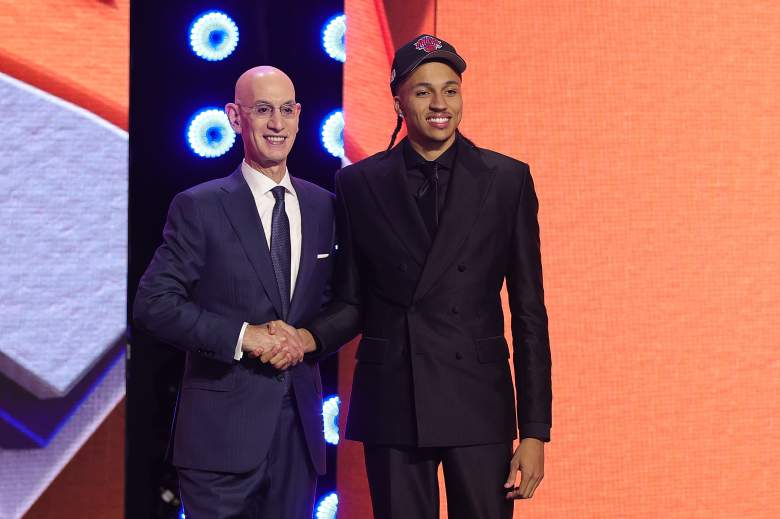
The trade itself was a monumental move, involving Giannis Antetokounmpo and veteran forward Bobby Portis ending up with Miami in exchange for Herro, Kel’el Ware, Jaime Jaquez Jr., Kasparas Jakucionis, and a substantial collection of future draft capital. The package included the No. 13 pick in the 2026 draft (which turned into Nate Ament), an unprotected 2031 first-round pick, an unprotected 2033 first-round pick, a swap option for a 2030 first-round pick, and a 2033 second-round pick. For Milwaukee, the deal signaled a willingness to reshape the roster around young talent and long-term assets while adding a guard who had previously earned Sixth Man of the Year honors.
For Herro personally, the move places him closer to his roots. He grew up in the Milwaukee area, specifically the Greenfield suburb, and this homecoming moment adds an emotional dimension to the transition. If he remains with the Bucks, he would join a younger core that includes players like Ryan Rollins, who emerged as a promising contributor in recent seasons. The fit could provide Herro with new opportunities to showcase his scoring craft and versatility within a system that values guard play and pace.
Beyond the initial trade, there has already been interest from other teams in acquiring Herro. Rumors and reporting suggest that the Detroit Pistons—among others—could explore a deal to bring Herro into their rotation. League insiders have noted that while Milwaukee may be open to listening to offers, they could also decide to keep Herro as a key piece of the deal’s outcome. This dynamic keeps Herro’s future in flux for the near term, with the possibility of additional moves shaping the Bucks’ strategy in the months ahead.
As the 2026 offseason progresses, the timeline remains fluid. The trade will become official on July 6, and until then, Holdup and negotiation with other teams could continue to influence Herro’s path. In the meantime, fans and analysts are watching how his role might evolve within Milwaukee’s system and how his presence could impact the Bucks’ ceiling for contention in a competitive Eastern Conference.
If Herro stays with Milwaukee, he would be teaming with a mix of young talent and championship experience, providing him with a platform to contribute as a scorer and playmaker while adapting to a new city, fanbase, and coaching staff. The broader narrative around the trade emphasizes the ongoing chess match that defines modern NBA front offices: balancing immediate win-now capabilities with long-term asset preservation and development.
In summary, Tyler Herro’s recent trade to the Bucks represents a significant shift for his career, with implications for team chemistry, market dynamics, and fan expectations. While the public discourse around his remarks sparked controversy, the focus for teams and players now centers on performance, health, and fit within a revamped Milwaukee roster. As the offseason unfolds, all eyes will be on how Herro integrates into the Bucks’ system, how the team leverages its accumulated draft capital, and whether further moves reinforce Milwaukee’s bid for sustained success in the coming seasons.