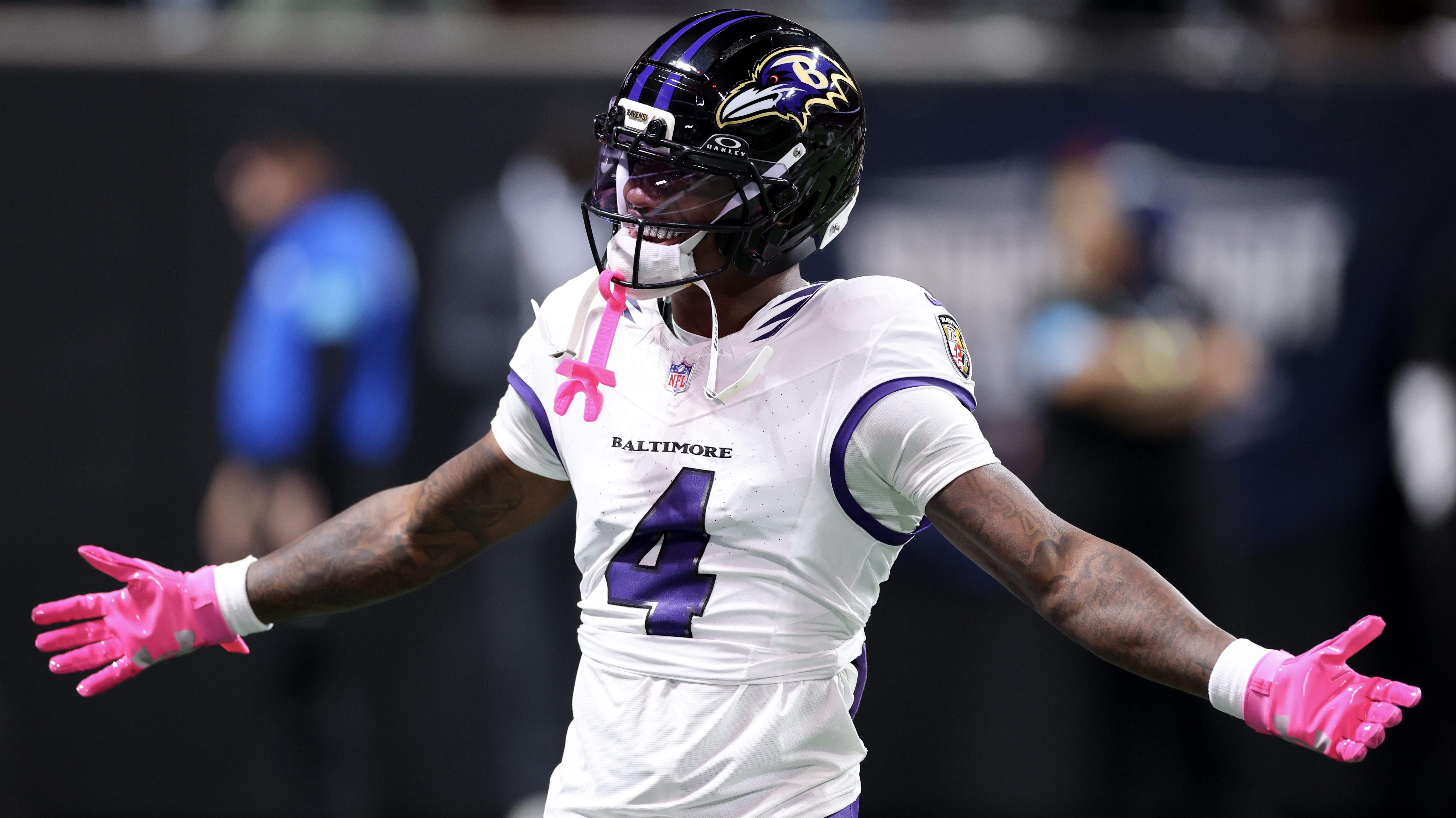
Derrick Henry didn’t try to sugarcoat the Baltimore Ravens’ problems on the ground after a historically poor rushing performance against the Los Angeles Chargers on Monday Night Football. In Baltimore’s 23–20 loss at M&T Bank Stadium, Henry managed just 10 yards on 10 carries.
Asked about his numbers after the game, the two-time NFL rushing champion responded, “What did you just say to me? How many rushing yards did I have? It weren’t working. Got to be better.”
Henry was equally direct when asked what the Chargers had done to limit Baltimore’s rushing attack. “Not letting us run the ball. We wasn’t efficient enough to run the ball. They were better than us,” he said.
Asked whether the trouble stemmed more from the Chargers’ defense or the Ravens’ own execution, Henry answered, “Everything. We’re just not doing a good enough job to be efficient in the running game. 16 total yards, there’s a clear explanation.”
He ended the exchange with a pointed remark: “I don’t mean to be rude but y’all are asking questions I think you all know the answer to.”
## Henry’s Two Touchdowns Couldn’t Hide a Difficult Night
Henry scored both of Baltimore’s touchdowns, but the two trips to the end zone couldn’t disguise how much the offense struggled to run the ball. He recorded negative yardage on his first five carries: two yards, two yards, no gain, two yards for a touchdown, and minus three yards. That left him with minus-one yard on those five attempts.
Baltimore’s rushing output was especially poor in the first half. The Ravens gained no rushing yards before halftime, the fewest in a first half in franchise history. Henry was hit at or behind the line of scrimmage on four of his five first-half carries.
His final total—10 yards on 10 carries—was even more striking alongside his 24 yards after contact. That figure means he averaged minus-1.4 yards before contact per carry, a sign that he had little room to build momentum.
## Ravens’ Run-Game Problems Go Beyond Henry
Henry’s performance came amid broader issues for Baltimore’s offense. The offensive line has struggled to create space, making it difficult for him to find running lanes before defenders reach him.
The absence of injured dual-threat quarterback Lamar Jackson has also affected the ground game. Jackson’s ability to run can force defenses to account for him, potentially leaving fewer defenders available to focus on Henry. With Jackson sidelined, opponents have been able to concentrate more heavily on stopping the Ravens’ veteran running back.
The fit between Henry and first-year offensive coordinator Declan Doyle’s schemes has also been a concern. At times, the play calls have not put Henry in advantageous situations; at others, the offense has made it easier for defenses to anticipate when he will get the ball.
Henry is 32 and has carried a heavy workload over 11 punishing NFL seasons. While the Ravens’ blocking and offensive approach contribute to his struggles, his latest performance has also raised questions about whether he has lost some of the burst that once made him a dangerous breakaway runner.
Baltimore’s run-game difficulties have several contributing factors, and the loss to the Chargers offered little evidence of an easy fix.