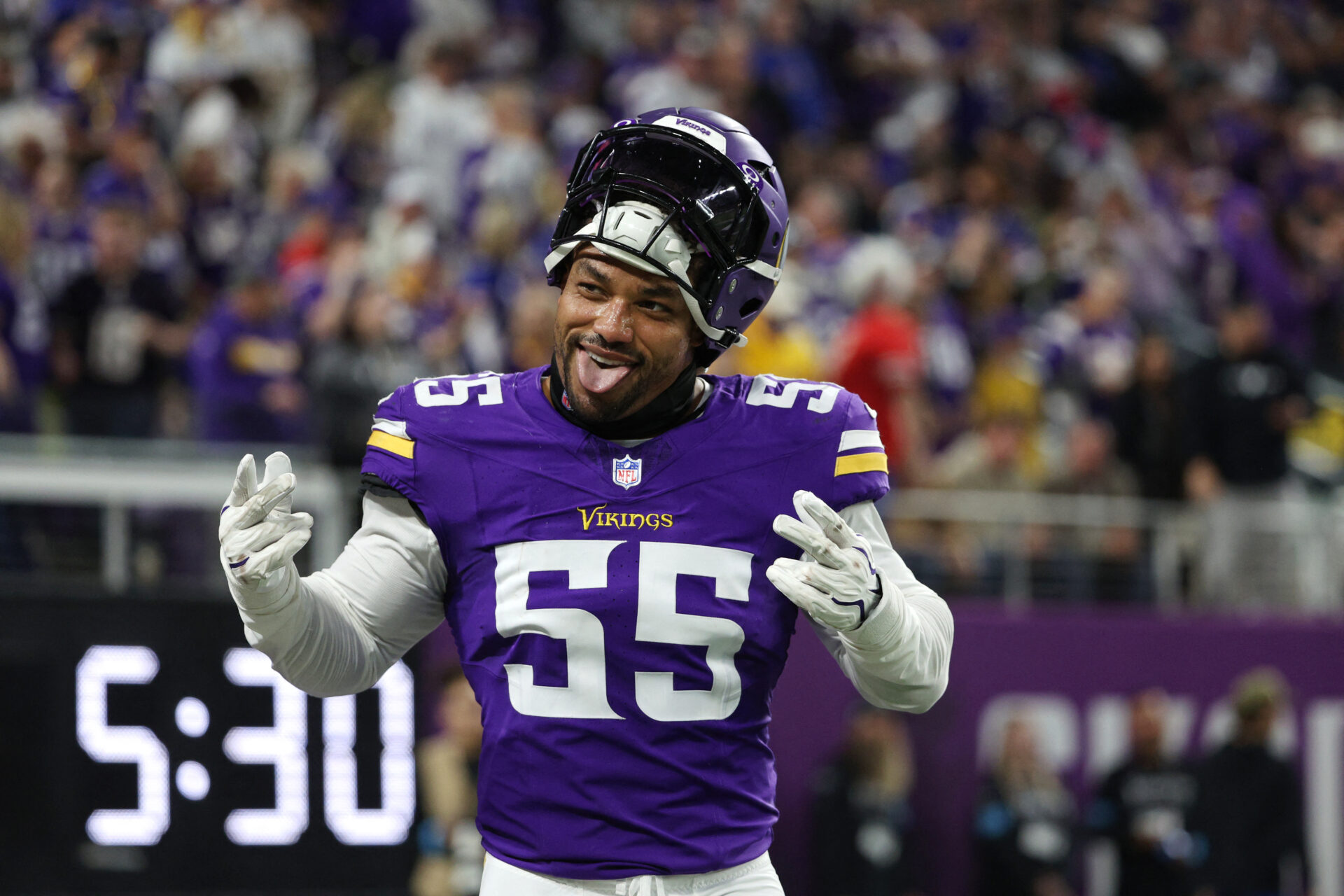
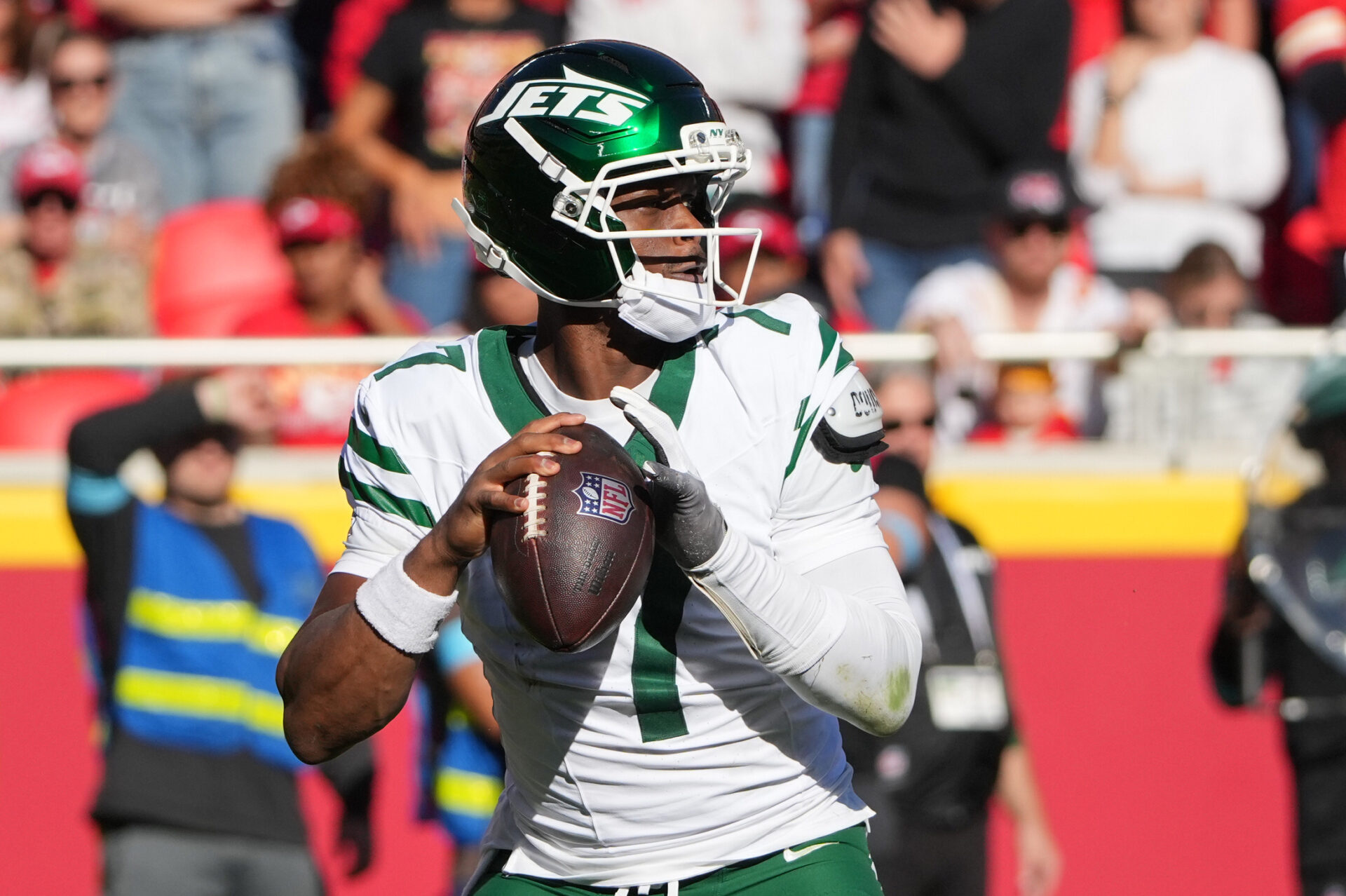
The New York Jets lost starting quarterback Geno Smith late in the first half of their Week 10 game against the Buffalo Bills after he was hit by two Buffalo defenders. The play looked forceful and drew attention, but a CBS rules expert said the hit was legal.
Even so, the collision was the kind of moment that could lead viewers to expect a penalty. Jets head coach Aaron Glenn appeared to share that view. Before heading to the locker room at halftime, he spoke with the officials about the play and other calls from the first half.
One possible subject of the discussion was a tackle on Jets receiver Garrett Wilson near the sideline. Wilson was taken down out of bounds, but no flag was thrown. The contact on Smith may also have been part of Glenn’s conversation with the officials.
The sequence raised questions about how the same play might have been judged if it had involved a high-profile quarterback such as Buffalo’s Josh Allen. Glenn appeared to suggest that a similar hit on Allen would have drawn a flag. That is a difficult possibility to dismiss, given how severe Smith’s collision looked, although the CBS rules expert’s assessment was that the contact itself was clean.
## A forceful hit, but no penalty
Smith’s injury came at a critical point in the game, with the Jets losing their starting quarterback before halftime. The two defenders’ contact sent him out of the contest, and the visual impact of the play made it easy to understand why Glenn sought an explanation from the officials.
Still, appearance alone does not determine whether a penalty should be called. The rules expert’s assessment that the hit was legal provides important context: the play may have looked dangerous without meeting the criteria for a foul. The absence of a flag was therefore consistent with that interpretation, even if Glenn believed the officials should have viewed it differently.
The argument about whether Allen would have received a different call is also shaped by the quarterbacks’ circumstances entering the game. Smith and Allen had each thrown 12 touchdown passes. Allen had six interceptions, while Smith had three. Those numbers made their passing performances comparable in some respects, even though the teams were having very different seasons.
Buffalo came into the game with a 7–2 record, while New York was 2–7. That contrast could influence how observers view Glenn’s complaint, but it does not settle whether the officials made the right decision on Smith’s hit. A team’s record does not change the rules governing contact with a quarterback; the question is whether the play itself warranted a penalty.
## Another hard hit after halftime
The officials’ handling of the contact was also notable later in the game. During the second half, rookie quarterback Cade Klubnik took a similarly forceful hit that was also considered clean. That play did not draw a flag either.
The two hits offered another point of comparison for the no-call on Smith. Both were described as brutal-looking but legal, and neither resulted in a penalty. That consistency supports the view that the officials did not treat the contact on Smith differently from the later play involving Klubnik.
For Glenn, however, the first-half sequence included more than one potential concern. The hit on Smith ended his quarterback’s day, while Wilson’s tackle out of bounds offered another reason to approach the officials. His conversation at halftime reflected those frustrations, though it did not change the calls.
In the end, the central distinction was between a hit that looked severe and a hit that violated the rules. The collision left Smith unable to continue, and Glenn clearly wanted the officials to consider whether a flag was warranted. But the rules expert judged the play clean, and the later hit on Klubnik also went unpenalized.