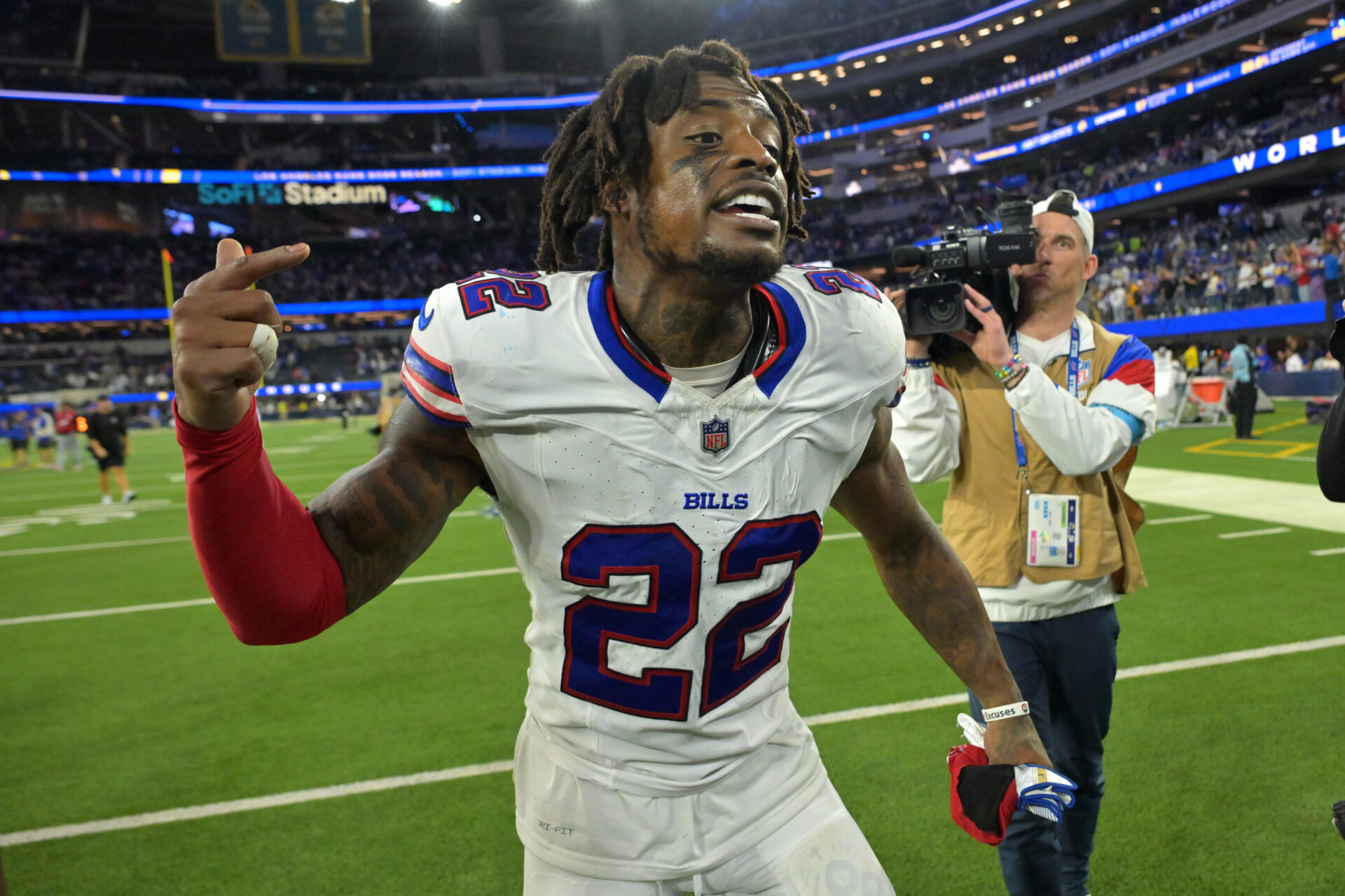
During the play, Stafford’s fumble provided Collier with a clear opportunity for a quick score. However, Collier did not surrender the ball, despite his 300-pound frame and the fact that he was roughly 35 yards from the end zone. He attempted a spin move to break through a tackle, but was brought down by Rams defender Jordan Whittington. Rather than handing the ball off to a teammate or conceding, Collier celebrated briefly after being tackled, having failed to secure the two points for his team.
As the play drew reaction from sideline observers, Greg Olsen commented on the moment, noting his teammates had suggested pitching the ball to preserve the possibility of two points. Cornerback Kei’Trel Clark had been closely pursuing Collier along the way, adding to the drama of the sequence. Social media captured the incident as well, with broadcasts and posts highlighting the moment and the players’ reactions.
In the immediate aftermath, Collier’s decision to keep the ball became a talking point among fans and analysts, who discussed whether a pitch-back or handoff could have extended the scoring opportunity. The sideline images showed Collier grinning after the play, contrasting with the broader view that the moment represented a lost chance to secure points in a tight game.
The game itself remained competitive, with the first half ending tied at 9-9. For a team fighting to climb from a 1-4 start, opportunities to capitalize on turnovers and create scoring chances are crucial, and the sequence sparked discussion about discipline and decision-making in high-pressure moments.
This incident sparked broader conversations about situational awareness during special-teams plays and the potential benefits of aggressive decision-making versus conservative play when a turnover occurs near the goal line. While the final outcome of the game would ultimately determine its significance in the standings, the moment underscored how a single sequence can become a focal point for evaluating strategy and player judgment in the NFL.