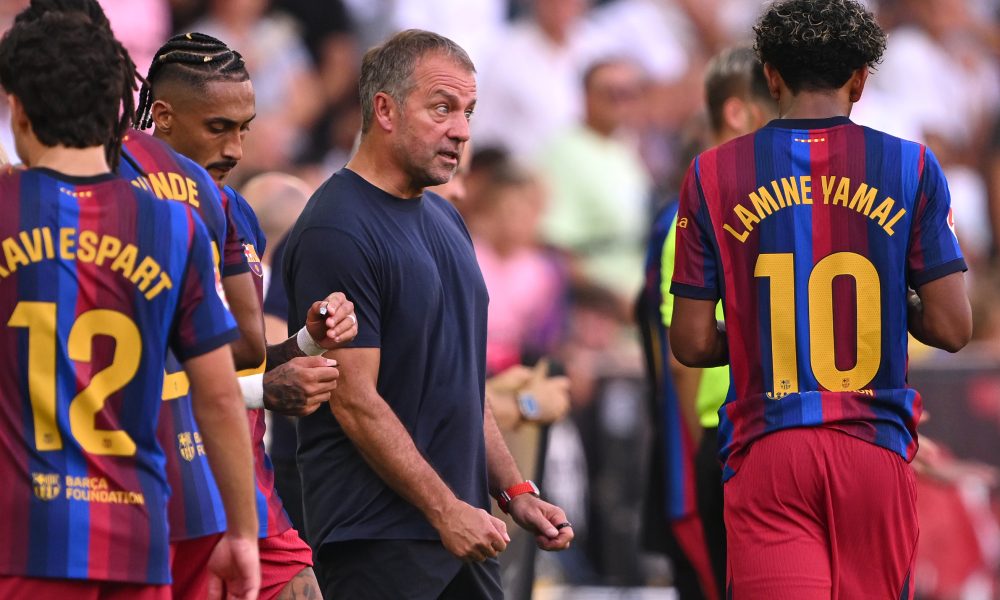
Former Barcelona forward Pau Victor recently shared insights into just how physically taxing Flick’s training can be. In an interview, Victor described Flick as “very intense” and admitted that he sometimes left sessions feeling dizzy. He recalled moments where he and teammate Gavi were seen lying on the ground with their legs in the air, confirming that the coach’s reputation for toughness is well earned. Victor’s reflections shed light on the level of effort Flick expects from players, even those already accustomed to top-level football.
Flick’s approach centers on relentless pressing and immediate reactions when the ball is lost. The German coach’s style relies on players closing down opponents quickly, maintaining correct positioning, and sustaining high-intensity runs throughout matches. This emphasis on fitness during training is tied to a broader tactical identity: capable, high-pressing football that can be repeated across an entire season. While this intensity suits Barcelona’s pressing game, the key question remains how to maintain these standards while managing recovery and rotation during a busy schedule that includes La Liga, the Champions League, and international duties.
For players like Gavi, whose style combines constant movement, aggressive pressing, and physical challenges, Flick’s system demands continued, sustainable effort. Raphinha, a captain-like figure in the squad, has been highlighted as a standout example of the team’s work rate and intensity, helping set the tone for others to follow. As Barcelona navigates a demanding campaign, the challenge will be keeping up the intensity without risking burnout, with recovery and lineups carefully managed to sustain performance across competitions.