In a Week 2 matchup against the Indianapolis Colts, the Kansas City Chiefs demonstrated a renewed, multi-faceted attack that left opponents rethinking how to slow them down. Chief quarterback Patrick Mahomes delivered a career-best performance on play-action passes, a development rooted in the team’s improved rushing efficiency and strategic game planning.
Rising to the moment, Kansas City leveraged the Colts’ defensive focus on Kenneth Walker III. After Walker’s standout Week 1 production, Indianapolis devoted substantial resources to slowing him down. In the first half of Week 2, Walker logged limited yardage, with six carries for 39 yards. The second half, however, showcased a different rhythm: Walker carried 24 times for 114 yards and caught six passes for 61 yards. This uptick came as the Chiefs leaned more into a two-pronged approach—bolstering the ground game and integrating play-action passing more frequently.
Mahomes emphasized the importance of the run game in setting up the rest of the offense. “We ran the ball, and when you can run the ball, the play-action opens up,” he explained after the game. This sentiment reflected a broader shift in Kansas City’s offensive philosophy, showing they can lean on the run to create favorable passing looks and keep defenses honest.
Colts defenders made a concerted effort to stop the Chiefs’ running attack in the second half, and Kansas City responded by turning that emphasis into a weapon for the passing game. The team’s play-action strategy blossomed as a result, with Mahomes finding success through reads that benefited from the additional fake handoffs and misdirection.
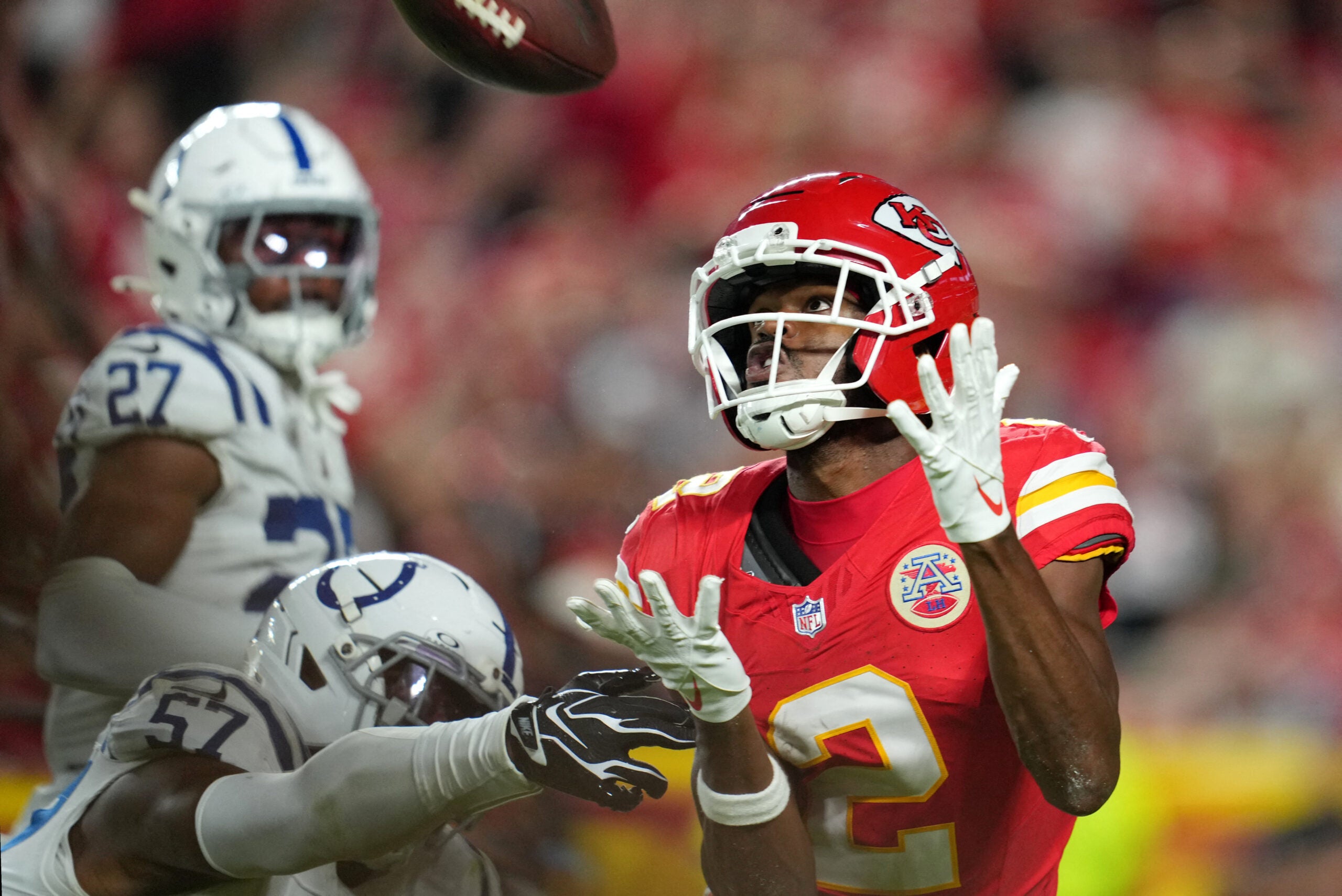
A standout stat from Week 2 underscored the effectiveness of the play-action approach. According to Next Gen Stats, Mahomes completed 14 of 17 play-action pass attempts, accruing 137 yards and two touchdowns on those plays. This marked a career-high efficiency for Mahomes on play-action, illustrating how the Chiefs converted the Colts’ focus on stopping the run into explosive passing opportunities.
The broader takeaway is that Kansas City showcased a versatile, dynamic offense capable of exploiting defenses that commit heavily to one facet of the attack. The combination of a productive ground game and a sharpened play-action passing game allowed the Chiefs to stretch the field and put pressure on opposing defenses in multiple ways. Mahomes also highlighted the complementary role of the running game and the offensive line, noting that their execution—drive through the line and sustain blocks—creates opportunities for both the run and the pass.
This performance signals a refined balance for Kansas City. In Week 1, the team demonstrated strong running production, and in Week 2 they built on that success by driving play-action concepts off the same foundation. The result is a more complete offensive scheme that can adapt to different defensive game plans, making it harder for opponents to predict how the Chiefs will attack.
Key takeaways from the Week 2 game include:
– An effective roadmap for using play-action to elevate passing efficiency, especially when the running game commands attention.
– A demonstrated ability for Kenneth Walker III to deliver substantial production both on the ground and as a receiver, imposing a dual-threat challenge on defenses.
– Mahomes’ versatility in progressions and reads, aided by improved timing with his targets and better distribution of the ball through play-action looks.
As the season progresses, the Chiefs’ offense appears poised to maintain this balance, leveraging a strong running attack to open up high-impact play-action opportunities. If they continue to integrate ground-and-pass creativity in this manner, Kansas City can sustain long, efficient drives and maintain a strategic edge over defenses that try to overload one phase of the game.
Note: This analysis summarizes Week 2 performances and does not rely on any external promotional content or third-party references.