Postgame remarks from Cowboys owner Jerry Jones drew immediate attention. After the win, Jones approached reporters in his customary spot and offered a line that appeared carefully prepared in advance. He said, “There is nothing more dangerous than an old man with money,” a remark that sparked conversations about whether it hinted at upcoming roster moves or strategic gambits to bolster the team during the current season. The quote was captured on video and circulated widely, fueling speculation about potential deals or plans involving the Cowboys’ personnel.
Context for those comments lies in the broader arc of Dallas’s season so far. The offense unleashed its potential against Washington, with quarterback Dak Prescott delivering four touchdown passes and wide receiver CeeDee Lamb racking up 153 receiving yards and two scores. That performance showcased the ceiling of Dallas’s passing game when everything clicks, including precise route-running, timing, and play design that allowed big plays to materialize downfield.
However, the flip side of the ledger remained concerning. The defense—while improving from Week 1—still exhibited vulnerabilities. The pass rush did not consistently convert pressure into sacks or disruptive plays, allowing Commanders quarterback notable mobility. The absence of a finish on several hurried attempts by the Cowboys’ edge rushers allowed Washington to extend plays and sustain drives, limiting the defense’s ability to tilt momentum in key moments.
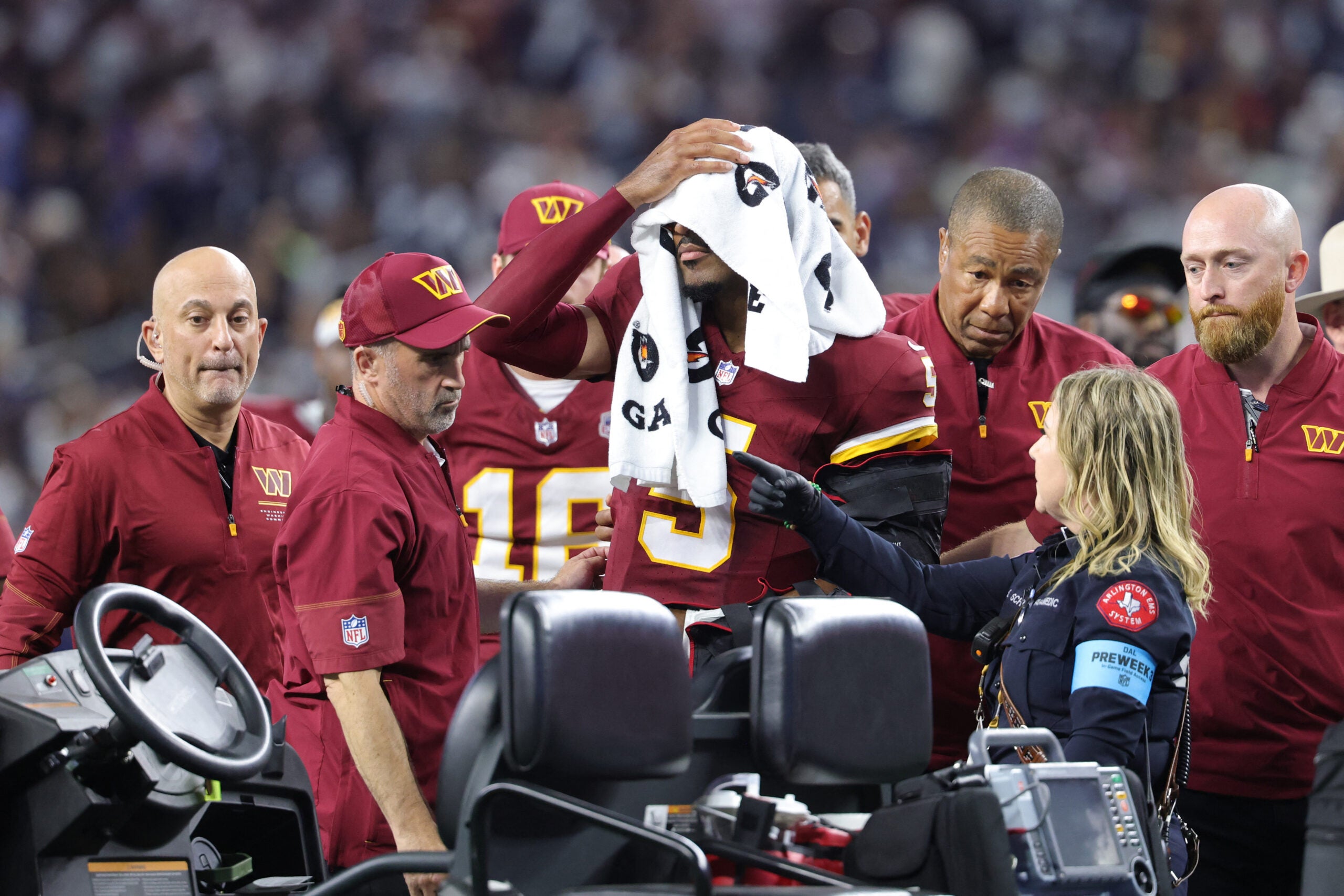
Injuries compounded the defensive struggles. Dallas faced a wave of health issues that tested depth and experience at multiple levels. Linebackers DeMarvion Overshown and Jaishawn Barham were unavailable or forced out of action at various points, while safety Malik Hooker remained out of the lineup. His replacement, PJ Locke, exited the game with an injury, and cornerback Cobie Durant also left the field. With these disruptions, the Cowboys leaned on reserves and rotational players, which often translates to a temporary mismatch against a more cohesive offensive unit.
The combination of offensive success and defensive instability has long been a focal point for the team’s leadership. Jones’s decision-making process—whether it involves pursuing established veterans to complement a younger, developing core or relying on internal development and depth—draws heightened attention whenever the roster faces midseason stress. In the early portion of the season, with the trade market typically quieter, any public insinuation from a team owner about “deals” or “money” can be interpreted as either a genuine signal of strategic intent or a motive to keep players engaged and opponents guessing.
Analysts looking for a path forward emphasize a few critical areas for improvement. First, the pass rush needs to translate pressure into tangible results—sacks, forced hurried throws, or aggressive run stops that disrupt rhythm. When opponents can extend plays, even a strong offense becomes harder to counter, as long drives sap energy and increase the chance of mistakes. Second, the Cowboys must bolster depth at linebacker and in the secondary to weather injuries without a noticeable drop in performance. The health of key contributors at multiple positions will determine how resilient the defense can be against capable offenses later in the season.
On the offensive side, the Dallas attack demonstrated how potent it can be when Prescott and Lamb are firing on all cylinders. The ground game also has to complement the aerial attack, providing balance that prevents defenses from concentrating resources exclusively on the pass. In high-scoring affairs, a complete, cohesive unit—one that minimizes self-inflicted mistakes, protects the quarterback, and maintains discipline in coverage—becomes the blueprint for sustained success.
The questions surrounding Jones’s postgame remarks raise the broader issue of how teams navigate midseason rosters and salary considerations. It is common in the NFL for owners and front offices to explore ways to accelerate a championship window, whether through shoring up key positions, extending veteran leadership, or acquiring players whose impact can be felt immediately. The timing of any potential move, the cost in draft capital, and the players involved will depend on a variety of factors, including market conditions, injury reports, and the perceived readiness of the current supporting cast.
Looking ahead, the Cowboys face a track of opportunities and tests that will reveal whether the roster can sustain high performance on offense while ironing out defensive lapses. If the defense can tighten its pass rush, improve in high-leverage situations, and stay healthy, Dallas could maximize the upside of its dynamic offense. Conversely, if injuries persist and the defense remains inconsistent, it may prompt more pronounced discussions about roster adjustments or strategic shifts to maintain competitiveness as the season progresses.
In any case, the juxtaposition of a high-powered offense and a vulnerable defense remains the central narrative for the Cowboys early in the campaign. The interplay between head coach, front office decisions, and on-field execution will determine whether Jones’s cryptic remarks translate into concrete moves or serve primarily as a talking point for fans and analysts. For fans and observers, the next few weeks will be telling as Dallas attempts to refine its identity and convert offensive brilliance into wins while building a more resilient defensive unit.