The board moves: three teams enter the top seven, last week’s leader drops out, and the defending champion slides despite a win. It may be aggressive, but if the data changes and the ranking doesn’t, what exactly are we measuring?
Just missing the cut
Los Angeles Rams: A tough drop from No. 1 to outside the top seven is explained by a 27-7 defeat, especially with a key injury to Myles Garrett looming over opponents. A quick response game against the Giants will be telling.
Cincinnati Bengals: Cincinnati beat Tampa Bay 33-27, but four Buccaneers turnovers did a lot of lifting. The defense looked retooled, yet the Burrow-Chase-Higgins offense was only “meh.” In a championship context, merely fine isn’t enough.
Houston Texans: Scoring 31 at home against Buffalo keeps Houston in the conversation, but allowing 36 points challenges the core premise. The defense was expected to create weekly margins, and Buffalo’s offense piled up 409 yards.
Chicago Bears: Chicago’s 59-point eruption against Carolina was electric, with 552 yards and 291 rushing yards. Still, giving up 37 points shows there’s more work to do, and the overall structure matters more than a single outburst.
7. Jacksonville Jaguars
Jacksonville handled a lesser opponent in Cleveland, 34-10, with Trevor Lawrence completing 18 of 23 passes for 245 yards, four touchdowns, and no interceptions. Through Week 1, advanced metrics place the Jaguars near the top of the league in offensive efficiency and robust defensively. The next test comes on the road at Denver, then New England, Cincinnati, London, and Houston. Denver will quickly reveal whether Jacksonville’s interior pass protection has improved or if the opener was a favorable matchup against Cleveland. Injury notes around the interior line remain a consideration, and staying healthy will be critical.
The 13-win baseline from 2025 plus a strong opener earns Jacksonville this spot over Cincinnati. Philadelphia and San Francisco get more trust when playoff games get challenging. A win in Denver would push this ranking further into meaningful territory.
6. Philadelphia Eagles
Philadelphia edged Washington 24-22 in a game that felt uneven at times. Jalen Hurts threw for three touchdowns, Saquon Barkley contributed a solid 83 rushing yards, but the offense managed only 10 first downs, and Week 1 offensive efficiency dipped. The upcoming schedule includes visits to Tennessee and Chicago before hosting the Rams and facing Jacksonville in London. Tennessee may offer a chance to tidy things up; Chicago could demand points. The Rams and Jaguars will test whether Sean Mannion’s offense can function under real pressure.
The line is shifting: an injury to Landon Dickerson at left guard adds to the challenge of replacing A.J. Brown’s output. The defense remains capable, but January’s pressure heightens the stakes. Philadelphia moves up because it won and because several teams above it displayed more concerns. The floor is higher than Jacksonville’s, and the Week 1 performance was not as convincing as San Francisco’s. This feels like the right neighborhood for now.
5. San Francisco 49ers
San Francisco did not sneak past last week’s top team. They beat the Rams 27-7, rushing for 174 yards and holding L.A. scoreless after halftime. Brock Purdy tossed three touchdowns, and the team sits around the top in offensive and defensive EPA rankings. The schedule now sends Miami, Arizona, and Denver to Santa Clara before a test in Seattle. The overseas matchup with Seattle will be a significant barometer for the NFC West’s trajectory.
Depth remains a concern; De’Zhaun Stribling is headed to injured reserve with an ankle injury, thinning a deeper skill group. Veteran-heavy rosters can be vulnerable when supporting players drop. Still, San Francisco controlled the Rams, protected Purdy, and displayed a balanced attack without forcing Christian McCaffrey into an emergency plan. One strong opener is not a full-spread case, but it’s enough to move them back into the conversation.
4. Seattle Seahawks
Seattle’s 13-10 win over New England was far from pretty but revealing. After a rocky start with Sam Darnold leaving early due to an injury, Drew Lock stepped in and delivered 187 yards and a touchdown while Seattle’s defense intercepted Drake Maye three times. The question remains: how long can Lock operate efficiently if Darnold isn’t ready to return? The team has to survive upcoming tests against Arizona, Washington, the Chargers, and the 49ers. Seattle’s defense remains elite, but the offense must provide more consistent support if the playoffs demand it.
The reigning champions slide slightly not due to performance, but due to quarterback availability. If Darnold returns quickly and plays effectively, Seattle can regain ground quickly.
3. Kansas City Chiefs
Kansas City answered questions by beating Denver 31-10. Kenneth Walker III erupted for 173 rushing yards, and Patrick Mahomes accounted for three touchdowns. The defense ranked highly in EPA allowed in Week 1, and the offense showed new depth in the backfield. The schedule offers a stream of tests: Indianapolis at home, then trips to Miami and Las Vegas before the bye, followed by Kansas City’s usual slate of tough opponents. The caution remains in the passing game, where Mahomes averaged 6.8 yards per attempt and no pass traveled more than ten yards through the air. A healthy Mahomes paired with a potent rushing threat is a scary combination.
2. Baltimore Ravens
Baltimore opened with a strong win over Indianapolis, 41-23. Lamar Jackson threw for 324 yards, Derrick Henry ran for 144 yards with three scores, and Zay Flowers looked like a impact receiver before leaving with a hamstring issue. The Ravens sit near the top in offensive EPA per play and strong defensively. The upcoming schedule features New Orleans, a trip to Rio for a game against Dallas, and showdowns with Cincinnati, Buffalo, Jacksonville, and the Chargers that will matter in the long run.
The receiving corps is thinning, with Flowers’ status uncertain and Ja’Kobi Lane expected to miss time with a fracture. The line showed some protection issues against Indianapolis, even with strong run blocking. If the defense holds and the offense stays balanced, Baltimore can sustain this level.
1. Buffalo Bills
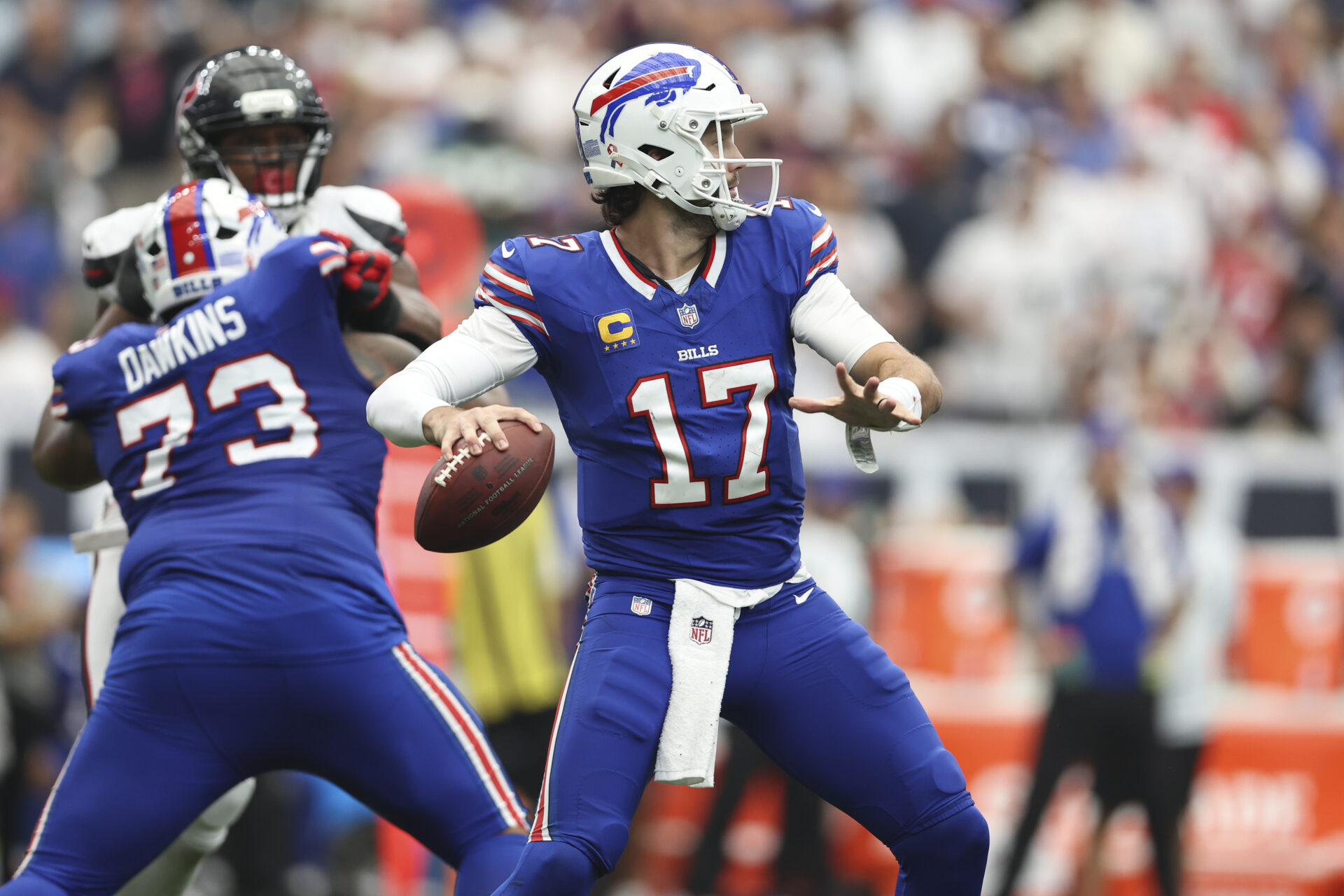
Buffalo opened with a decisive win in Houston, 36-0 on a Houston defense that had been strong in EPA allowed last season. Josh Allen threw for 334 yards, four total touchdowns, and drove a 96-yard go-ahead march. The offense showed explosive plays and resilience under pressure. The defense, though, allowed 31 points to the Texans, highlighting a potential vulnerability for a championship pursuit. The schedule includes Detroit, the Chargers, and New England in the near term, followed by a challenging stretch against Baltimore, Kansas City, Seattle, and others later in the season. The balance between offense and defense will determine how far Buffalo can go.
Summary: Week 1 provided a snapshot of a top-tier field capable of winning in multiple ways. The ranking reflects both proven strength and signals to monitor in the coming weeks: quarterback health and efficiency, interior line play, and the ability of defenses to close out games. The season remains long, and early strides, even if imperfect, establish baseline expectations for a championship-caliber run.