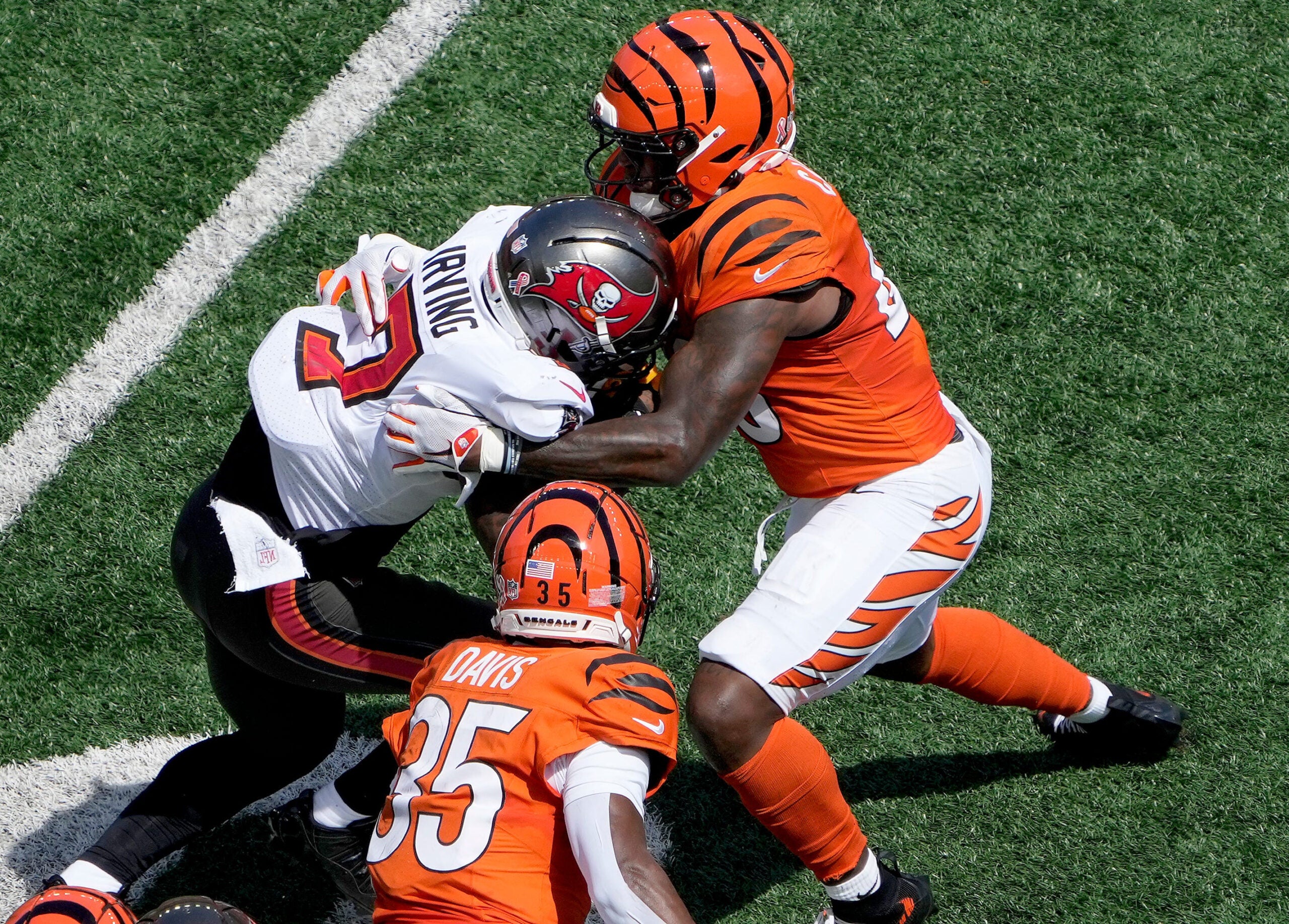
In the Week 1 matchup, Bain recorded minimal impact on the stat sheet. Pro Football Focus credited him with zero pressures on 24 pass-rush snaps, while Next Gen Stats tallied one pressure on the same number of attempts. By the tape, that pressure is on the lower end of the spectrum. Regardless of the grading method, Bain’s absence of disruptive plays contributed to a defeat the Buccaneers will want to move past quickly.
Head coach Todd Bowles acknowledged Bain’s quiet day publicly. Asked about Bain Jr. during Bowles’ weekly segment, he noted that there wasn’t a high level of action from the rookie’s side and stressed that the defensive line must operate as a cohesive unit. “Not a lot of action. Not a lot of action,” Bowles said, emphasizing that the line needs to rush in concert and iron out the early-season kinks. This comment underscored a broader concern: individual talent must translate into synchronized team performance.
The discussion around the defensive line’s effectiveness centers on both personnel and scheme. A successful pass rush hinges on players working in tandem—utilizing proper gaps, angles, and responsibilities to pressure the quarterback. When players attempt to win battles in isolation, the unit can fail to create sustained pressure or even allow blockers to slow down the rush, undermining the design of the play.
The Bengals’ game plan compounded the challenge. Bengals quarterback Joe Burrow operated with one of the fastest release times in Week 1, averaging 2.54 seconds per attempt. That pace kept the ball out of the rush’s hands and limited the window for disruption. With the league average around 2.75 seconds, Burrow’s quick decisions further complicated the Buccaneers’ chances of generating pressure, regardless of individual performance.
Despite the early setback, there is a clear path for improvement. Bain and the rest of the Buccaneers’ defensive front have to find ways to improve communication, align their rush lanes, and execute as a unit. This approach is essential not only for Bain’s development but for the entire rotation, as multiple players contribute to a cohesive pass rush. When the group can synchronize their efforts, the unit becomes more than the sum of its parts.
Looking ahead, the Buccaneers will likely emphasize a more coordinated rush approach, focusing on pairing speed with leverage and exploiting the quarterback’s footwork and tendencies. By refining the timing of stunts, twists, and pressure packages, the defensive line can increase its effectiveness even against offenses that prioritize quick release and decisive line play. While Bain’s Week 1 results were not ideal, the maturation of the unit remains a priority, and the team believes in the potential of its pass rush to deliver more pressure as the season progresses.
For fans and analysts, the key takeaway is that a strong pass rush requires more than individual talent. It demands a unified front where every lineman understands his role within the scheme and contributes to a collective effort. If the Buccaneers can translate practice-field concepts into game-day execution, Bain’s development will accelerate, and the pass rush will begin to meet its potential. The early-season challenges are instructive, and addressing them will be crucial as the team aims to improve its performance in upcoming matchups.