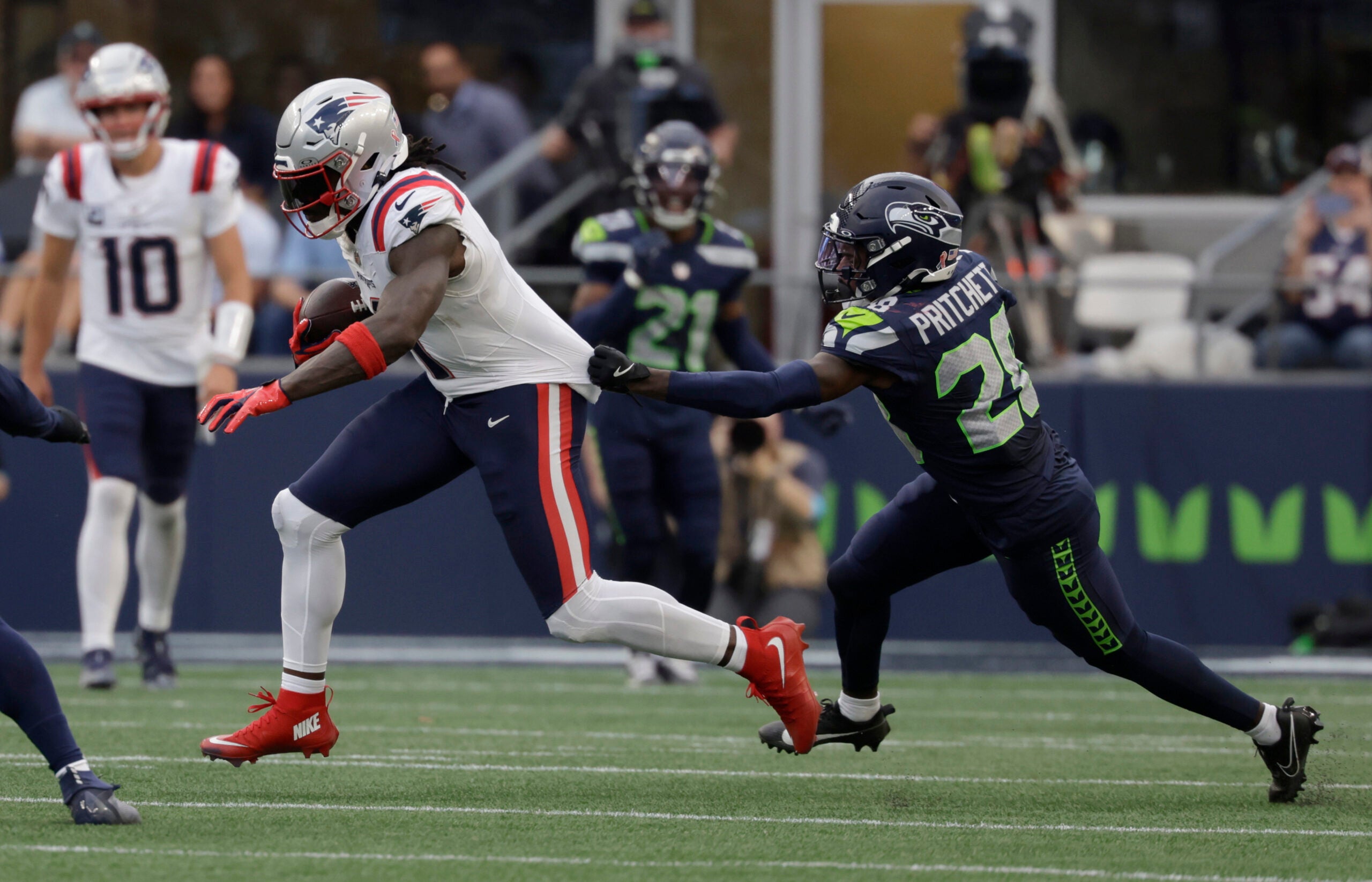
A.J. Brown’s first game with his new team did not go as planned, and the results have echoed through the football community. After leaving the Philadelphia Eagles, Brown joined the New England Patriots, and his debut was marked by struggles. The Patriots lost to the Seahawks, and Brown left the game with an ankle sprain. The performance on the field drew sharp commentary from fans and analysts who followed Brown’s career and the recent changes around the team he left behind.
Around Philadelphia, there was a sense of satisfaction in observing a public display of misfortune for a former star. Brown’s move, coupled with the early-season struggles of his new quarterback, Romeo Doubs, and the turnover-heavy play of Drake Maye, sparked conversations about whether Brown made the right choice in changing teams. The opening weeks of the season have been revealing, highlighting that even players who leave successful situations may not always find instant stability in a new environment.
Expanding the discussion beyond Brown’s debut, the broader conversation centered on the quarterback at the center of the Eagles’ plans: Jalen Hurts. Hurts has been the subject of intense debate this offseason, with critics scrutinizing his ability to throw downfield and connect with receivers on deep routes. The ongoing discussion about Hurts’ long-term role in Philadelphia includes the question of his next contract, since quarterback extensions have become a focal point for teams aiming to lock in leadership for the foreseeable future.
Industry observers have noted a pattern in how the Eagles handle negotiations. Historically, the organization has tended to avoid negotiating extensions during the season. This approach often pushes such discussions into the offseason, allowing front office executives to evaluate the team’s performance, the player’s health, and the market landscape without the pressure of a live campaign. As a result, fans and analysts watch carefully for signs about how the team values Hurts and whether they anticipate locking in his services at a long-term rate.
The market for quarterbacks has been reshaped by recent agreements, with several peers in the league signing substantial contracts that set new benchmarks. When a player at Hurts’ position signs a high-value deal, it naturally nudges the ceiling higher for comparable players. For Hurts, this means that teams like the Eagles may face mounting pressure to reach a favorable agreement that reflects both his on-field contributions and the evolving market norms.
From a performance perspective, Hurts’ course in recent weeks has provided a counterpoint to the criticism aimed at him this offseason. If he continues to produce strong results and demonstrate leadership on the field, his case for a long-term commitment from the Eagles only strengthens. The early-season struggles of Brown in his new setting serve as a reminder that football is a team sport, and one player’s transition can ripple through related discussions about a neighboring star and the overall strategy of the organization.
As the season progresses, several key questions will remain in the room for the Eagles’ front office: Will Hurts’ sample size and trajectory justify a major commitment, and how will the team balance short-term competitiveness with long-term salary cap considerations? The answers will shape not only Hurts’ future in Philadelphia but also the franchise’s ability to maintain a cohesive roster around its quarterback.
Meanwhile, Brown’s situation continues to be a talking point about player movement, expectations, and the realities of switching teams at the professional level. His health will be a factor in assessing his immediate impact and potential return to form with his new team. For fans who followed Brown’s tenure with the Eagles, the current chapter serves as a reminder of how quickly narratives can shift in the NFL—from breakout performances to questions about fit and fit under new systems.
In summary, Brown’s debut with the Patriots and Hurts’ ongoing contract situation have combined to create a moment of reflection for Philadelphia’s fan base and the broader league. The key takeaway is that a high-profile move or a high-stakes contract discussion does not guarantee instant clarity. On the field, performance, health, and team dynamics will continue to shape the storylines as the season unfolds. The Eagles’ path remains focused on evaluating Hurts as their quarterback of the present and future, while Brown’s topic of transition underscores the unpredictable nature of professional football. All eyes will stay on how the team navigates these questions, balancing immediate results with long-term planning.