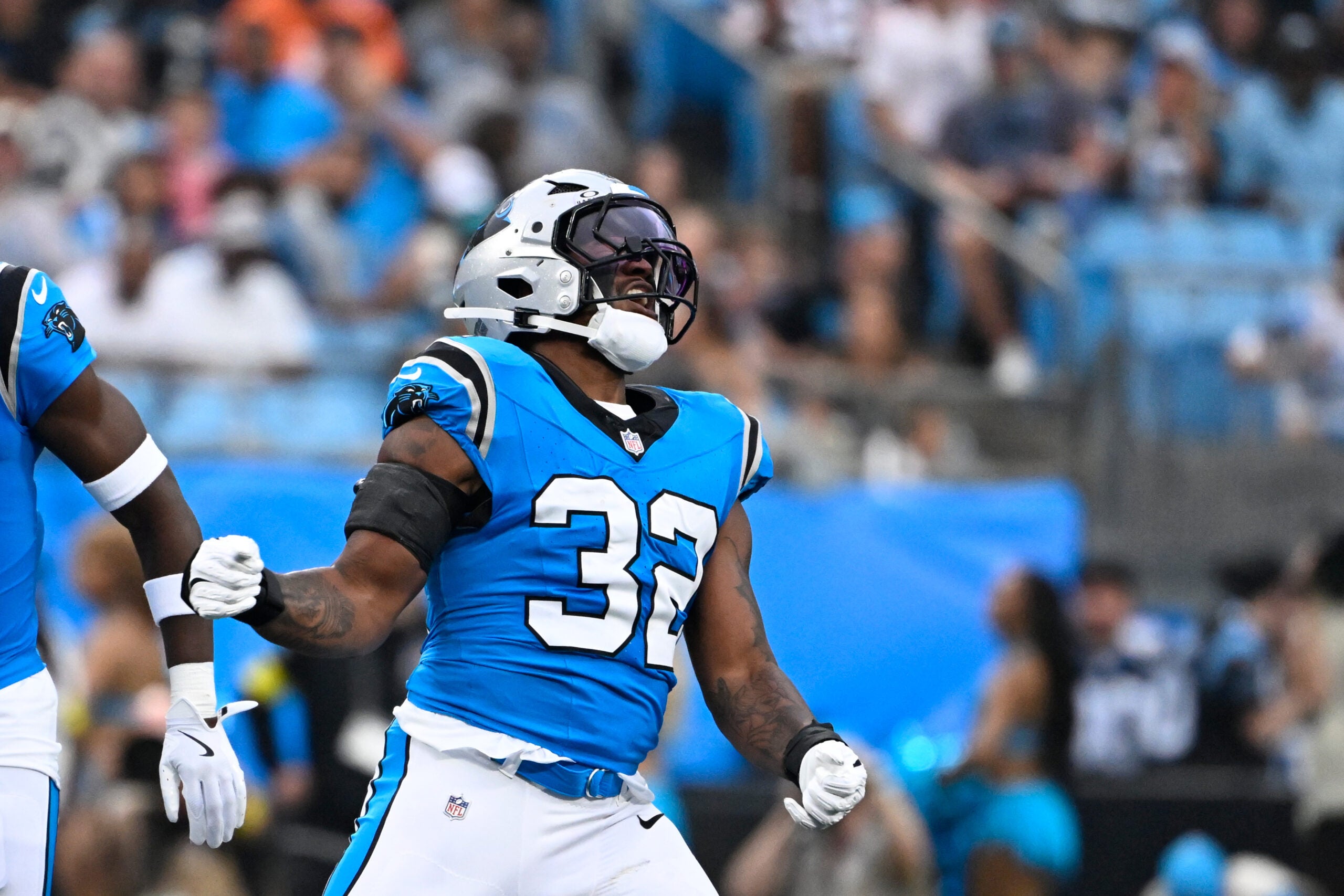
What Luter brings to Las Vegas
Luter has accumulated 27 career NFL appearances, including 17 games in the most recent season. He started three of those games and possesses a modest, but tangible, résumé: a fumble recovery, a forced fumble, a tackle for loss, a pass deflection, and 38 total tackles. While those numbers don’t scream star power, they reflect a player who has logged meaningful NFL action and can contribute in a variety of ways when called upon. For a Raiders defense that could use more reliable depth behind its top cornerback—Eric Stokes—the addition of a veteran option with NFL grind and familiarity with professional schemes can be a valuable asset.
The current cornerback landscape in Las Vegas
Las Vegas enters the season with several young players expected to see significant playing time, including fourth-round pick Jermod McCoy and fifth-round pick Hezekiah Masses. In addition to those rookies, Darien Porter enters his second year with the club, having transitioned from receiver at Iowa State to cornerback. Porter brings athletically appealing traits, but his development path remains ongoing. The group also features Stokes as the clear CB1, but the Raiders recognize the need for more competition and depth behind him. Luter’s arrival is aligned with that objective: he provides a veteran, NFL-tested presence that can help stabilize the back end of the defense and push younger players to grow.
Assessing the on-field fit
Luter’s path to earning a steady role is unlikely to involve stepping straight into a starting assignment. Instead, the Raiders will likely deploy him as a seasoned option who can absorb playbooks quickly, contribute in nickel and dime packages, and serve as a mentor to younger corners who are still learning the ropes of NFL life. The goal is to bring a steadying influence to a room that is still forming its identity. While Luter may not be penciled in as CB1 or CB2 right away, his familiarity with professional routes and covering diverse schemes gives Las Vegas a resource they can lean on during practice and in situational matchups.
The numbers tell a nuanced story
Luter’s NFL track record shows promise but also exposes why a team might be cautious about immediate dependability. In the most recent season, he appeared in 17 games but recorded only seven games with defensive snaps in coverage. Across 169 coverage snaps, he was targeted 15 times and allowed 10 receptions for 142 yards and a touchdown. Of those targets, 12 were deemed catchable. While the sample size is modest, these figures suggest there is room for refinement, particularly in the consistency of defending routes and closing space on receivers. Yet, there is also value in tracing a pattern: a confident cornerback who has endured the rigors of the league and can translate college and early pro experiences into productive NFL snaps when required.
The strategic purpose of a waiver claim
No. 1 waivers are valuable because they provide a team with first crack at available players who have cleared other teams’ rosters. The Raiders aren’t pursuing this claim as a speculative overnight fix; they are banking on a player who can contribute in a way that aligns with the franchise’s broader roster-building plan. This emphasis on depth—not just upgrading the top-line starter—reflects a careful approach to assembling a roster that can weather injuries, performance fluctuations, and the unpredictable ebbs and flows of a long NFL season.
What this move signals for the Raiders’ roster-building approach
– Depth over immediate star power: The Raiders aren’t counting on Luter to immediately assume a starting role. The emphasis is on adding a veteran who can contribute in specific packages and provide a steadier presence in the second and third levels of the defense.
– Experience as a teaching tool: A player with NFL game experience can help accelerate the growth of younger corners by sharing insights from the field, practice habits, and route recognition. This can shorten the learning curve for rookies and sophomores who are still adapting to professional schemes.
– Long-term roster flexibility: By adding Luter, Las Vegas preserves options as cuts approach and rosters are trimmed to the final 53. Some players claimed on waivers may move to the practice squad, while others could be added through waivers or free agency later in the season.
What to watch going forward
– Roles and snap counts: Observe how the Raiders rotate Luter into the defense. Will he see immediate action in subpackages, or will he primarily contribute during practice and work his way into game plans?
– Development of young corners: Porter’s growth, McCoy’s and Masses’ adaptation to NFL speed, and how Luter’s presence influences their technique and confidence will be telling indicators.
– Injury and game-day impact: Depth at cornerback often becomes most valuable when injuries occur. Luter’s availability and performance in those moments will test the Raiders’ strategic calculation.
In summary, the Raiders’ waiver claim of Darrell Luter Jr. represents a thoughtful depth move aimed at strengthening a cornerback room that benefits from veteran guidance and NFL-tested adaptability. It’s a move that signals a measured approach to refining the roster, with the expectation that Luter can contribute when needed while the younger corners continue to develop under his watchful presence. This acquisition could prove meaningful as the season unfolds, particularly if it translates into more stability in coverage and better situational execution for Las Vegas’s defense.