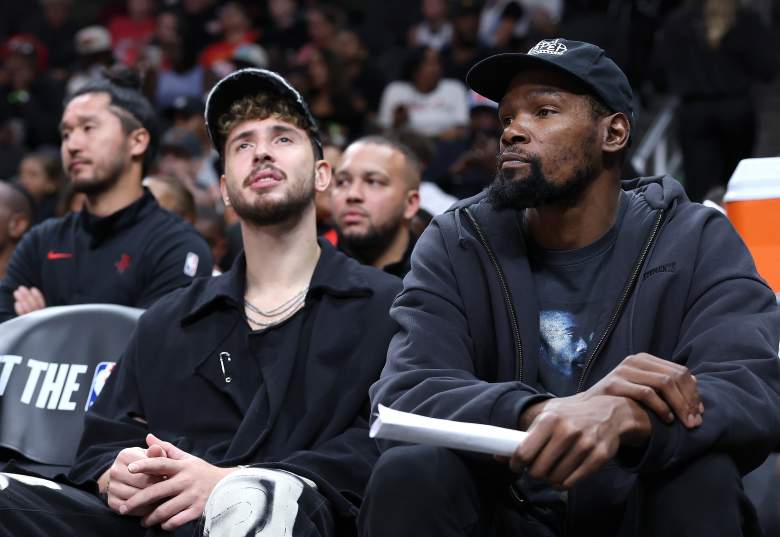
Durant intensified the discussion with a recent comment when asked to name his best team ever. He said, “Looking at the straight roster and nothing else, I would say Brooklyn. Kyrie, James, Blake Griffin, Paul Millsap, Patty Mills. We had names on that team if we’re looking at straight paper. I know people are going to say the Warriors, but if you look at the team at that time, Steph was an MVP, but Klay and Draymond didn’t have the accolades at that time. They were like one-time All-Stars. These dudes I’m talking about had already completed their careers; they had all their accolades.”
Comparing the Brooklyn Nets of the early 2020s to the dynasty-era Warriors doesn’t align when looking at results. Brooklyn won one playoff series with Durant, Kyrie Irving, and James Harden, while Golden State captured two championships and would have contended for a third in three years had Durant remained healthy.
The central point of Durant’s argument is his challenge to the notion of superstar status for Klay Thompson and Draymond Green. Durant has enjoyed two superstar teammates in Brooklyn, which shapes his view of how teams are constructed and perceived.
Acknowledging Stephen Curry as a superstar and the best teammate he has played with, Durant also notes that Green and Thompson played pivotal roles in the Warriors’ rise to dominance, including the 2015 NBA Championship and the 2016 regular-season record of 73 wins. Durant’s statement about not placing Thompson and Green on the same tier as the top three players in his career is likely to stir more responses from Warriors fans. DeMarcus Cousins was also mentioned in discussions about contributors to the 2019 season, with some suggesting his impact was greater than that of Thompson and Green.
Durant’s dissatisfaction with Golden State may be influenced by social media and intense fan debates, areas where he has spent considerable time online. He has faced scrutiny over decisions to join Golden State, with some interpreting it as seeking easy championship opportunities. Additionally, tensions with head coach Steve Kerr have been noted, particularly around the period after Durant joined the Warriors and became a two-time Finals MVP.
Durant’s comments reflect an ongoing conversation about how “super teams” are defined and whether multiple star players on a roster equate to a historically dominant dynasty. His perspective underscores the broader debate about player legacy, team construction, and how fans evaluate greatness across different eras and franchises.