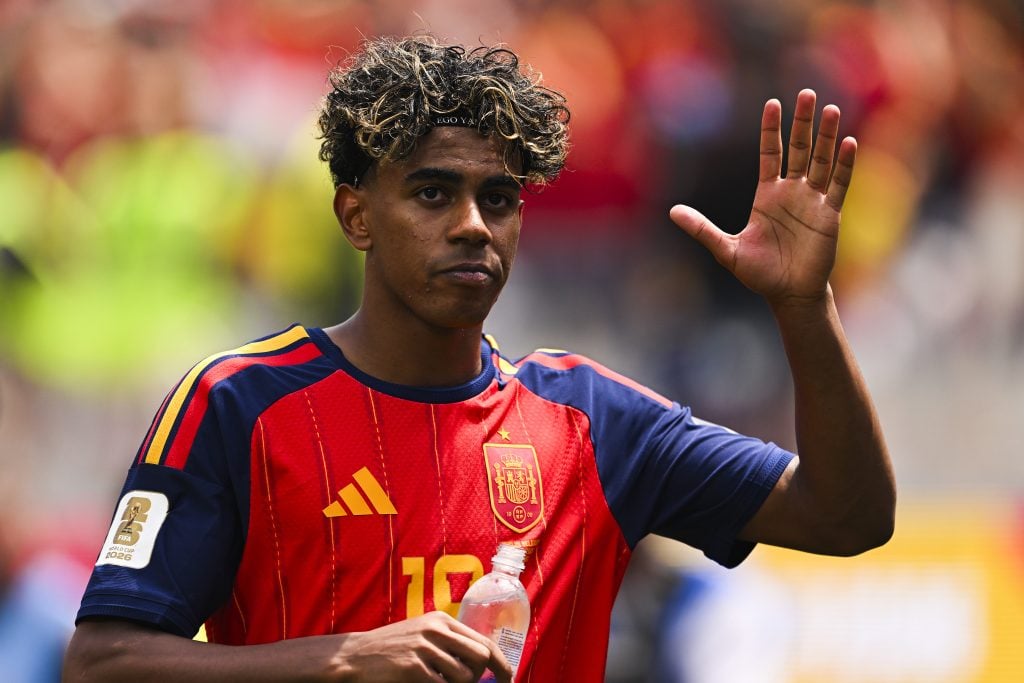
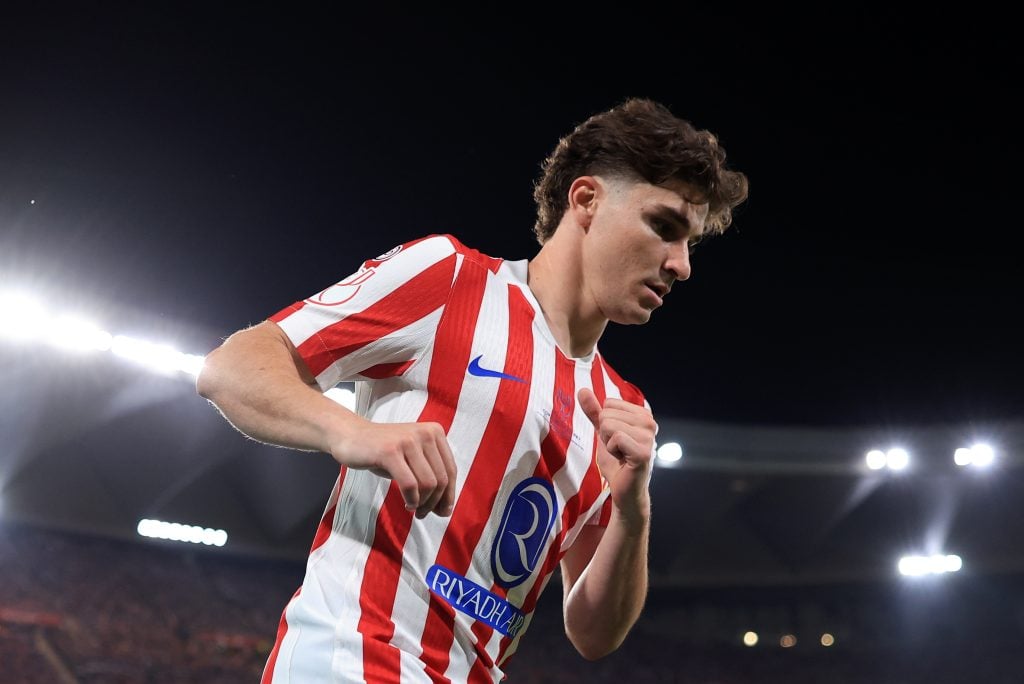
There are three credible archetypes Barcelona could deploy to lead the attack under head coach Hansi Flick, each delivering a distinct balance of goal threat, pressing intensity, and creative initiative.
1) Ferran Torres as the natural No. 9
Ferran Torres represents the clearest fit for the central striking role, having already spent considerable time as a central forward for Barça. His strengths lie in movement and intelligent positioning between the center-backs, with sharp runs that penetrate the defensive line and improved instincts inside the penalty area. Over the past two seasons under Flick, Torres has proven valuable as both a starter and a super-sub.
A likely front three could feature Anthony Gordon or Raphinha on the wings, with Torres through the middle and Lamine Yamal on the opposite flank. Gordon and Yamal can stretch the pitch, allowing Torres to concentrate on arriving in the box and finishing chances rather than dropping deep to dictate possession.
A potential concern is Torres’ consistency at the elite level, as periods of goal glut have alternated with goal droughts. At 26, he is entering a typical prime period for a striker, is familiar with the system, and has demonstrated defensive responsibility along with goal production. If Torres remains with the club and there is no imminent PSG move, he stands a strong chance of starting as the club’s number nine, presenting a balanced and reliable option.
2) Anthony Gordon as a mobile striker
Anthony Gordon offers a more aggressive, mobile profile. Originally a winger, he has experience operating centrally when the team seeks greater pace and pressing through the middle. Gordon’s game is built around direct running, high-intensity pressing, and exploiting spaces behind the defensive line, rather than playing with his back to goal.
A potential setup could be Raphinha on the left, Gordon through the middle, and Lamine on the right. This arrangement could be particularly potent in transition, combining high-energy pressing with rapid attacking movement. It would be especially effective in Champions League away fixtures or against teams that push their defensive lines high.
However, Gordon is not a traditional penalty-box striker, which means Barça would lack a fixed target to convert crosses into chances in some scenarios. His strengths are magnified when there is space to exploit rather than in crowded boxes. As a result, this option should be used selectively rather than as a permanent solution.
3) Dani Olmo as a false nine
Dani Olmo as a false nine represents a tactically innovative approach. Flick has experimented with Olmo in this role, where the midfielder drops between the lines to create numerical superiority in midfield, draw defenders out of position, and facilitate possession-based control. In a notable performance last season, Olmo helped Barcelona maintain possession, created several chances, and supplied an assist while operating centrally.
A front three featuring Gordon, Olmo (as false nine), and Lamine, with Pedri and Fermin Lopez arriving from midfield, would deliver exceptional technical quality and fluidity. Olmo’s intelligence and link-up play could unlock space for runners beyond him.
The clear drawback is the absence of a traditional striker occupying the box. Success would depend on precise timing and movement from the midfielders and wingers, and Olmo cannot be Barça’s starting number nine in every game.
Overall assessment
Barcelona can survive without a new signing if they pursue multiple options, but the three proposed pathways offer distinct advantages. Ferran Torres provides the strongest overall balance between goal threat and involvement in the build-up. Anthony Gordon introduces speed, pressing, and chaos that can destabilize high-line defenses, particularly in certain matches or competitions. Dani Olmo as a false nine adds control and tactical variety, enabling a flexible, technically rich approach.
In terms of long-term strategy, it would be prudent for the club to continue exploring a true number nine, while leveraging the strengths of the three options as needed across different competitions and game states. The best match-up will depend on opposition tactics, the rest of the squad’s form, and fitness, but a combination of Torres as a central striker, supplemented by Gordon’s pace and Olmo’s playmaking could offer a well-rounded approach for Flick this season.
Endnote: This analysis outlines three feasible configurations to reinforce the attack without a definitive striker signing, emphasizing balance, adaptability, and potential impact across domestic and European campaigns.