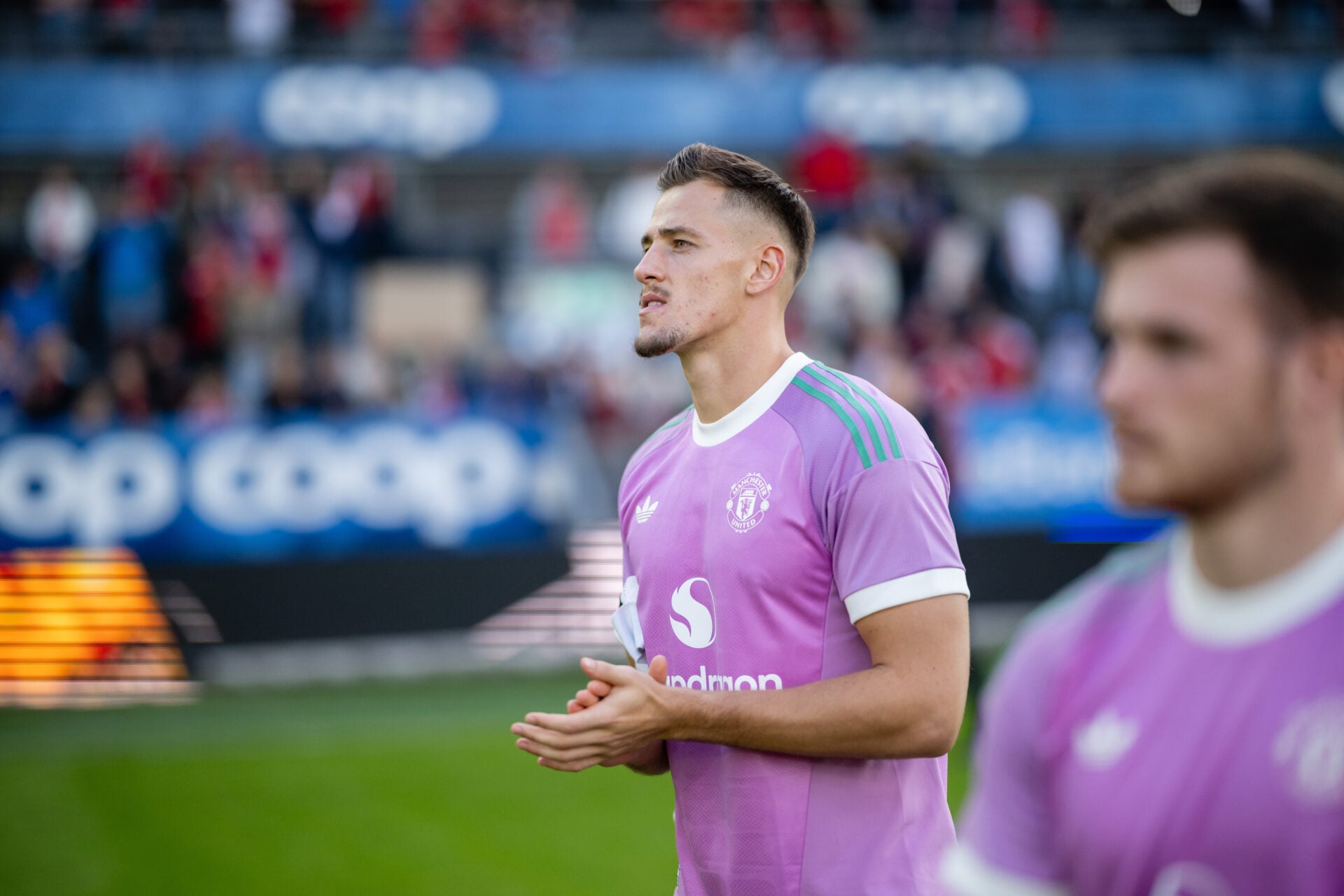
Current talking points center on a potential deal for Lewis Hall, who spent last season with Newcastle and is viewed as one of the Premier League’s most promising young players at left-back. Reports suggest Hall could cost around £60 million this summer, with TeamTalk highlighting United as a potential destination. In parallel, United are keeping a close eye on Amass, a 19-year-old who has impressed during pre-season and is pushing for a first-team role under manager Michael Carrick after a productive spell on loan at Sheffield Wednesday.
How do the two players compare?
A pre-season display in a 5-0 win over Rosenborg helped boost Amass’s case, with United supporters taking note of his performance. Hall, by contrast, already possesses Premier League and Champions League experience, having established himself at a higher level earlier in his career. The club’s strategy with youth could tilt toward developing Amass within the first-team setup, while Hall represents a significant market opportunity that could align with strategic investment plans.
Statistically, a direct comparison from a trusted data source shows the two players posting similar output in the 2025/26 season. Amass logged 1,881 minutes, with 1 goal and 1 assist, 2.25 crosses per 90 minutes, 1.53 interceptions per 90, and 1.91 tackles per 90. Hall recorded 2,181 minutes, 1 goal, 1 assist, 4.21 crosses per 90, 1.20 interceptions per 90, and 1.28 tackles per 90. The figures indicate that both can contribute in attack and defense, with Hall offering a higher crossing rate and Amass delivering stronger defensive numbers.
From a tactical and financial perspective, United could benefit from developing Amass rather than committing a hefty transfer fee for Hall. Amass has reportedly bulked up in pre-season to enhance his physical presence, and his experience on loan in the Championship has contributed to his maturation for senior football. Should United choose to trust Amass, the club would save around £60 million in transfer fees and related wages, reallocating resources to bolster other areas of the squad.
Beyond the left-back position, United still face broader squad considerations. There is talk of needing a third midfielder, a potential new centre-back, and possibly a striker, depending on the future of Joshua Zirkzee. If the club preserves faith in Amass at left-back, those funds could instead be directed toward strengthening defence and attack, while continuing to develop a highly regarded academy product.
In summary, United face a strategic decision between investing in Hall’s high-potential but costly signature or prioritizing Amass’s development pathway within the current squad framework. The choice will influence not only immediate transfer activity but also long-term planning around player development, wage structure, and squad balance.