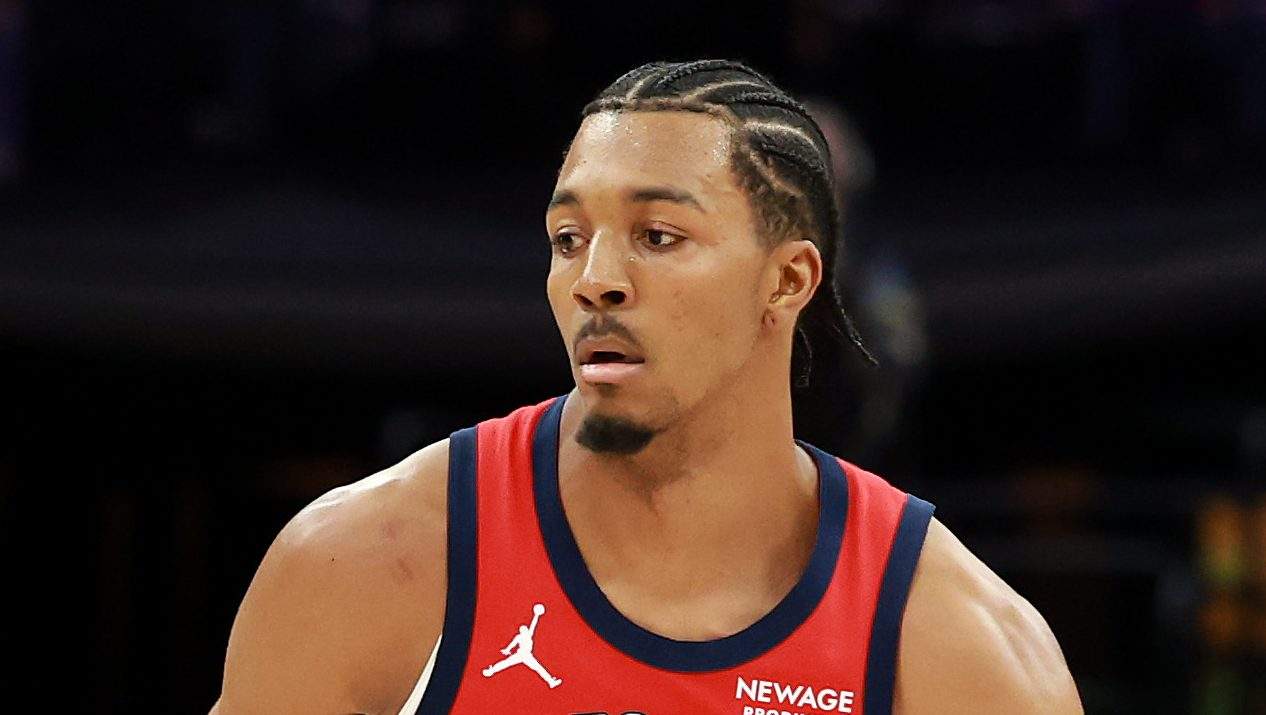
One intriguing avenue involves the possibility of acquiring Dylan Harper, a highly regarded young guard who has captivated NBA scouts with his ceiling. A proposed trade scenario would see the Lakers land Harper from the San Antonio Spurs in exchange for the 2025 No. 2 overall pick, along with a package of supporting pieces. In this framework, Los Angeles would send out Jaden Hardy, Jake LaRavia, Dalton Knecht, Adou Thiero, Cameron Carr, and two future draft assets—a 2032 first-round pick and a 2033 second-round pick—to San Antonio. The question remains: is this a fair price for a player who isn’t yet among the top options on his current team and who averaged under 12 points per game in his rookie season?
Harper’s rookie year with the Spurs was notable for his development and integration into the roster. He earned a spot on the NBA All-Rookie First Team and contributed to a Spurs squad that remained competitive through the season. His play extended into the playoffs, where his confidence and composure stood out, including a 25-point performance in the later stages of the NBA Finals run. While those moments reflect a high upside, he is still a young player on a rookie-scale contract that translates to a cost-controlled asset for a team like the Lakers, who are always balancing cap flexibility with roster ambition.
From a strategic standpoint, acquiring Harper would represent a long-term investment. He is under rookie-scale terms for several more seasons, meaning the Lakers could integrate him at a manageable cost while he continues to develop into a larger role. The logistical challenge, however, lies in persuading San Antonio to part with a promising guard who is under rookie control and whose value seems to rise as he gains experience. The proposed framework would require the Lakers to part with multiple young players who could become valuable contributors down the line, as well as two future draft assets. For the Spurs, adding a combination of immediate depth and future flexibility—plus a protected or distant first-round pick—could be an attractive package as they rebuild and reevaluate their current roster construction.
Harper’s first-year performance suggests a potential long-term fit in Los Angeles, where the backcourt already features high-usage creators. Harper posted solid averages across points, rebounds, and assists in his rookie year, while also showing growth in decision-making and composure beyond his years. In playoff situations, he demonstrated the ability to produce offensively and make meaningful contributions against top competition. If he continues to mature, he could evolve into a reliable secondary ball-handler and scoring option who can slot into a dynamic, multi-guard lineup.
In terms of fit, Harper’s age and skill set align with a modern, positionless approach. The Lakers could utilize him in a variety of roles, including as a secondary initiator who can play off Doncic and Reaves. A three-guard lineup could be explored in certain matchups, although it may be more likely that Harper competes for minutes behind the primary backcourt duo rather than as a full-time starter immediately. Even if he isn’t an everyday starter at first, his development path could yield a versatile, high-upside contributor who grows into a larger role over time.
The trade scenario presents a trade-off: a bounty of draft capital and multiple young pieces for a single guard who is still early in his career. For the Lakers, the upside is clear—adding a guard with a high ceiling who can be nurtured within a star-studded environment. For the Spurs, the deal would bring in a significant infusion of young talent and future draft returns, enabling a new trajectory as they continue to shape their roster around Harper’s potential.
Ultimately, whether this specific package is the right move depends on assessments of Harper’s trajectory, the Spurs’ willingness to part with him, and the Lakers’ appetite for reallocating assets to chase a long-term fit. If the Lakers want to optimize their roster by adding a young guard with demonstrable upside and are comfortable parting with a larger chunk of future potential, pursuing Harper could make sense. If not, there are alternative avenues to bolster guard depth or strengthen wing options, depending on the team’s evolving needs and market conditions.
Harper’s potential long-term impact remains an appealing storyline for teams seeking to fuse immediate competitiveness with future growth. As the league continues to evolve, the prospect of a guard with Harper’s profile landing in Los Angeles represents a compelling crossroads between building for today and planning for tomorrow. Regardless of the route chosen, the Lakers will aim to optimize their guard depth while preserving the flexibility to pursue additional improvements as the season unfolds.