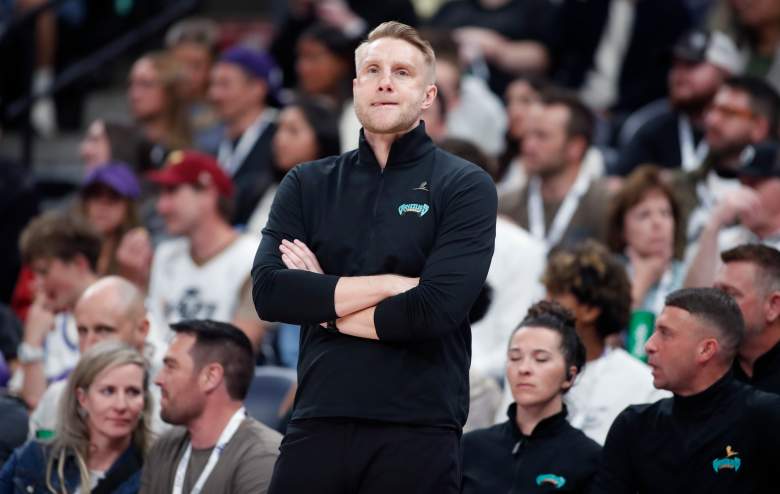
Industry watchers praised the move, highlighting Harkless’s work ethic and defensive versatility as key strengths that fit Detroit’s culture and developmental goals. Analysts from prominent outlets noted that Harkless stands out as one of the more capable two-way players in the league, praising the Pistons for acquiring a player with a proven track record of contributing on both ends of the floor and adapting to multiple roles.
With Harkless on board, Detroit has now secured all of its two-way slots for the upcoming season. He joins a trio of teammates already in place at the two-way level: Isaac Jones and Ugonna Onyenso, creating a robust group designed to maximize development while providing flexible depth for the parent roster.
Elijah Harkless’s NBA journey began in college, where he played for Cal State Northridge before transferring to Oklahoma. After two seasons with the Sooners, he moved to UNLV, where he emerged as a leading contributor. During the 2022-2023 college season with UNLV, Harkless started all 32 games, logging substantial minutes. He averaged 19.1 points per game on 41.4% shooting from the field, while also contributing 5.1 rebounds and 3.4 assists per contest. His scoring ability and playmaking, combined with his defensive effort, positioned him as a well-rounded prospect coming into the professional ranks.
Harkless went undrafted in the 2023 NBA Draft but immediately pursued opportunities in the NBA G League, signing with a Clippers affiliate team. His path then took him to the Utah Jazz, where he signed a two-way contract in January 2025. Over two seasons with the Jazz, he appeared in 36 games. In the 2025-2026 season, his numbers dipped somewhat, as he shot 33.5% from the field and averaged 6.8 points, 2.9 assists, and 2.0 rebounds per game. While those figures reflect a modest scoring average, they also underscore his role as a floor general who can push pace, distribute, and hustle on defense—qualities teams often value in two-way players who can contribute in varied lineups.
Detroit’s decision to bring in Harkless under a two-way deal aligns with a broader strategy many franchises are employing: cultivate homegrown depth through a structured path that allows young players and veterans alike to develop within the organization. By giving Harkless a clear itinerary for NBA and G League time, the Pistons can monitor his progression, integrate him into the team’s defensive schemes, and adjust his responsibilities as needed across both levels.
This roster move also signals a commitment to building a versatile, defensively oriented identity. Harkless’s reputation as a hard-nosed defender who can adapt to multiple positions makes him a natural fit for a team looking to blend youth with experienced depth. The two-way role is designed to maximize his efficiency while ensuring he remains accessible to the Pistons for potential late-season call-ups or extended runs if performances warrant it.
Looking ahead, fans can expect Harkless to compete for minutes on both fronts. At the NBA level, he will aim to showcase his defensive versatility, decision-making, and readiness to contribute in high-leverage situations. In the G League, he will have the opportunity to refine his shooting touch, improve consistency, and enhance his playmaking instincts through regular, game-ready reps. The dual-path approach is intended to accelerate development and maintain continuity within the organization’s tactical framework.
In terms of impact on the team’s overall plans, Harkless adds depth to a young Pistons core while providing a veteran presence that can guide younger players through the rigors of both the NBA slate and G League competition. His two-way contract ensures he remains a visible and evaluable asset, capable of stepping into NBA action when called upon and serving as a reliable contributor in the developmental league when needed.
As the Pistons move through their Summer League slate and continue shaping their roster for the upcoming season, the addition of Elijah Harkless stands as a strategic move designed to bolster defense, versatility, and organizational depth. By leveraging a two-way contract, Detroit positions itself to maximize player development and on-court adaptability, aligning with modern strategies that prioritize flexible, multi-layered rosters.