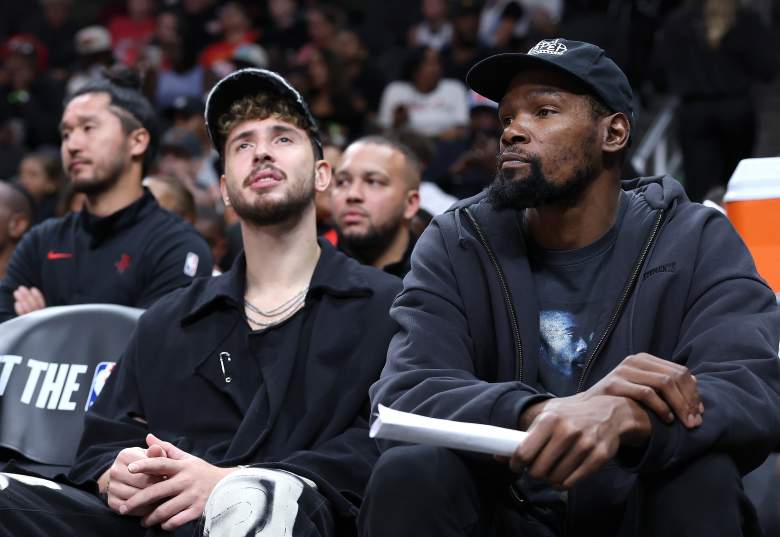
Durant’s playoff impact this run was limited, as he appeared in only a single postseason game before Houston’s campaign ended with a series loss to the Los Angeles Lakers. The context of that series—where other star players from rival teams were either sidelined or rarely played—cast doubt on the Rockets’ ability to translate star power into momentum on the biggest stage. The outcome underscored the challenge of building a winner around one centerpiece, even when that centerpiece brings undeniable talent and experience.
Looking ahead, analysts have speculated about Durant’s long-term fit and future with Houston. One notable NBA writer suggested that Durant could be among the next marquee players to change teams, pointing to the possibility that the “burner” or situational distractions that have accompanied Durant in recent years might contribute to a decision to seek a new path. The premise is that a combination of personal restlessness and evolving team dynamics could prompt a desire for a fresh start somewhere else, even if the current organization presents a competitive roster.
From Houston’s perspective, the potential for another roster reshuffle depends on several factors. Leadership, chemistry, and role clarity are crucial for a player of Durant’s caliber. If the Rockets determine that his presence isn’t aligning with the long-term plan or that harmony within the locker room is harder to maintain, they could consider exploring options that would help recalibrate the franchise trajectory. The reality is that a star’s influence on a team’s direction can hinge as much on intangible factors—fit, leadership style, and unity—as on pure statistical production.
Injuries and health also played a part in Houston’s season-long outlook. The Rockets faced a setback with Fred VanVleet missing time, which disrupted the continuity of the offense and the pace at which the team could develop the half-court rhythm necessary for sustained success. VanVleet’s return was anticipated as a catalyst for improving the offense and stabilizing the ball-handling responsibilities that are critical to a high-functioning attack. When a point guard can consistently orchestrate sets and push the tempo in the right moments, teams often experience smoother transitions into late-game scenarios and more efficient possessions.
Reinforcements at the forward and center positions were also pivotal talking points. The team hoped that the return of Steven Adams would bolster the frontcourt, particularly in rebounding and interior defense. Adams’ presence had been a functional asset prior to his season-ending surgery, and his return, along with other healthy contributions, was expected to help stabilize the team during late-season stretches. The balance between interior toughness and outside shooting is a delicate mix for any aspirational contender, and Houston was keen to optimize that blend as the season progressed.
Another area of focus for the Rockets is turnover management. During the prior season, the team finished with one of the higher turnover rates in the league, highlighting the need for more disciplined ball security and smarter decision-making in the half-court sets. A healthy VanVleet, who is known for his playmaking ability, was anticipated to reduce turnovers and raise the efficiency of Houston’s offensive sequences. If the offense can operate with improved spacing and timing, the team can rely more on set plays and collaborative ball movement rather than forcing difficult outcomes in late-clock situations.
Health and sustained performance remain the overarching questions. Durant’s long-term fit, the dynamic of his relationship with teammates, and the overall roster construction will shape what comes next for Houston. If the organization envisions a championship-caliber window, the path could involve internal development, strategic acquisitions, or even a broader recalibration of the core around which the rest of the roster is built. Conversely, if the cohesion or the ceiling of the current configuration proves limiting, executives might explore opportunities that better align with a shared vision of sustained excellence.
For fans and analysts, the core takeaway is that star power alone rarely guarantees a title without a cohesive system, durable health, and the right complementary pieces. The Rockets’ trajectory will likely hinge on how well the team translates individual talent into collective efficiency—how smoothly the offense retools around playmakers, how robust the defense becomes, and how effectively leadership guides a young group through the growing pains of contention. If Houston can cultivate improved on-court chemistry, maximize the strengths of its veteran presence, and maintain health across key contributors, they can position themselves to contend deeper in the postseason.
As the team navigates this crossroads, continued evaluation of fit, leadership, and developmental progress will be essential. The landscape of the NBA evolves quickly, and capable franchises frequently recalibrate in pursuit of a sustainable title window. The Rockets’ next steps will be watched closely by the league, with fan expectations anchored in the belief that a balanced approach—combining veteran insight with young, rising talent—offers the best route to long-term success.