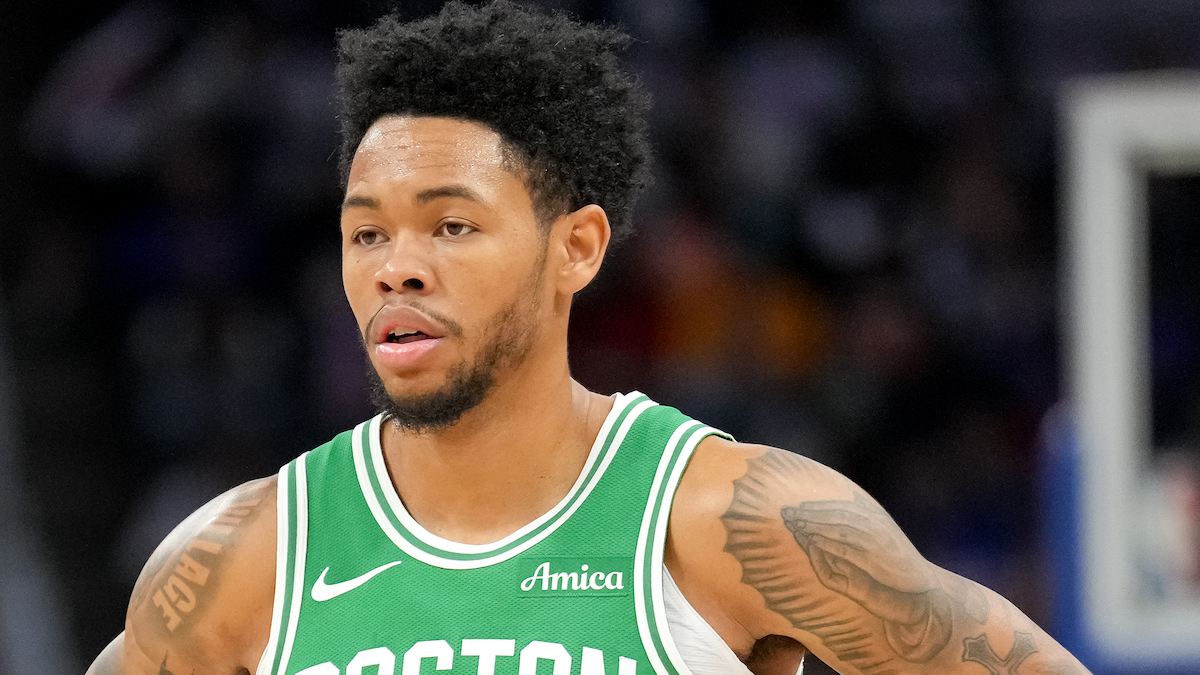
Trey Alexander is coming off a season where he appeared in nine games for the New Orleans Pelicans, averaging 5.2 points, 1.2 rebounds, and 1.0 assist per game. He became an unrestricted free agent after New Orleans chose not to extend a two-way qualifying offer. Alexander’s career path has included productive stretches in the G League and a stint in the NBA, highlighting his versatility as a guard who can contribute as a scorer and playmaker.
Alexander’s journey to the NBA began after a standout three-year run at Creighton. He declared for the 2024 NBA Draft but went undrafted. He quickly earned a two-way contract with the Denver Nuggets following an impressive Summer League showing. In his rookie season with Denver, he appeared in 24 games, averaging 1.3 points, 0.5 rebounds, and 0.5 assists. Much of his development came with Denver’s G League affiliate, the Grand Rapids Gold, where he earned recognition as a standout performer.
His progress continued when he joined the New Orleans Pelicans last season. While he spent the majority of his time with the Birmingham Squadron in the G League, Alexander delivered notable numbers: around 23.9 points, 4.7 rebounds, 7.8 assists, and 1.7 steals per game. These performances underscored his ability to handle heavy scoring loads and distribute effectively, traits that can be valuable in a guard-forward rotation.
Joining the Jazz places Alexander in a crowded guard group, featuring players such as Keyonte George, Darryn Peterson, Ace Bailey, John Konchar, and Cody Williams. The Utah roster depth at guard will create a competitive environment where Alexander must consistently demonstrate tangible value in practices and Summer League action to secure a longer-term spot.
From a contract perspective, Alexander’s two-way deal provides an opportunity to showcase his skills and potentially earn a standard NBA contract if he proves he can contribute at a higher level. Two-way contracts are designed to offer players a pathway between the NBA and the G League, with eligibility to participate in up to 50 regular-season games. The financial terms for a two-way contract can be favorable for a player who performs well and catches the right opportunities.
The Jazz’s offseason moves have been aimed at strengthening their young core while maintaining veteran support. The acquisition of veterans and the development of younger players remain central to the franchise’s blueprint. In addition to the mid-tier roster shuffle, the Jazz selected Darryn Peterson with a high draft pick, adding another young piece to a growing core that includes Keyonte George and Ace Bailey. Veteran leadership from players such as Lauri Markkanen and Jaren Jackson Jr. provides a steadying influence as the team continues to build toward future competitiveness.
The departure of Walker Kessler to the Los Angeles Lakers, in exchange for multiple first-round picks and pick swaps, opened a notable organizational gap. The Jazz addressed this by adding Jusuf Nurkic on a two-year deal and signing Jaxson Hayes in free agency, aiming to stabilize the frontcourt while allowing younger bigs to develop alongside experienced centers.
As the regular season approaches, Alexander will have opportunities to earn meaningful minutes and potentially cement a two-way path into a standard contract, depending on his performance and how roster needs evolve. The guard position remains a focal point for the Jazz, who will evaluate Alexander’s ability to contribute as a shooter, ball-handler, and defender within the NBA system.
Overall, the Jazz’s 2026 summer moves reflect a balance between nurturing emerging talent and reinforcing the roster with players who can adapt to multiple roles. Alexander’s addition adds another layer of depth to a developing backcourt, and his continued progress in the NBA and G League will determine whether he can translate two-way duties into a more permanent NBA role.