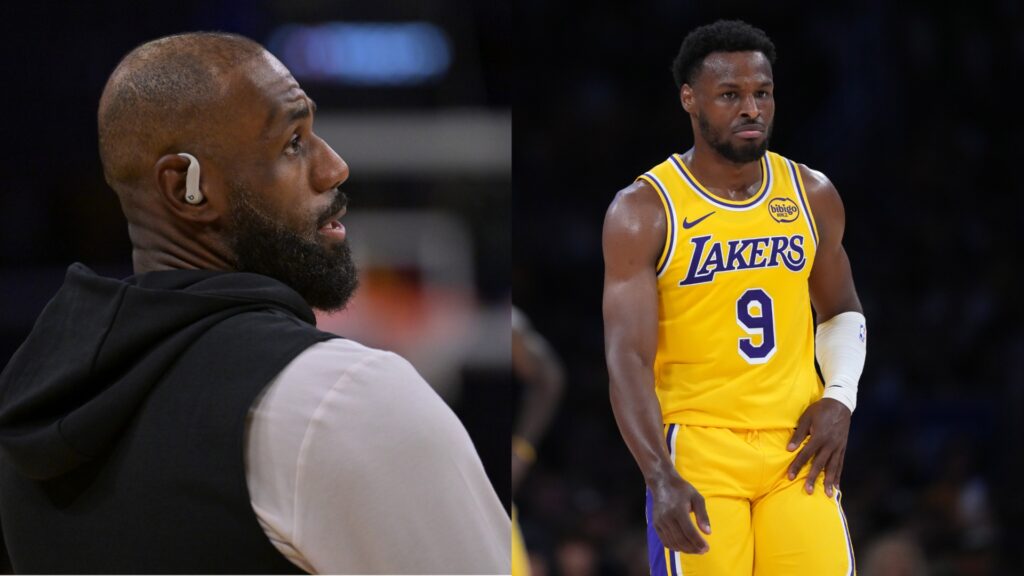
Chalmers, who won two championships alongside James with the Miami Heat, drew on his firsthand experience with James to form his perspective. He indicated that his firsthand knowledge of LeBron’s approach to the game points to Golden State and Miami as the most plausible destinations where James could maximize his chances to win another title. “I really think it’s between Golden State and Miami just by knowing Bron and being his teammate before and the way he approaches the game,” Chalmers remarked. He added, “Those are two spots where I think he has the best chance of winning. I want to say Miami, but I have a gut feeling that it might be Golden State.”
The Miami Heat have recently reorganized their roster, bringing in Giannis Antetokounmpo in a blockbuster deal. With Antetokounmpo and Bam Adebayo anchoring the frontcourt, the Heat project as a legitimate title contender, capable of leveraging star power while continuing to refine their depth. Although the move elevated their ceiling, it did come at a cost in terms of depth, implying the Heat will need to balance star power with role players to sustain success throughout a demanding season. Strategic moves are already underway, with Tim Hardaway Jr. reportedly set to sign with the team after the league’s moratorium, signaling an eagerness to bolster backcourt scoring and overall versatility.
Heat head coach Erik Spoelstra remains a critical factor in any potential improvement. Known for maximizing players who thrive under his system, Spoelstra’s track record suggests he could maximize the impact of veteran stars and complementary pieces alike. If James were to join Miami, Spoelstra’s familiarity with high-IQ, adaptable lineups would be invaluable in creating a cohesive attack that could complement James’ playmaking and scoring.
On the other side of the spectrum, the Golden State Warriors face a different set of challenges. The roster has not seen a dramatic influx of new talent, and the team’s prospects for significant upgrades ahead of the next season are not as clear-cut. The Warriors’ offensive efficiency has historically hinged on Stephen Curry’s presence. When Curry has been on the floor, the Warriors have typically posted elite numbers; in his absence, the offense has often struggled to find a consistent rhythm. This was evident last season when Curry missed substantial time due to injury, underscoring how dependent the system can be on his production and movement.
If LeBron joined Golden State, the potential is obvious: a hallmark combination of Curry’s off-ball movement and deep scoring range with LeBron’s ballhandling, playmaking, and multi-position versatility could create a dynamic offensive engine. The pairing could potentially force defenses to choose between contesting Curry’s outside shooting and staying in front of James’ drive-and-kick game. However, several considerations would need to be addressed to determine whether the duo could realistically translate into sustained success.
First, while two stars can elevate a team, championships typically require a well-rounded supporting cast. Both Curry and James demand significant usage, which could strain depth if not complemented by reliable role players who can contribute consistently when either star sits. The Warriors would need a reliable secondary scorer to reduce the load on Curry and James, along with defenders and shooters who can maintain spacing and provide steady production across different lineups. The current roster would need targeted upgrades to ensure continuity and balance when the stars rest.
Second, health and age are practical constraints. Curry, now in his late 30s, and James, who has consistently drawn praise for durability but will inevitably face the wear and tear of a longer season, would require careful load management and strategic rotation. Ensuring players who can step up when either star is resting would be essential to maintain competitiveness through a rigorous schedule and into the playoffs.
Third, fit and chemistry cannot be overlooked. Even players with illustrious resumes can struggle to mesh if playing styles and defensive philosophies diverge. The Warriors’ typical emphasis on floor spacing, pace, and defensive schemes would need to seamlessly accommodate James’ unique skill set, while also preserving Curry’s off-ball movement and shooting as a focal point of the offense. Any movement toward a LeBron addition would likely involve a broader roster plan that emphasizes versatility, veteran leadership, and depth.
At present, several roster dynamics suggest the Golden State option would require meaningful changes to make a LeBron James addition feasible and sustainable. The likelihood of a direct, marquee signing would hinge on a strategic alignment of salaries, cap space, and the willingness of management to pivot the roster construction toward a two-star nucleus with complementary pieces. Miami, meanwhile, presents a different path that emphasizes Spoelstra’s proven ability to maximize talent and create cohesive, high-possibility lineups around star players.
In summary, the notion of LeBron James teaming up with Stephen Curry remains an exciting hypothetical for basketball fans. The possibility hinges on several variables, including team fit, health, and the broader roster built around two of the NBA’s most dynamic players. While discussions and speculation will continue, the practical challenges of assembling a championship-caliber supporting cast and maintaining depth after star players join forces cannot be underestimated. As teams evaluate their rosters and futures, the question of where LeBron might land next continues to be a topic of widespread interest, with Golden State and Miami at the forefront of the conversation.