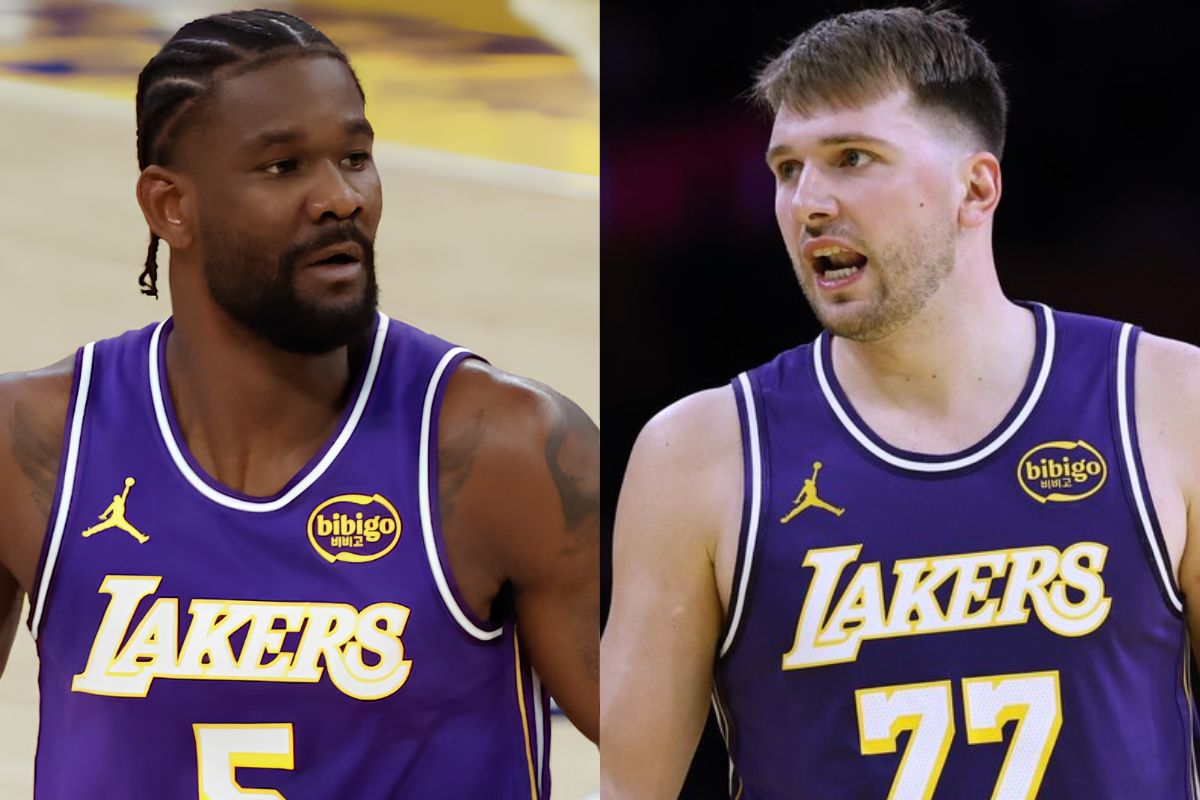
A notable discussion arose during an appearance on the Hoop Collective, where ESPN’s Vincent Goodwill shared a candid interaction with a G League general manager. The question posed was pointed: is the Lakers’ executive leadership, led by Rob Pelinka, attempting to get himself fired by taking bold, high-stakes risks? The remark underscored a larger debate about the team’s direction and the sustainability of its plan.
Beyond the curiosity about leadership motives, the central concern focused on whether the new additions fit around Dončić and, crucially, whether the defense could be strengthened enough to stop teams from repeatedly attacking the Lakers on the perimeter. Even with the arrival of a center such as Walker Kessler, questions persisted about the defensive structure. If opponents continue to beat the Lakers on the perimeter, a traditional rim protector might not be enough to stabilize the unit. The risk is that Kessler could find himself in foul trouble and overwhelmed by the volume of ball-handling and pick-and-roll activity, limiting his effectiveness and potentially creating more breakdowns on the floor.
The Lakers’ defensive profile from the previous season amplified these concerns. The team ranked near the bottom of the league in several key metrics, including a defensive rating that hovered around 116.4 and a field-goal percentage allowed north of 48%. Those numbers suggested that the defensive struggles were not solely about the absence of a traditional center; they reflected broader issues across pick-and-roll defense, transition defense, and the ability of perimeter defenders to remain in front of attackers. While contributors like Jarred Vanderbilt had success on the defensive end, the overall package still left a lot to be desired.
Offensively, the Lakers showed flashes of progress but also highlighted ongoing areas for improvement. The combination of ball-handling, decision-making, turnover management, and transition discipline continued to influence results. On paper, adding versatile players can create a more dynamic offensive ecosystem, yet if defensive leaks persist, the team may still fall short in the playoffs or against top-tier competition.
From the Lakers’ perspective, the approach appears to be driven by a belief that surrounding Dončić with an amalgam of wing playmakers and a stronger frontcourt can create a more complementary and competitive environment. The front office signaled a commitment to building around Dončić, aiming to accelerate the timeline of contention by integrating players who can contribute immediately and adapt to high-usage roles. The spending spree included multi-year commitments and notable salaries intended to secure talent that can grow with the franchise’s star player.
Dončić’s involvement throughout the offseason has been highlighted by reports indicating ongoing dialogue with the organization. The sense from those close to the situation was that Dončić was engaged in the process and excited by the potential impact of the new roster, particularly in addressing rim protection as a priority. While this sentiment provides a positive signal to fans and observers, it also raises expectations that the team can translate financial resources into tangible on-court improvements.
The question, ultimately, centers on results over receipts. Will the Lakers’ aggressive offseason create a more formidable defense, a more efficient offense, or a combination of both? The risk is that higher price tags for players do not automatically equate to better outcomes if the system, chemistry, and on-court fit do not align. Clean transitions, disciplined decision-making, and a cohesive defensive identity will be critical to converting potential into consistent performance.
As the season approaches, observers will watch how the new ensemble functions in real-game contexts: how quickly the group can synchronize, how well they protect the rim and switch on defense, how efficiently they manage turnovers, and how effectively they pace the game in transition scenarios. The real test will be whether the roster can translate Dončić’s strengths into a sustainable championship trajectory, rather than becoming a high-cost experiment that raises questions about upside and long-term viability.
In the end, the Lakers’ offseason strategy reflects a bold belief in accelerating their competitive window. Whether this bet pays off will hinge on on-court execution, adaptability, and the ability to convert defensive stability from theoretical improvements into practical, game-to-game gains. As the league watches, the next chapters will determine whether this is a masterstroke that unlocks a golden era or a cautionary tale about spending beyond proven returns.