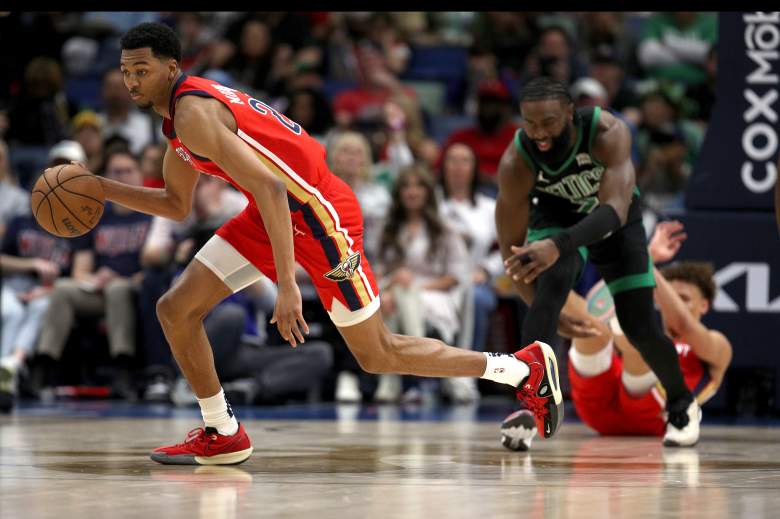
Moving past Brown creates a clear opening for more on-court responsibility to be distributed throughout Boston’s guard rotation. Brown’s prolific production in the previous season underscored what the Celtics must replace in terms of offense and playmaking. While George adds proven scoring and versatility, he also represents a different style of impact, and the Celtics will need to balance usage, efficiency, and fit with the returning core around Jayson Tatum.
Payton Pritchard emerged as a potential catalyst in this transition. In recent seasons, he has shown flashes of high-end offensive efficiency and decision-making that could translate into a larger role. Pritchard demonstrated the ability to score consistently and run an offense, posting solid averages across points, assists, and shooting efficiency when given extended minutes. The question now is how substantial his jump can be and whether he can sustain a heavier on-ball workload without compromising team defense and floor spacing.
Historically, teams have found success by leveraging young guards who can shoulder increased responsibility and still contribute as shooters and decision-makers. A Jalen Brunson-like trajectory is ambitious but not unprecedented. Brunson’s breakout with the New York Knicks showcased how a smaller guard with a polished offensive toolkit can become a franchise centerpiece when given opportunity and a conducive supporting cast. For Pritchard, the path might involve refining his role as a primary or secondary playmaker, improving off-ball movement, and sharpening his defensive engagement to earn trust in crunch time.
From a development standpoint, Pritchard’s efficiency will be critical. Last season, he logged significant minutes and produced strong scoring while maintaining solid shooting percentages. If he can sustain or improve his shooting from deep, continue to make smart reads in pick-and-roll sets, and contribute reliable ball-handling under pressure, he could help fill a portion of Brown’s production gap. The Celtics will also need to optimize lineups to maximize spacing, especially with a floor general who can distribute the ball effectively and knock down perimeter shots.
Of course, balancing the rotation remains a challenge. The addition of a veteran scorer like Paul George adds a different dynamic to the backcourt/forward mix and could influence how Pritchard is utilized. George’s presence might enable Boston to stagger minutes and keep Pritchard fresh while ensuring that the offense maintains its continuity when Tatum is resting. It will be essential to manage minutes and roles so that Pritchard’s development does not come at the cost of overall team cohesion.
Defensively, the Celtics will need to address questions about how small guards fit within their schemes. Pritchard has shown tenacity and a willingness to compete on that end, but sustained success will depend on the team’s defensive structure and individual growth. If he can contribute meaningfully on the defensive end, the combination of improved shot-making and solid defense could make him an efficient pairing with the rest of Boston’s lineup.
In the broader context, the Celtics’ move signals a willingness to embrace a multi-layered offense with multiple capable scoring options. The path to success will hinge on how well the coaching staff can integrate these pieces, maximize each player’s strengths, and mitigate any situational weaknesses. Pritchard’s development will be a focal point for fans and analysts alike as Boston navigates a post-Brown era.
Looking ahead, the upcoming season promises a test of depth and adaptability for the Celtics. If Pritchard can translate his potential into consistent production and playmaking, Boston could derive substantial value from his growth in conjunction with new and existing veterans. The success of this strategy will depend on disciplined development, smart game planning, and the ability to sustain high-level execution across a demanding schedule.
In summary, while the return for Jaylen Brown drew scrutiny, the Celtics have opportunities to redefine their guard rotation and capitalize on internal growth. Payton Pritchard stands at the forefront of this transition, with the chance to evolve into a more prominent contributor. The coming season will reveal how effectively Boston can translate potential into consistent performance, maintain offensive flow, and preserve defensive integrity as they move forward in a reorganized or reimagined roster landscape.