On a Brooklyn-based podcast, Anthony suggested Brown reached a breaking point despite his on-court production. He argued that Brown “never felt fully backed by the people who mattered most,” a dynamic that may have pushed the forward to take control of his own future. Anthony asserted that the issue extended beyond fans’ appreciation and into a perception of the Celtics’ internal support.
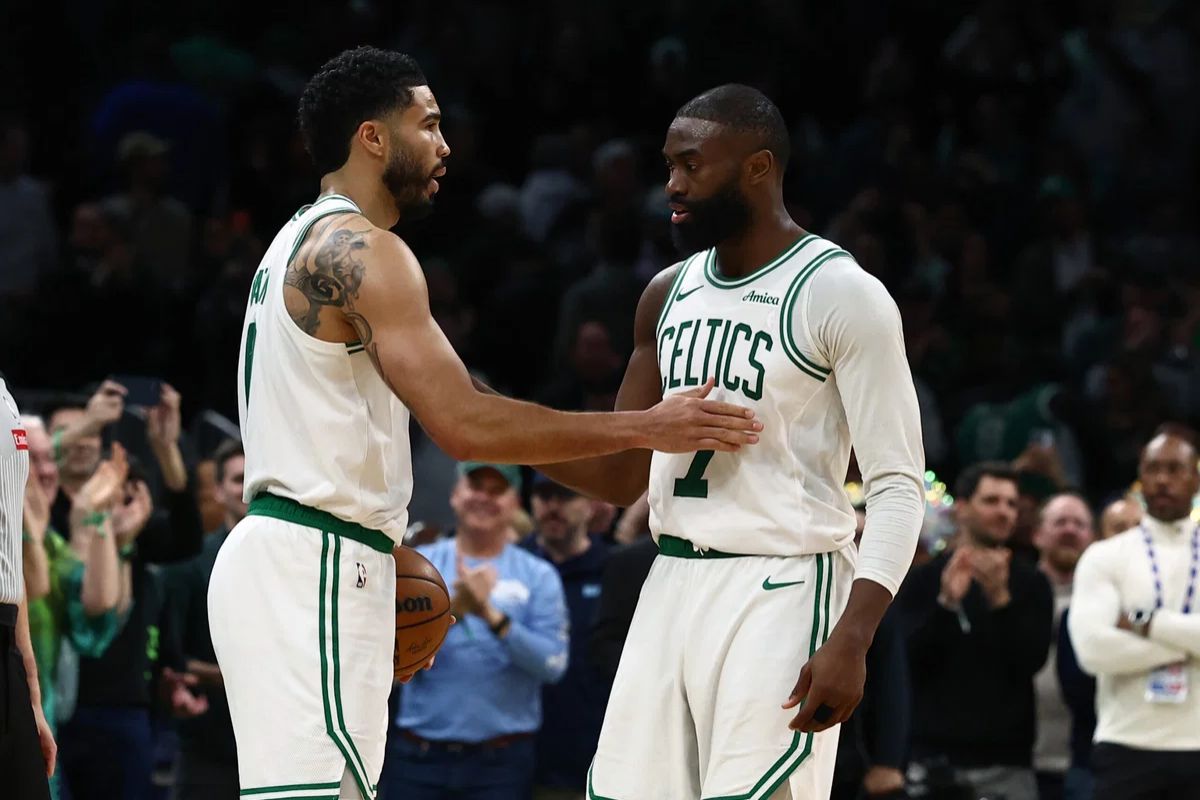
Anthony also touched on the dynamic between Brown and his former co-star, Jayson Tatum. He indicated that while Brown and Tatum were aligned and communicated, the underlying tension was broader. “This has nothing to do with Jayson Tatum and Jaylen Brown,” Anthony said, emphasizing that the situation involved higher-level front-office decisions. He suggested that Boston’s management had effectively exposed their hand, contributing to the roster shake-up.
Earlier in May, former star Tracy McGrady spoke about Brown’s frustration, noting that Brown’s leadership and the leadership he demonstrated off the court went beyond just his scoring. McGrady highlighted the sense that Brown’s impact extended beyond his role as a primary scorer, underscoring the distress Brown reportedly felt within the organization.
Brown has often been recognized as an underrated star. In the 2025-26 season, he delivered at an MVP-caliber level in Jayson Tatum’s absence, averaging 28.7 points, 6.9 rebounds, and 5.1 assists per game as Boston posted a 56-win season. His performance was a key reason the Celtics finished second in the Eastern Conference despite a rocky start to the year. This elevated profile adds to the complexity of evaluating whether the Celtics properly supported him in his prime.
Looking at the broader team performance, even with Brown’s elite play, there were questions about how Boston’s success would be measured without him. The team posted strong results in his absence, pointing to a balance of production across other players. For instance, in a recent high-stakes game when Brown was sidelined, the Celtics managed well, and in general, the mix of players like Derrick White and Payton Pritchard helped sustain strong team performance.
With Brown now with the 76ers, speculation has turned to whether Boston will find a long-term replacement who can replicate Brown’s two-way impact and scoring ability. While Paul George has been floated as a potential fit on paper, concerns about his injury history and age raise questions about whether he can serve as a durable, long-term solution. The conversation continues around how the Celtics will navigate this transition, balancing continuity with the need to inject young talent and maintain competitive viability in a crowded Eastern Conference.
Carmelo Anthony’s remarks align with a broader narrative: the friction between a star player’s demand for backing and a front office’s strategic decisions can shape a franchise’s trajectory as much as on-court performance does. The Celtics’ decision to move on from Brown—despite his high-level production and leadership—has sparked debate about whether the organization prioritized long-term plan over immediate, high-impact continuity.
As the offseason unfolds, fans and analysts will closely examine the implications of Boston’s roster changes. The trade marks a turning point for a franchise that has long been defined by its star duo and front-office strategy, raising questions about how teams should support star players who carry a franchise’s success and how front offices balance loyalty, leverage, and long-term goals in a fast-moving league.