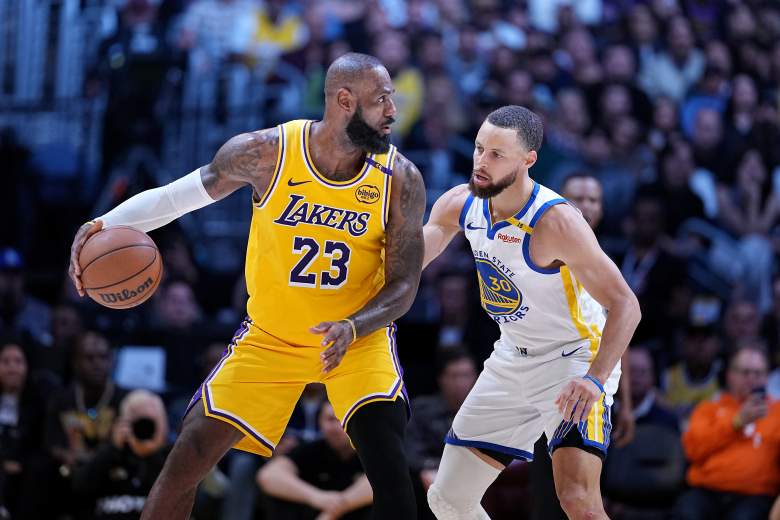
Abdul-Jabbar, a towering figure in Lakers history and the Hall of Famer whose all-time scoring record James surpassed in 2023, shared a warm note on social media after reports indicated James had informed the Lakers that he intends to explore opportunities with another team for the 2026-27 season. The veteran center highlighted James’ dual impact as a winner on the court and a positive presence off it, urging Lakers fans to recognize and remember the sustained excellence James has exhibited over the past eight years in Los Angeles.
In addressing the possibility of LeBron returning to his hometown, Abdul-Jabbar framed the situation in a broader context. He suggested that a potential return to Cleveland, while emotionally significant for fans, would be a distinct chapter—one about closure and long-term legacy rather than simply a chase for another title. This framing resonated because it moved the conversation from a transactional free-agent decision to a narrative about James’ career arc and the emotional resonance of his various stops.
From the basketball side, the news landscape around James’ next move centers on its practical implications. Reports indicate that James informed the Lakers of his plan to play for another team in the 2026-27 season, with free agency opening to allow discussions with interested franchises. The Lakers’ response to this development could reshape their offseason strategy, potentially affecting cap space, roster construction, and long-term planning. Analysts have discussed how clearing or modifying the team’s cap situation could enable the Lakers to pursue new frontcourt options or reconfigure the roster around other core players, including emerging talents and established stars.
Abdul-Jabbar’s message also gave a human-centered angle to the broader roster situation. The Lakers have to consider not only LeBron’s future but the continuity of the organization’s legacy. If James remains in the league beyond this season, his presence will continue to influence decisions about veteran leadership, player development, and the team’s overall strategic direction. The possibility of Bronny James, LeBron’s son, remaining on the roster for the following season adds another layer to the family subplot, illustrating how the franchise manages both a historic era and a potentially new chapter in the James family’s connection to the team.
Reaction to LeBron’s departure would also include reflections from Lakers management and players. Statements acknowledging LeBron’s eight-year impact with the franchise underscore the magnitude of his contributions: championship success in 2020, continued production at an elite level well into his 40s, and a sustained commitment to the Lakers’ culture and competitive standards. For fans, Abdul-Jabbar’s words reinforce the idea that LeBron’s tenure built a bridge between generations of Lakers fans who witnessed a transformative era in the franchise’s history.
As the offseason unfolds, the basketball world will watch how the Lakers navigate the prospect of life after LeBron James. The decision is not merely about who fills a roster spot; it is about how a franchise carries forward a legacy that includes a championship, record-breaking milestones, and a long-standing connection with a devoted fan base. Abdul-Jabbar’s tribute amplifies the narrative that this is a moment of reflection as well as transition—a reminder that LeBron’s journey is as much about the stories surrounding him as about the points he accumulates or the victories he secures.
In the broader context, the Cleveland chapter of LeBron’s career remains a significant emotional thread. His return to Cleveland would represent more than a standard career move; it would symbolize a homecoming and a different kind of fulfillment for a player whose influence transcends the court. Abdul-Jabbar’s remarks captured this duality: celebrating LeBron’s achievements in Los Angeles while acknowledging that the Cavaliers’ fan base might view a potential homecoming as a distinct, closure-oriented moment.
Ultimately, Abdul-Jabbar’s message gives fans a focal point for understanding the sense of transition surrounding LeBron James’ reported plan to explore free agency. It anchors the discussion in a shared sense of history and appreciation, highlighting how a single public note can frame a broader, emotionally charged NBA offseason. As teams negotiate cap space, rosters, and strategic directions, the human elements—the legacies, the cities that shaped a player’s journey, and the fans who stood by him—remain central to the story. LeBron James’ next chapter is still in motion, but the cultural significance of his tenure with the Lakers and the potential for a Cleveland chapter remains a compelling and unfinished narrative.