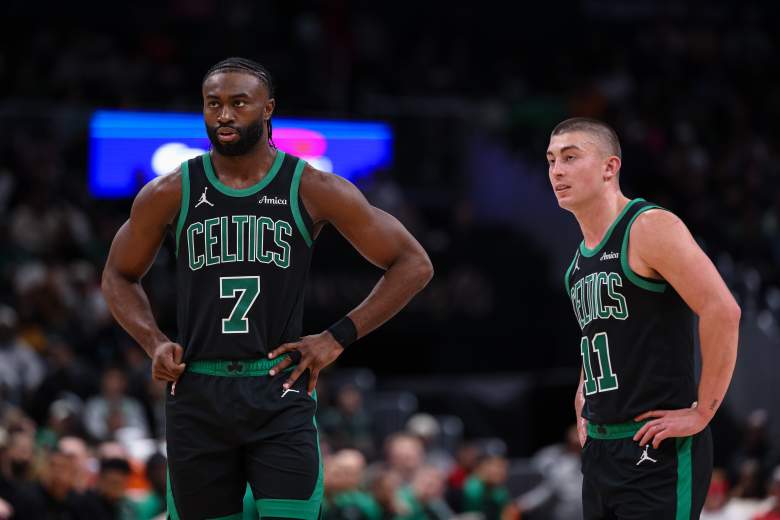
A trade package that has circulated in discussions involves Minnesota sending established frontcourt talent and young pieces to Boston in exchange for Brown. The proposed framework envisions the Timberwolves landing Brown by parting with Rudy Gobert, Donte DiVincenzo, a young wing, and a future first-round pick. From the Celtics’ perspective, Brown remains a high-utility two-way wing and a cornerstone scorer, capable of carrying heavy offensive loads and contributing defensively. If Boston were to pivot away from Brown, Minnesota would need to balance the payroll and preserve enough depth to remain competitive.
Cap dynamics play a central role in any such negotiation. Brown is on a five-year, max-level contract that carries a substantial cap hit in the immediate term. For Minnesota, aligning salary, luxury tax considerations, and future flexibility would be essential. The Timberwolves would also have to factor in the risk of weakening their depth, particularly if they trade away multiple rotation players and a core veteran center. Still, with calculated moves, Minnesota could structure a deal that preserves financial maneuverability, especially if it leverages existing cap space and trade exceptions.
The potential fit with Edwards adds another layer of appeal. Brown is an accomplished scorer who can relieve Edwards of some ball-handling and shot-creation duties, allowing Edwards to play off the ball and attack defenses with more room to operate. Brown’s ability to score efficiently, along with his experience as a scorer in high-pressure moments, could help the Timberwolves generate easier baskets and maintain scoring pace when Edwards faces double teams or when defenses are keyed in on him.
Defensively, Brown brings versatility that would complement Minnesota’s lineup. He has experience guarding multiple positions and can provide the kind of mobility and urgency that a team needs when transitioning from defense to offense. If the Timberwolves were to pair Brown with a steady rim protector and stretchable floor spacing, they could develop a more balanced roster that mitigates some of the defensive gaps that have persisted in recent seasons.
From Boston’s standpoint, absorbing a package that includes a high-quality center and rotation pieces would represent a shift toward retooling the frontcourt. Gobert is a two-time Defensive Player of the Year with elite rim protection, rebounding, and a high impact on the defensive end. DiVincenzo offers playmaking and perimeter potential, while a promising young wing provides upside and balance. A future first-round pick adds long-term value for rebuilding or window-padding purposes. Celtics executives would need to assess whether such a deal aligns with their long-term competitive timeline, including the fit of Brown alongside other core players and the flexibility to maneuver in upcoming seasons.
For the Timberwolves, the path to a successful Brown acquisition involves more than just talent replacement. It requires preserving enough depth to remain competitive in the event of injuries or slumps, maintaining the ability to compete in the Western Conference hierarchy, and ensuring that the fiscal framework doesn’t overextend the franchise. The balance between maximizing Edwards’ peak years and maintaining a robust supporting cast is delicate, and any deal would need to safeguard youth development and roster chemistry.
Beyond the headlines, Minnesota has shown a willingness to act decisively in the market when opportunities arise. The franchise has demonstrated an openness to reshaping the roster to better align with Edwards’ timeline, and Brown’s combination of scoring prowess, playoff experience, and two-way versatility would be a natural fit for a dynamic, offense-first approach. If executed thoughtfully, such a move could help the Timberwolves reach higher levels of consistency and playoff impact.
The question remains: can Minnesota pull off a deal that satisfies both sides while staying true to their cap realities? The star-power dimension Brown brings is undeniable, and pairing him with Edwards would instantly create a formidable duo capable of producing high-scoring nights and creating matchup problems for opponents. It would also set the stage for a broader strategy that emphasizes balanced scoring, reliable defense, and a deeper bench capable of contributing in the playoffs.
As teams evaluate their offseason options, Brown’s potential availability adds an intriguing chapter to the dialogue about how the Timberwolves can accelerate their growth. If Minnesota can navigate the salary intricacies and preserve enough rotation depth, a trade that brings Brown into the fold could mark a turning point in their pursuit of sustained contention. The coming weeks will reveal whether talks evolve from speculative chatter to concrete negotiations, but the possibility itself underscores Minnesota’s willingness to pursue high-impact upgrades in a bid to elevate their standing in a competitive NBA landscape.