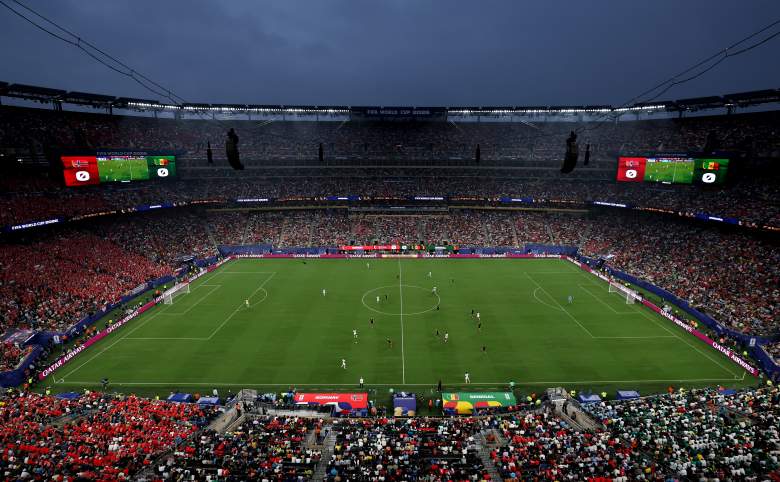
In the Group D clash held in Miami, Brazil asserted control from the opening whistle. Vinicius Jr. was the standout in front of goal, delivering a brace that underscored his creativity and finishing ability. Yet, beyond the goals, the performance of the backline drew significant attention. Magalhaes, in particular, was praised for his quickness and decision-making under pressure, contributing to a disciplined defensive display that kept Scotland at bay throughout the match.
Throughout the game, the Arsenal defender proved he could read the play effectively and respond rapidly to changing situations. He completed a high number of passes, demonstrating his comfort on the ball and his ability to initiate moves from the back. While Portugal-based outlets and international observers often focus on forwards and midfield dynamics, this match reinforced Magalhaes’s importance in building attacks from defence and maintaining shape even when pressed by an opponent seeking to destabilize Brazil.
Several Brazilian outlets provided granular assessments of Magalhaes’s performance. One noted his interceptions at key moments in the first half, highlighting how he closed down attackers and recovered quickly after challenging sequences. Others emphasized his speed, describing how he could match attackers stride for stride, which is particularly valuable when facing quick forwards who look to exploit space behind a high defensive line. The consensus across various ratings was that Magalhaes was the best-performing member of the Brazilian defence in this match, contributing to the clean sheet and providing a steadying presence at the back.
Complementing the defensive display, Magalhaes’s distribution from the back was also highlighted. His ability to recycle possession efficiently helped Brazil maintain possession under pressure and build transitions into more advanced territory. This facet of his play is especially relevant for teams that prefer to play out from the back, as it reduces the risk of turnovers and keeps the tempo advantageous in the opponent’s half.
Commentators and analysts noted that the performance demonstrated a broader tactical point for Brazil and, by extension, for club teams that rely on him. A higher defensive line can be sustainable when the central defender possesses the pace to recover quickly and recover space if an opposing attacker breaches the line. Magalhaes’s speed in recovery situations reassured coaches that an aggressive defensive setup can be maintained without compromising solidity at the back. This alignment between defensive shape and pace is a quality that managers often seek when considering personnel for high-pressing, modern systems.
The public discussion around Magalhaes’s speed also intersected with his wider reputation among fans and pundits as a ball-playing defender who can contribute to both phases of play. While his primary duty remains preventing goals, his ability to drive the ball forward and participate in the team’s build-up play is increasingly valued in contemporary football. In this match, he seemed to balance his defensive duties with an ability to contribute to Brazil’s attacking transitions.
For Arsenal, the implications are practical. A centre-back who can operate at a high line with confidence in his pace provides head coach Mikel Arteta with additional tactical flexibility. It enables broader strategic variations, including aggressive pressing and quicker ball progression through defensive lines. The Brazilian defender’s performance against Scotland offers a tangible case study on how his speed can be integrated into Arsenal’s defensive and transitional plans next season.
Final analyses from observers noted Magalhaes’s overall contribution: robust tackling, effective interceptions, and a high pass completion rate that supported Brazil’s construction of play from the back. His seven wins in duels, three recoveries, and extensive passing workload stood out as indicators of his reliability in a demanding matchup. These metrics reinforce the perception of Magalhaes as a player capable of delivering consistent performances in high-stakes environments, a trait valued by clubs looking for steadiness in defence.
In summary, Gabriel Magalhaes’s performance against Scotland affirmed several key attributes: his speed in defensive scenarios, his ability to maintain composure under pressure, and his proficiency in distributing the ball to initiate attacks. For Arsenal, these elements translate into potential tactical gains in the upcoming season, offering reassurance that they possess a centre-back capable of adapting to varied tactical demands while maintaining defensive integrity. As the World Cup progresses, Magalhaes’s form in this match may influence not only club-level evaluation but also considerations for future formations and strategies that prioritize pace and positional awareness in the heart of the defence.