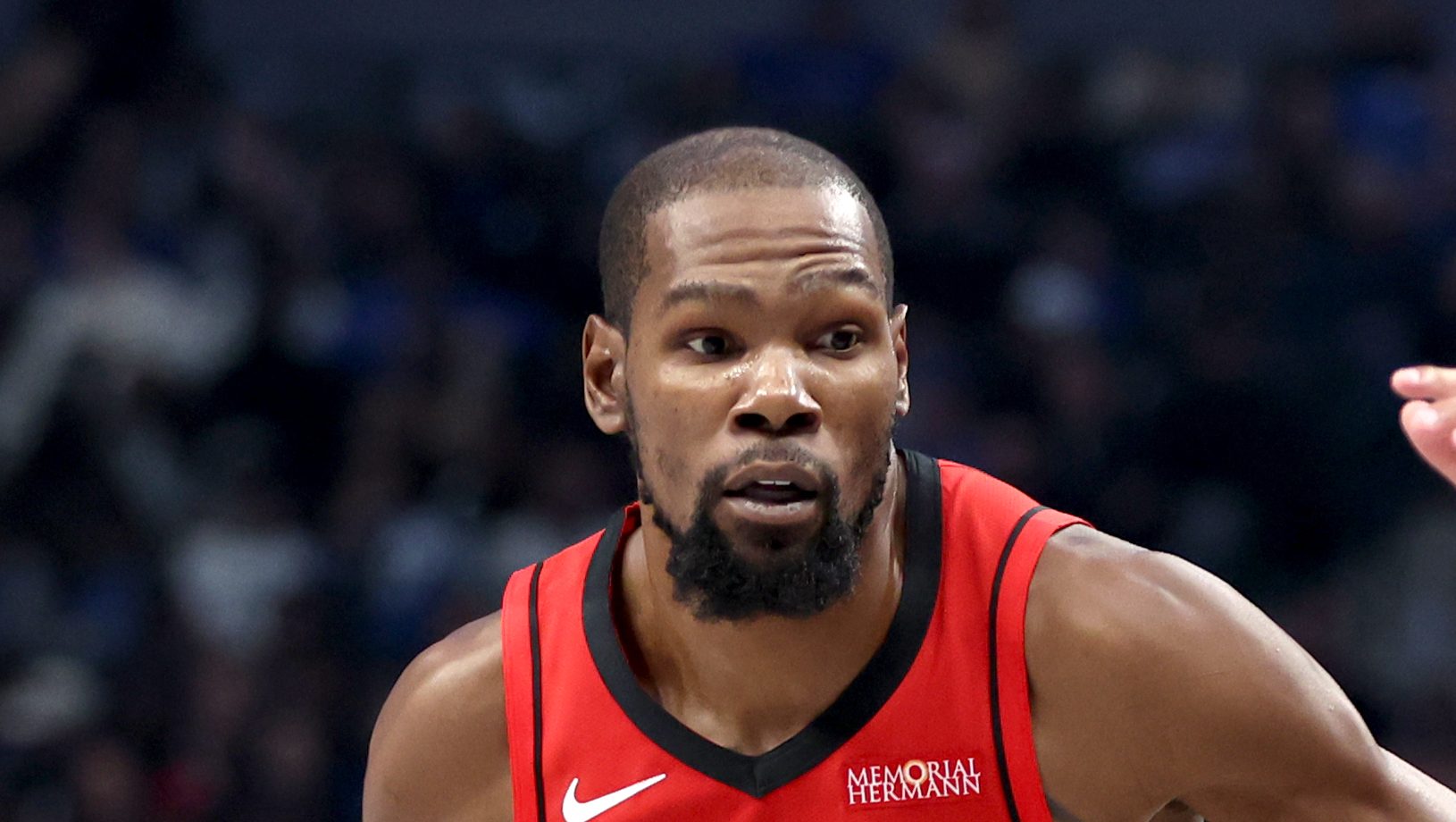
Durant had missed the series opener with a deep bruise in his right patellar tendon. The injury traces back to last Wednesday during a practice drill when he collided knees with a teammate, leading to swelling, pain, and limited range of motion. Houston’s decision to clear him came after days of uncertainty about his availability.
In Game 1, the absence of Durant was felt as Houston fell 107-98 to a shorthanded Lakers squad. LeBron James facilitated with 19 points, eight rebounds, and 13 assists, while Luke Kennard exploded for 27 points on five-for-five shooting from beyond the arc. The Rockets shot 37.6 percent and failed to reach 100 despite more total attempts than Los Angeles.
Durant’s presence has consistently altered Houston’s offense this season. He averaged 26.0 points, 5.5 rebounds, and 4.8 assists per game on 52.0 percent shooting (41.3% from three) across 78 games. With him on the floor, Houston posted a 120.2 offensive rating; without him, that dropped to 117.4. In high-leverage moments, true shooting fell from 58.0 percent to 54.7 percent when he sat.
Inside the Rockets’ camp, optimism regarding Durant’s return had grown through the day Monday, and by Tuesday afternoon the decision was certain. Coach Ime Udoka stressed that the key test would be Durant’s ability to move comfortably, not just tolerate the knee. Durant’s return shifts the series calculus sharply in Houston’s favor, provided his knee holds up in live playoff action, with the Rockets listed as five-point favorites for Game 2.
The upcoming game will be a true test of whether Durant can blend his movement with his usual scoring impact under playoff pressure. If he can move well and stay effective, Houston’s offense—already potent with him—could gain a decisive edge as the series resumes.